High-protein foods: which supermarket picks are worth it?
What "high protein" on a label really means, and how puddings, bars, quark, skyr and everyday foods compare on protein per calorie, from thousands of labels.
The dairy aisle has quietly turned into a protein aisle. High-protein puddings, protein milkshakes, protein yoghurts, protein bars at the till, even protein bread. If you're trying to eat more protein, or eat it with fewer calories, which of these are actually worth it?
Short answer: the high-protein dairy products are mostly genuine, because underneath they're quark or skyr with flavour. Plain quark and skyr still give you more protein for the calories. Protein bars and protein bread only just clear the legal bar for the label, and end up about where Greek yoghurt or a couple of eggs are.
I went through the labels in Ampsu's food catalogue, thousands of them, to put numbers on that.
What does "high protein" on a label actually mean?
Less than you'd think. Under EU rules, a food can say "high protein" if at least 20% of its energy comes from protein, and "source of protein" at 12%. For comparison, plain low-fat quark gets about 70% of its energy from protein. So the claim is a floor, and a fairly low one. A product can be rich, sweet and mostly carbohydrate and still qualify.
Which high-protein foods give the most protein for the calories?
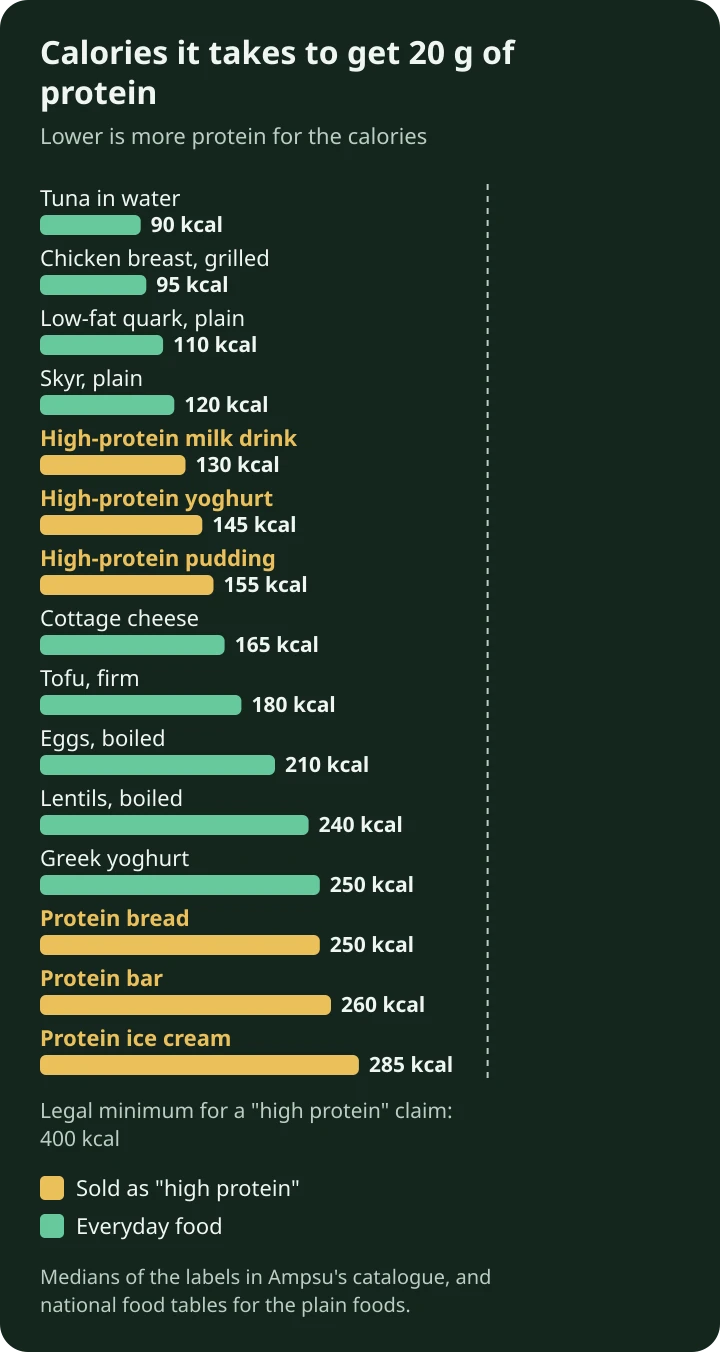
The fairest way to compare a pudding with a bar with a chicken breast is to ask how many calories it takes to get the same amount of protein. Here's 20 g, roughly what's in a decent snack or a third of a meal:
A few things stand out.
- Plain quark and skyr are hard to beat. About 110 to 120 kcal for 20 g, and no added sugar. Fish and chicken are the only things that do better.
- High-protein dairy is a fair deal. Drinks, yoghurts and puddings take 130 to 155 kcal for the same 20 g. The extra 20 to 40 kcal is the flavour and the creamier texture, which is a perfectly reasonable thing to pay for if it means you actually eat it.
- Bars, bread and ice cream are a different category. 250 to 285 kcal for 20 g, more than twice what quark costs. That's about the same as Greek yoghurt or two to three boiled eggs. They're convenient, and that's most of what you're buying.
Are high-protein puddings and yoghurts worth it?
As foods, yes. The big lines are close to each other: Ehrmann and Lidl's Milbona high-protein puddings, Arla Protein, Danone's HiPRO, Valio PROfeel and Melkunie Protein all land at about 10 g of protein per 100 g and somewhere between 60 and 80 kcal. A 200 g pot is about 20 g of protein for 120 to 160 kcal, which is good.
The fair comparison is with the plain version. 250 g of plain quark gives you about 30 g of protein for around 165 kcal. If you can live with plain, or with plain plus a spoon of jam or some berries, it's the better deal. If you can't, the flavoured pot is still a solid choice, and miles better than a regular pudding, which has about a third of the protein and three times the sugar.
One thing to watch: flavoured versions of good products can be noticeably weaker. Flavoured skyrs with fruit or chocolate pieces tend to carry less protein and more sugar than plain skyr, so check the label rather than the word "skyr" on the front.
Are protein bars a good source of protein?
They're a convenient one. A typical bar is 50 to 60 g with about 20 g of protein and 200 kcal. Popular brands like Barebells come in at about 38% of their energy from protein, which is roughly the same as a boiled egg. That's fine for a bar in your bag on a busy day. As a daily protein strategy, it's a roundabout way to eat a chocolate bar with extra protein.
Protein bread is similar. It usually has about two and a half times the protein of wholemeal bread, and a little more energy too, because the extra protein often comes with seeds. Per calorie it's no better than Greek yoghurt.
How much protein do I actually need?
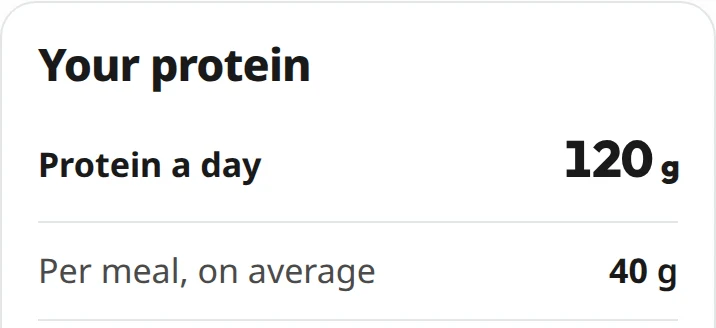
Most adults do fine on less than the marketing suggests. If you're losing weight or strength training, around 1.6 g per kg of body weight a day is a sensible target, because in strength training studies the benefit levelled off at about that point. For a 75 kg person that's 120 g a day, or about 40 g per meal over three meals.
The protein calculator gives you the number for your own weight. If you log food in Ampsu, the protein ring on your diary shows how close you are each day, and products scanned in the supermarket come with their label values.
So what should go in the basket?
- Plain quark, skyr or cottage cheese as the base. Add fruit, a little honey or a spoon of jam if plain is too plain.
- A high-protein pudding or drink when you want something that tastes like dessert. It's a good swap for a regular one.
- Tinned fish, chicken, eggs, tofu and lentils for meals. They don't say "protein" on the front, and they don't need to.
- Protein bars and bread when convenience is the point, not as the main source.
And if you've ever wondered where the fibre went while you were chasing protein, this piece on protein and fibre covers the other half of the plate.