You hit your protein target. Where's the fibre?
What fibre does for your gut, why so many of us eat less than recommended, and how to get a bit more without replacing dinner.
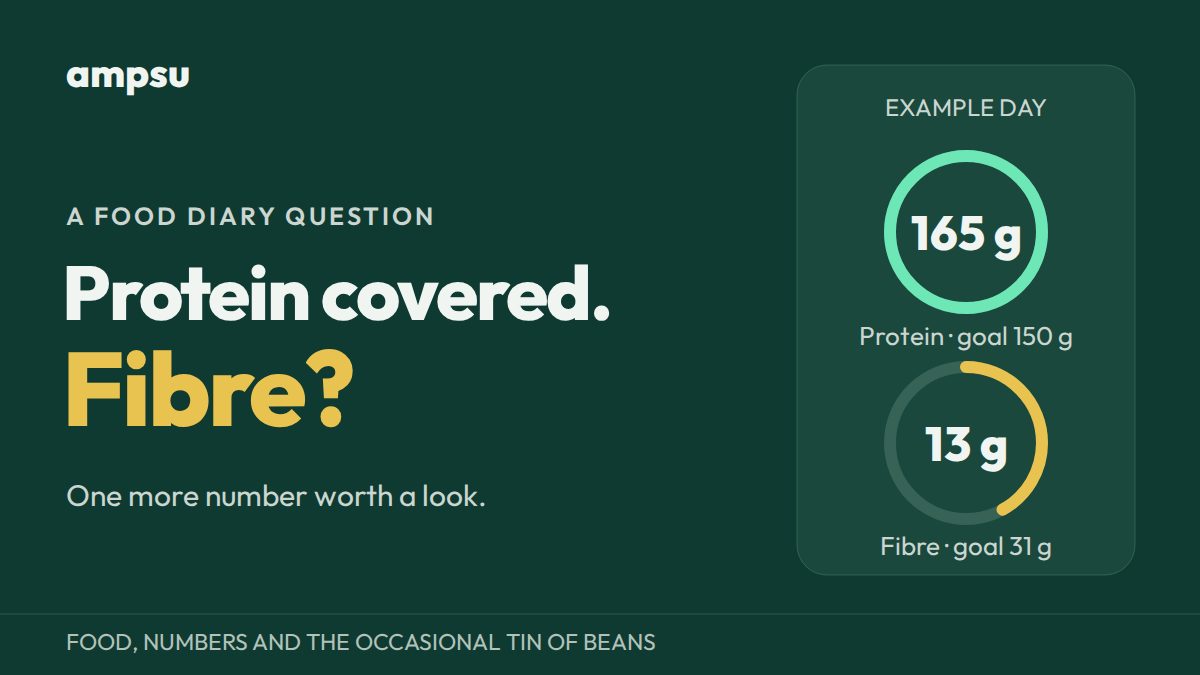
You can put a surprising amount of thought into a yoghurt. Fifteen grams of protein, twenty grams, perhaps there's another one on the shelf with a bigger number. By dinner you've got the protein target covered and a fairly good idea of your calories.
Ask how much fibre was in the day, though, and.. hmm. Might need to look that one up.
It's an easy number to overlook. Fibre helps keep your bowels working, can make meals more filling, and has health benefits that deserve some attention even when calories and protein are where you want them. Checking a few normal days can show you whether the food you eat regularly is giving you enough.
What does fibre actually do for you?
Fibre is a type of carbohydrate your body doesn't fully digest. You get it from foods such as oats, wholemeal bread, beans, lentils, fruit and vegetables. A few reasons to care:
- More comfortable trips to the toilet. Fibre helps with normal bowel function and can help prevent constipation. Fairly unglamorous, fairly useful. The NHS covers the digestion benefits.
- Meals that may keep you full for longer. Fibre-rich foods can help with fullness, which is useful if you're trying to make a calorie target comfortable to live with. It varies with the food and the person, so a fibre number can't promise how hungry you'll feel. Food Standards Scotland explains this.
- Health beyond today's diary. Higher fibre intakes are linked with lower risks of heart disease, type 2 diabetes and bowel cancer. A large review in The Lancet found those associations in long-term studies. Trials in the review also found lower total cholesterol in groups eating more fibre.
So there's a reason to give it some space beside protein. Hitting one target tells you very little about the other, even when the meals look perfectly sensible on paper.
Are we getting enough?
Often, no. In the UK's National Diet and Nutrition Survey, published in 2025, adults aged 19–64 reported an average of 16.4 g a day. The UK recommendation is 30 g. Across adults, only 4% met that recommendation.
That's UK data from 2019–2023, and food recalls can miss things people ate. It still gives you a reason to check your own usual meals instead of assuming a bit of salad has covered it.
This is where tracking helps: you can see what breakfast, lunch and dinner actually add up to, then try a change and see what it contributes. You might find your usual loaf is doing quite a lot. Or that the food entry never had a fibre figure to begin with. More on that little annoyance below.
What should I aim for?
WHO recommends at least 25 g of naturally occurring fibre a day for adults, while UK guidance recommends 30 g. Think of these as adult reference points. Being a gram short on Tuesday doesn't require an emergency bowl of bran.
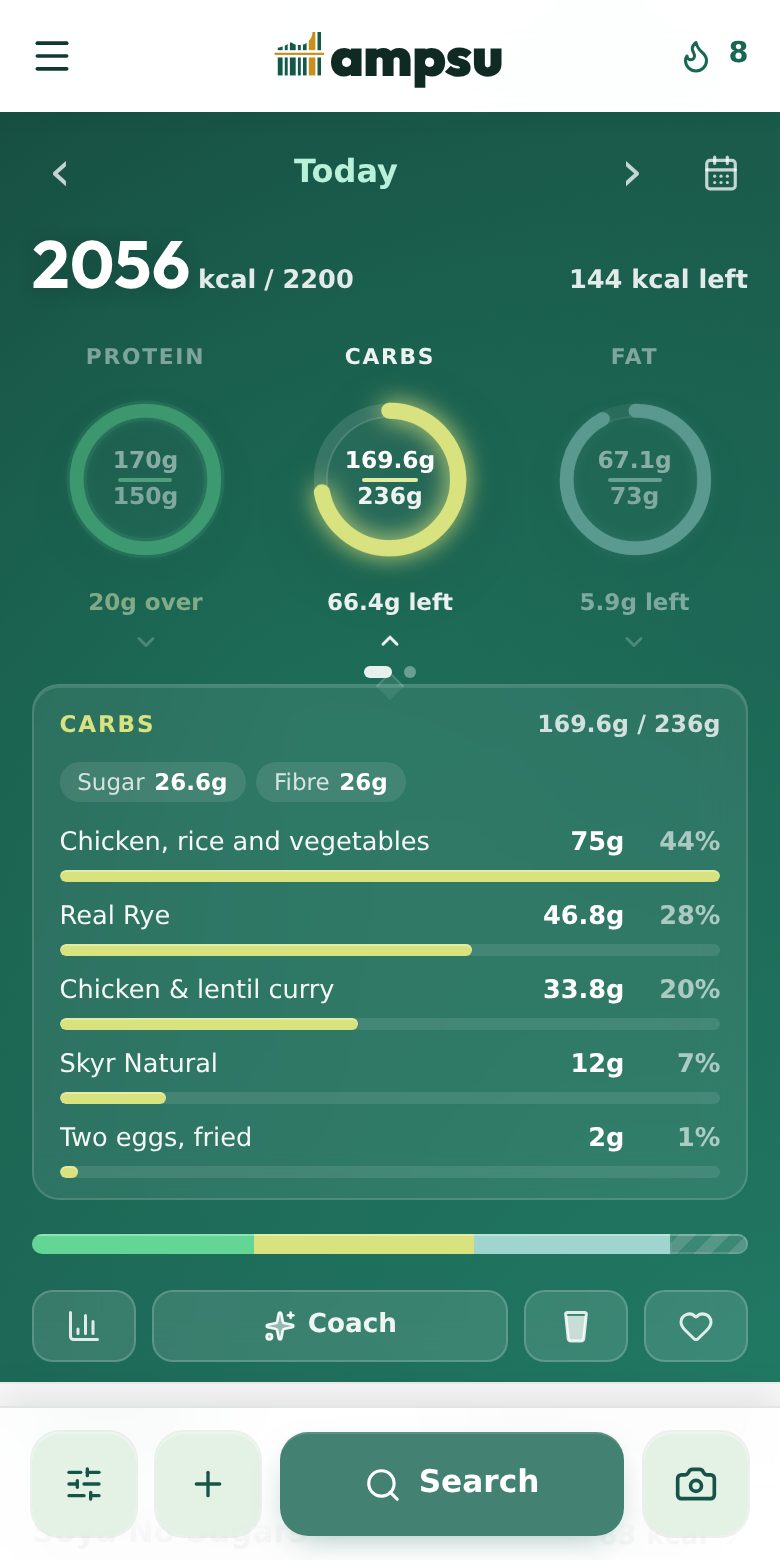
I've given fibre a meter in Ampsu, so you can see it without digging through the detailed nutrition figures. Swipe across the diary's macro rings and it's there beside your water.
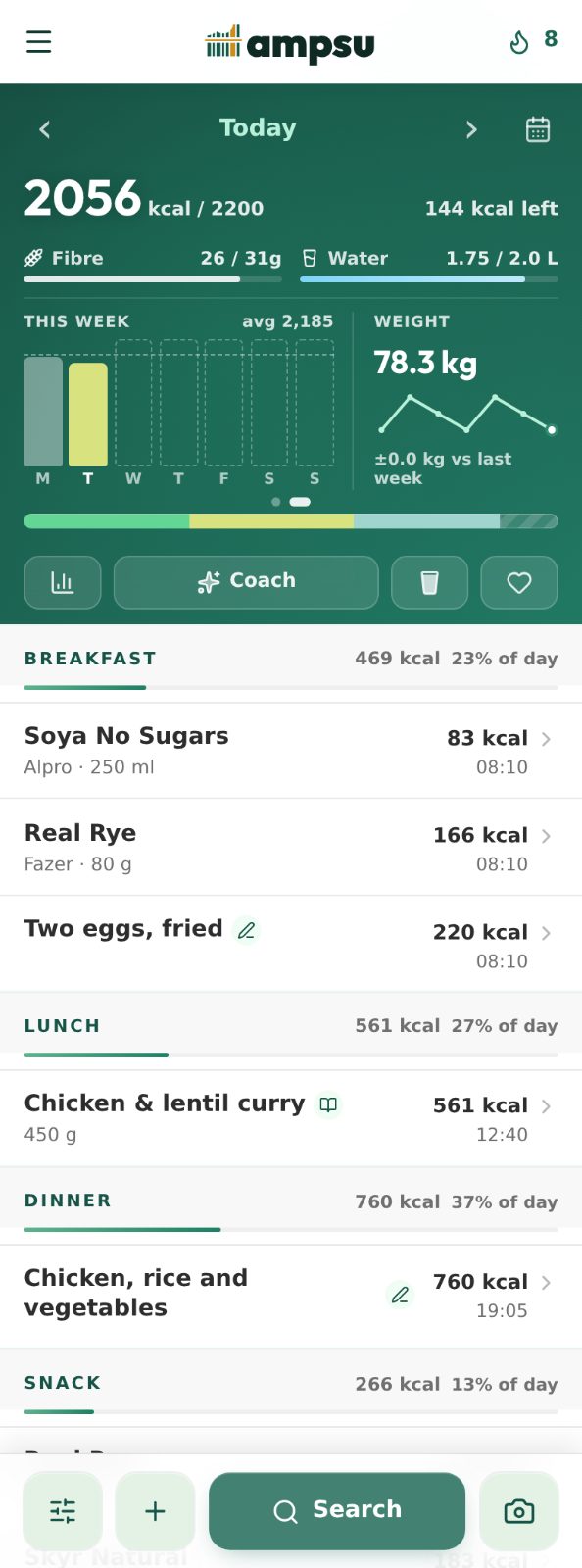
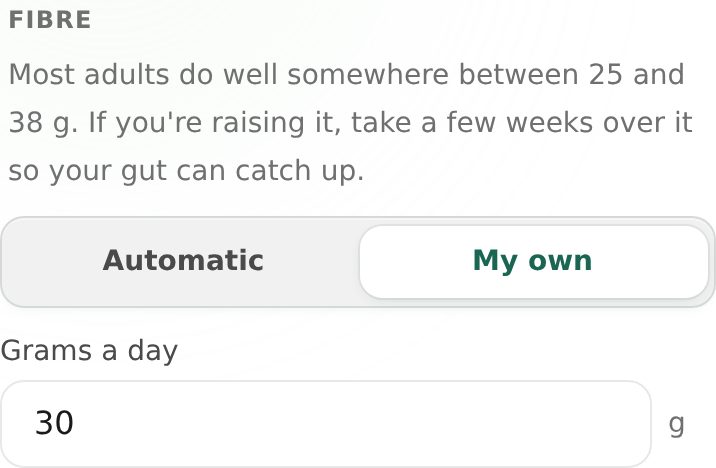
The app sets a daily fibre goal for you. If you'd rather choose your own, you can change it in Settings → Nutrition goals → Fibre. That's also where you can enter a target you've agreed with a clinician or dietitian.
Fine. What am I eating?
Start with something you already buy. Bread is a good candidate, partly because you probably pick up the same one every week without inspecting it particularly closely.
Say one loaf has 3 g of fibre per 100 g and another has 8 g. If you eat 60 g of bread, that's 1.8 g versus 4.8 g of fibre. Three grams more from changing the loaf, with the sandwich otherwise carrying on as usual.
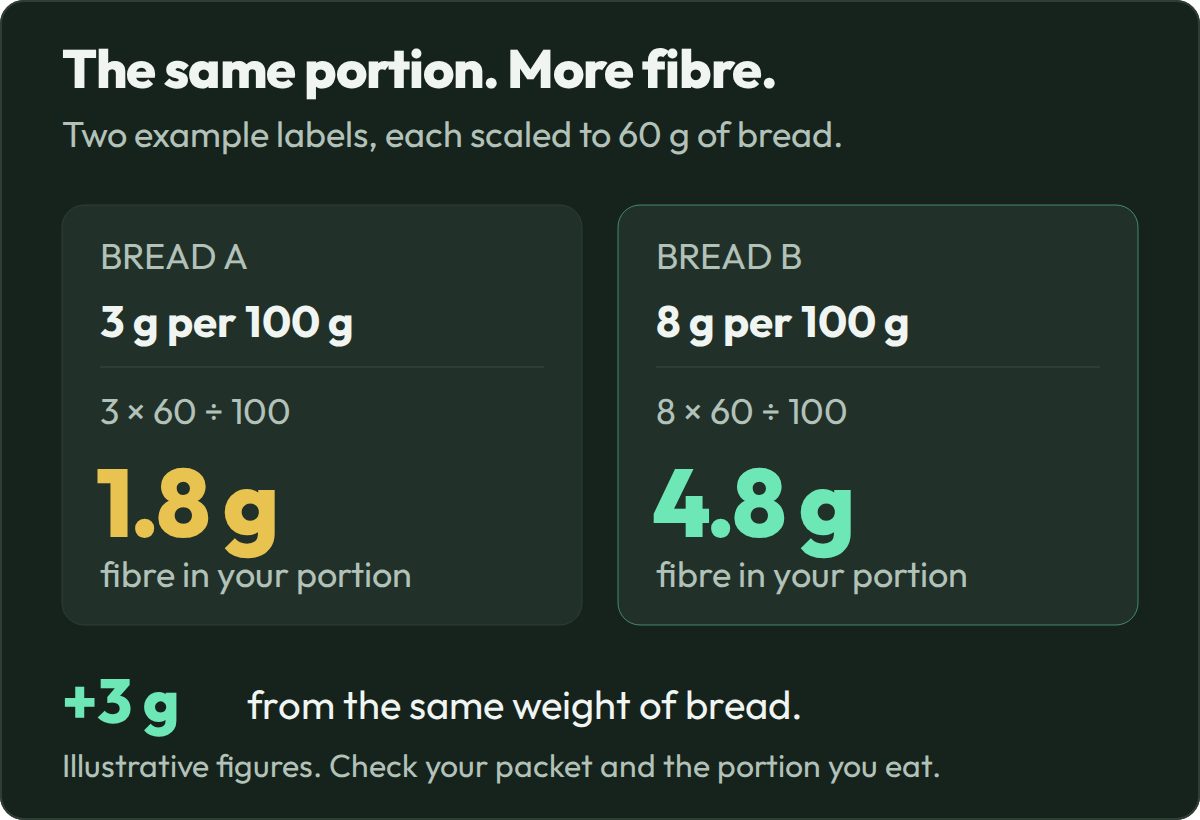
The nutrition-label calculator does the portion maths if you'd rather hand that job over. And check the fibre row, because brown bread isn't necessarily wholemeal.
A few other places to try:
- Breakfast: oats, or a higher-fibre version of a cereal you already like.
- Pasta sauce or curry: some tinned lentils, beans or chickpeas stirred in. Already cooked counts; you don't have to acquire a new hobby.
- A potato dinner: keep the skin on when it works for the dish, and have some vegetables with it.
- Snacks: fruit or a handful of nuts are options too. Count the portion if you're logging calories.
The NHS has more food examples. Pick something you'd happily eat again. It's the same idea as making dinner more filling while eating fewer calories: start with the meal you like and change some of what goes into it.
One annoying catch with the numbers
Fibre is optional in the standard EU nutrition declaration. So a packet, and the food entry made from it, can have calories, protein, carbs and fat filled in while fibre is missing.
I can give you a fibre meter. I can't make an omitted label figure appear by putting a nice green bar around it.
Before deciding your breakfast needs replacing, check a few foods you eat often against the packet or the manufacturer's information. A missing figure can leave the diary total below what you actually ate. If you can't find it, keep that uncertainty in mind.
Tap the Carbs ring to see the day's sugar and fibre figures above the food breakdown. The bars below rank foods by their carbohydrate contribution, so look at the fibre total separately.
Give your stomach a bit of notice
If you've been eating very little fibre, build it up gradually and drink enough fluid. Food Standards Scotland suggests increasing it over a few weeks. Going from hardly any beans to a tin at every meal is quite an introduction.
You also don't need to log every meal perfectly to learn something from this. I wrote about tracking calories without weighing every cucumber for exactly that reason.
Have a look at a few ordinary days, check the figures for your regular foods, and try one change you'd be happy to keep. Start with the bread you were going to buy anyway.