A worked example
For a woman 170 cm tall with a 33 cm neck, a 76 cm waist and 100 cm hips, the Navy estimate is 29% body fat.
Where to measure
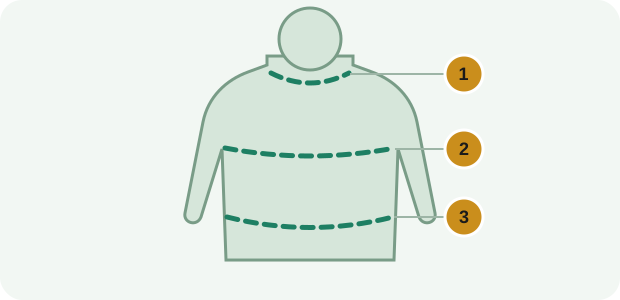
Stand relaxed and keep the tape level, snug against the skin without pressing in. Measure your neck just below the larynx (the Adam’s apple). For the male formula, measure your waist around the navel. For the female formula, measure the waist at its narrowest and the hips at their widest. Breathe out normally before each waist reading.
How good is a tape-measure estimate?
This is the US Navy circumference method, with the equations published in the NOAA Corps directive. Against lab methods it usually lands within about 3 to 4 percentage points, which is similar to most home scales that claim to measure body fat.
For a second reading, take the tape off and measure again. If the result changes, check the position of the tape before you record it. Use the same spot next time.
The ACE categories
The American Council on Exercise groups body fat into five bands, and the category with your result comes from this table. They describe where people typically fall and aren’t medical cut-offs.
| Category | Women | Men |
|---|---|---|
| Essential fat | 10–13% | 2–5% |
| Athletes | 14–20% | 6–13% |
| Fitness | 21–24% | 14–17% |
| Average | 25–31% | 18–24% |
| Obese | 32%+ | 25%+ |
Questions people ask
Why are there separate male and female formulas?
Bodies store fat in different places on average, so the Navy fitted separate equations. The female one needs a hip measurement for that reason. Pick whichever matches your body better.
How does this differ from BMI?
BMI relates weight to height. The Navy method uses circumferences to estimate the percentage of your weight that is fat.
What’s the difference between fat mass and lean mass?
Fat mass is the estimated weight of body fat. Lean mass is everything else: muscle, bone, organs and water. The TDEE calculator can use lean mass through the Katch-McArdle formula.