Christmas calories: mince pies, mulled wine and the scale
How many calories are in a mince pie, Christmas pudding or mulled wine, what a whole festive day adds up to, and why the scale jumps 1.5 kg after Christmas.
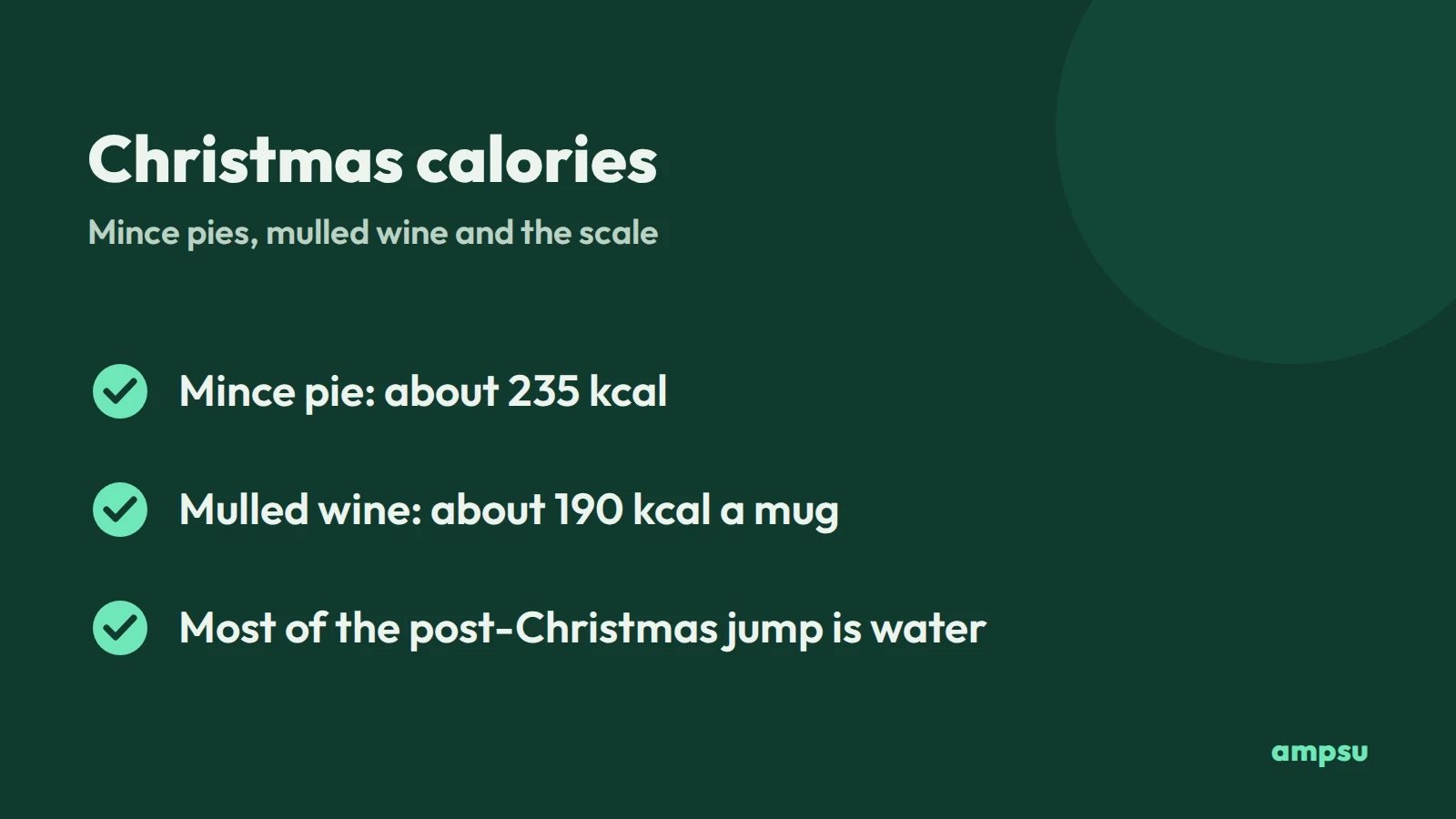
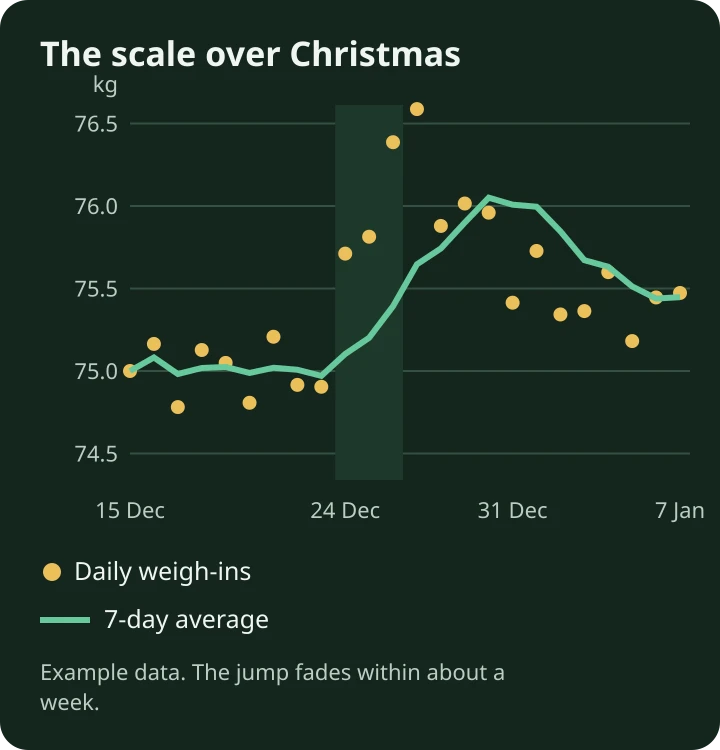
Two mince pies, a mug of mulled wine, a dinner that takes three plates and a pudding that arrives on fire. Then on the 27th you step on the scale and it says you're 1.5 kg heavier. Did Christmas really do that in three days?
Mostly no. A big festive day can easily be 1,500 kcal more than a normal one, and that's real. But 1.5 kg of body fat would take something like 11,000 kcal of extra food, and almost nobody eats that over Christmas. Most of the overnight jump is water, salt and food that's still on its way through. What does stay is small: studies that weighed people before and after the holidays found about 0.4 to 0.8 kg.
Below: what the festive classics add up to, why the scale overreacts, and what to do in January.
How many calories are in Christmas food?
I went through the labels in Ampsu's food catalogue and took the middle value for each festive favourite, so one unusually rich brand doesn't skew it. Portions are examples, roughly what the labels themselves call a serving.
- Mince pie (60 g): about 235 kcal. The middle of 294 labels is 391 kcal per 100 g.
- Christmas pudding (100 g, before brandy butter or cream): about 320 kcal.
- Mulled wine (200 ml mug): about 190 kcal. Roughly half of that comes from the alcohol and most of the rest from sugar.
- Roast turkey, white meat (120 g): about 185 kcal, using the UK's official food tables. The turkey is the least of it.
And because Christmas happens all over Europe, here's how the rest of the continent's festive food compares, one typical portion each:
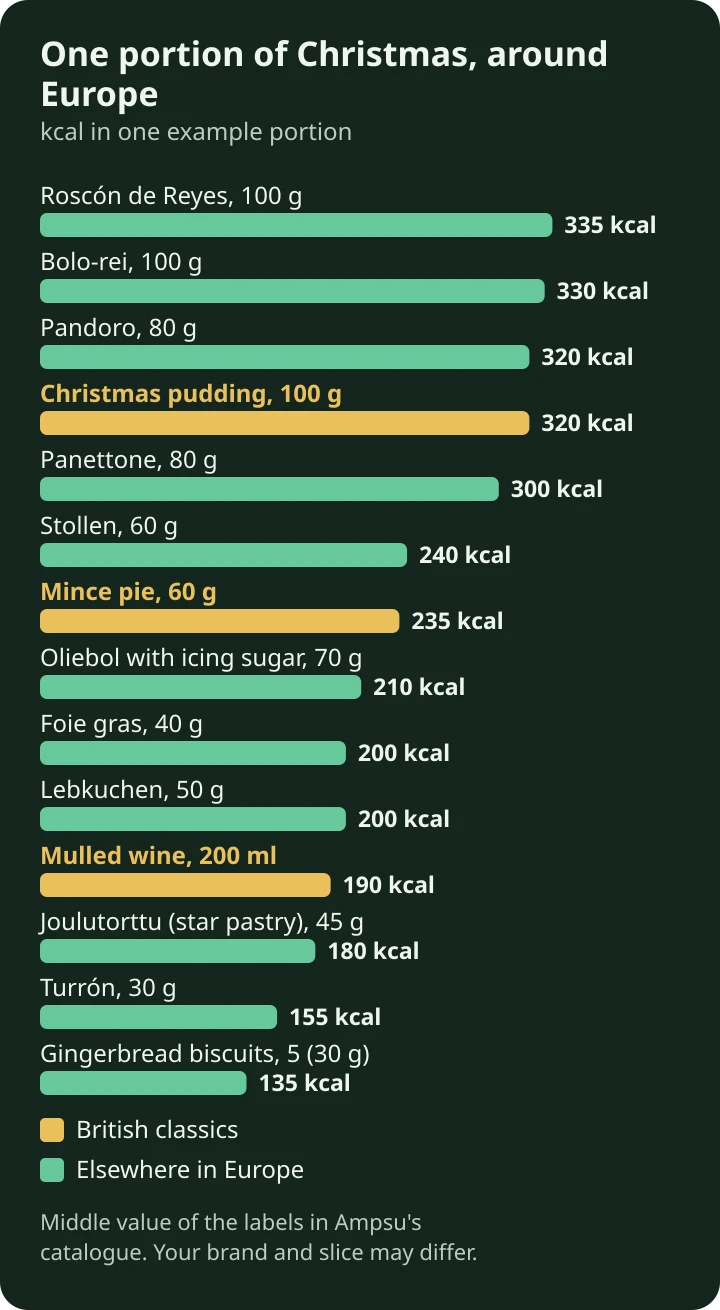
Two things stand out. Sweet breads and cakes are the heavy hitters, because a slice of panettone, pandoro or bolo-rei is 80 to 100 g of something that's mostly flour, butter and sugar. And the small things add up quietly. One gingerbread biscuit is about 27 kcal, which is nothing, until it's the tenth one of the afternoon.
How much extra is a whole Christmas day?
Here's an example day, the sort most people would recognise:
- Breakfast as usual, plus a mince pie: 400 + 235 kcal
- Two mugs of mulled wine through the afternoon: 380 kcal
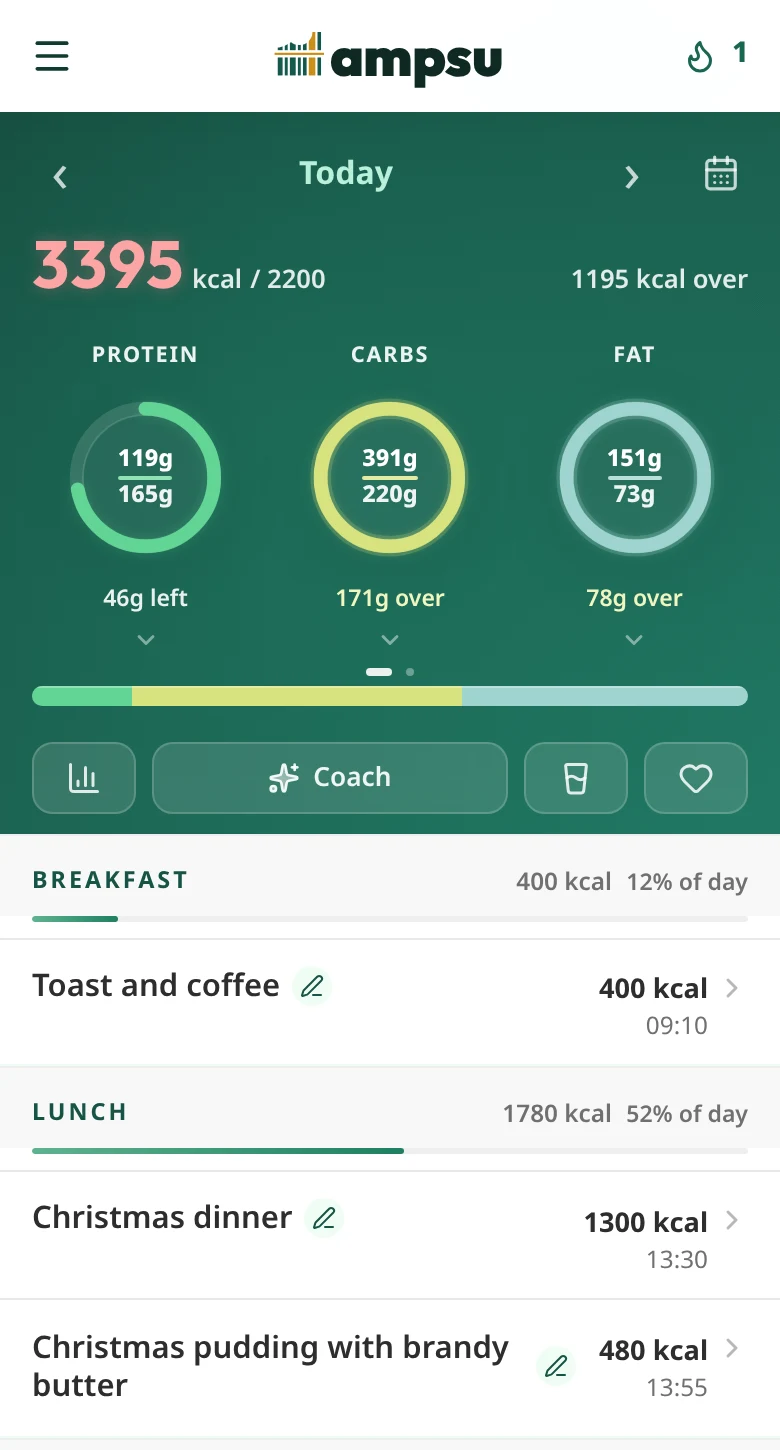
- Christmas dinner with turkey, roast potatoes, stuffing, pigs in blankets and gravy: around 1,300 kcal
- Christmas pudding with brandy butter: about 480 kcal
- Cheese, crackers and chocolates in the evening: about 600 kcal
That's about 3,400 kcal. If an ordinary day is around 2,000, Christmas Day adds roughly 1,400 to 1,500 kcal. Do that on Christmas Eve, Christmas Day and Boxing Day and you're somewhere around 4,000 to 4,500 kcal over.
A kilo of body fat is often put at about 7,700 kcal. That's a rough rule (it overestimates for leaner people), but it's close enough to show the scale: three big days come to something like half a kilo at most, nowhere near 1.5 kg.
Why does the scale jump so much after Christmas?
Because body weight isn't only fat. A few things pile up at once over Christmas:
- Stored carbohydrate. Your body keeps a reserve of carbohydrate called glycogen, and it's stored with water. Each gram comes with at least 3 g of water. A few days of bread sauce, potatoes and pudding refill that reserve, and the scale counts the water too.
- Salt. Ham, gravy, stuffing and cheese are salty, and salt makes you hold on to water for a day or two.
- Food in transit. A bigger dinner is still physically inside you the next morning.
- Less sleep and less walking, which mostly changes how the numbers swing rather than what's underneath.
All of that leaves again within a week or so of eating normally. Which is why the morning of the 27th is the worst possible day to judge anything.
Do people actually gain weight over Christmas?
A little, and some of it sticks. A study that weighed 195 adults before and after the holiday season found an average gain of 0.37 kg, much less than the 2 kg or so people tend to assume. The catch was that it hadn't gone by the following autumn.
Data from nearly 3,000 people with wifi scales in the US, Germany and Japan found the same pattern. In Germany, weight rose 0.6% in the ten days after Christmas, and about 1% (0.8 kg) across the whole season. Up to half of it came off quickly in January. The other half was still there in the summer.
So the big days themselves do surprisingly little, and the quick drop in January is mostly water leaving. The half kilo that tends to stay is what deserves a bit of attention.
So what should you actually do?
- Enjoy the days that matter. Christmas Eve, Christmas Day and a family dinner or two are a handful of days. Nobody needs to weigh their pudding.
- Watch the days in between. The weeks of open tins of chocolates, leftover stollen at work and "it's nearly Christmas anyway" do more than the big days. That's where the half kilo usually comes from.
- Count the drinks. Two mugs of mulled wine are a full extra meal, and drinks rarely make you feel full.
- Don't try to pay it back. Starving yourself in January usually ends in a bigger snack in February. Just go back to your normal days.
- Judge the scale a week later, using the average of several weigh-ins rather than one morning.
Should you log food over Christmas?
Either way is fine. If you like keeping the habit going, log roughly. A photo of the plate or a single "Christmas dinner, about 1,300 kcal" entry is plenty, and a rough number beats a blank day when you look back at your trends in January.
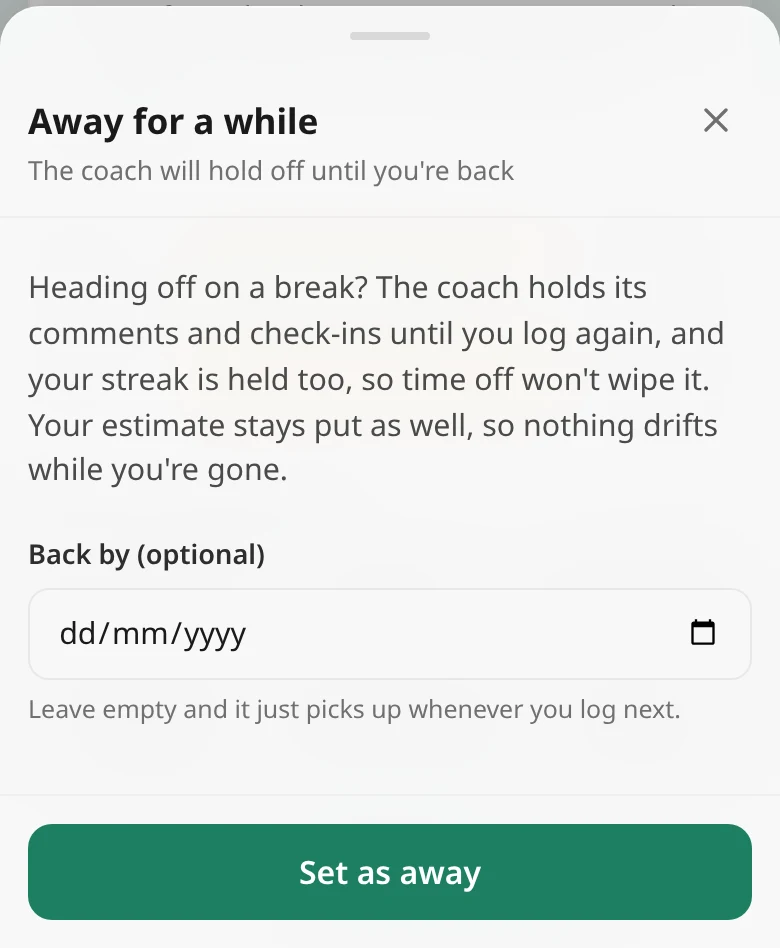
If you'd rather not think about it at all, tell Ampsu you're away. Open the coach, tap Stepping away for a bit? and set a return date, or leave it empty. The coach holds its comments and check-ins, your streak is kept, and your calorie estimate doesn't drift while you're not logging. Log something again and it picks up where you left off.
Then in the first week of January, eat like it's a normal week and let the weekly average tell you where you are. If you want a rough number to aim for again, the daily calorie calculator gives you a starting point, and this explainer on weight swings covers why the scale needs a week before it means anything.
Merry Christmas. Have the second mince pie if you want it :)