A worked example
A 80 cm waist divided by a height of 170 cm gives a waist-to-height ratio of 0.47.
What does 0.5 mean?
A ratio of 0.5 means your waist is half your height. NICE guidance for adults treats under 0.5 as no increased health risk from central fat, 0.5 to 0.59 as increased, and 0.6 or more as high. The ratio alone can’t diagnose anything, but it’s a good reason to look closer.
These adult reference bands are intended for use alongside BMI when BMI is below 35. Pregnancy changes waist size, so the bands don’t apply during pregnancy.
Waist sizes by height
The waist at which each band starts: under the first column is below 0.5, from the second column up is 0.6 or more.
| Height | 0.5 | 0.6 |
|---|---|---|
| 150 cm (59.1 in) | 75 cm (29.5 in) | 90 cm (35.4 in) |
| 155 cm (61 in) | 77.5 cm (30.5 in) | 93 cm (36.6 in) |
| 160 cm (63 in) | 80 cm (31.5 in) | 96 cm (37.8 in) |
| 165 cm (65 in) | 82.5 cm (32.5 in) | 99 cm (39 in) |
| 170 cm (66.9 in) | 85 cm (33.5 in) | 102 cm (40.2 in) |
| 175 cm (68.9 in) | 87.5 cm (34.4 in) | 105 cm (41.3 in) |
| 180 cm (70.9 in) | 90 cm (35.4 in) | 108 cm (42.5 in) |
| 185 cm (72.8 in) | 92.5 cm (36.4 in) | 111 cm (43.7 in) |
| 190 cm (74.8 in) | 95 cm (37.4 in) | 114 cm (44.9 in) |
| 195 cm (76.8 in) | 97.5 cm (38.4 in) | 117 cm (46.1 in) |
| 200 cm (78.7 in) | 100 cm (39.4 in) | 120 cm (47.2 in) |
How to measure
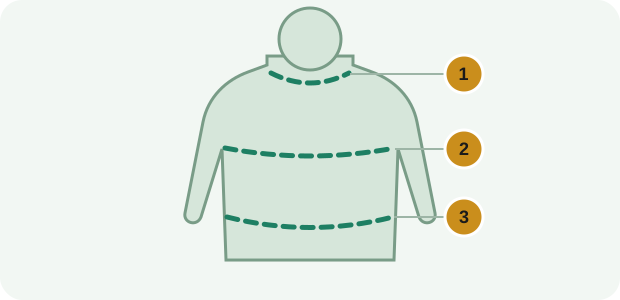
Find the bottom of your lowest rib and the top of your hip bone, and measure halfway between them. Breathe out normally, keep the tape level and snug without pulling it in. Doing it the same way each time matters more than chasing a tenth of a centimetre.
Healthy waist size for women and men
Waist size on its own is the older measure, and it’s split by sex. The WHO expert consultation gives these thresholds for adults of European descent, measured the same way as above. They don’t take height into account, which is why the ratio is the better single number, but they make a quick check.
| Women | Men | |
|---|---|---|
| Increased risk | 80 cm (31.5 in) or more | 94 cm (37 in) or more |
| Substantially increased risk | 88 cm (34.6 in) or more | 102 cm (40 in) or more |
Questions people ask
Is waist-to-height better than BMI?
It tells you something BMI doesn’t: where the weight sits. Fat around the middle is linked to heart disease and type 2 diabetes more closely than overall weight. Looking at both is better than either alone.
Does it work for children?
NICE’s bands are for adults. For children the ratio is used differently, so check with a health professional.
Can I use inches?
Yes. Select imperial units, then enter your waist in inches and your height in feet and inches.