How to track calories without weighing every cucumber
How to pick a target, log a real day, and deal with the days that go over it.
You've logged dinner and the app says you're 250 kcal over. Do you eat less tomorrow? Ignore it? Delete the biscuit and pretend it never happened?
Keep the biscuit. The useful way to track calories is to pick a starting target, log the whole day as honestly as you can, and judge the trend over a few weeks. One dinner is a poor progress report.
How many calories should I eat?
Calories are energy. On food labels they are usually written as kcal. Your body uses them at rest, while moving around, and while digesting food.
A calculator might give you a BMR of 1,600 kcal. That is your basal metabolic rate: roughly what your body uses at rest. It leaves out most of the day. Your TDEE, or total daily energy expenditure, includes activity and is the better starting point for an eating target. EFSA explains the difference activity makes.
Say your estimated TDEE is 2,200 kcal. Eating your 1,600 kcal BMR would put you about 600 kcal below that estimate. Quite a choice to make by accident. Find your starting TDEE with a TDEE calculator or set a goal in the app.
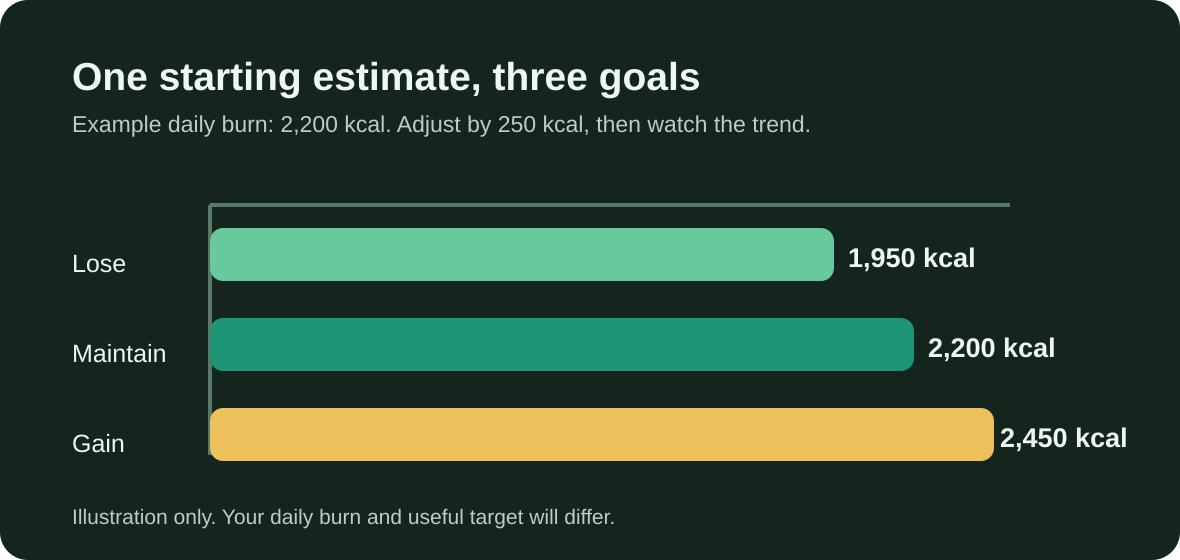
With that 2,200 kcal estimate, you might start at 2,200 to maintain, 1,950 to lose, or 2,450 to gain. These 250 kcal steps are examples, not a prescription. Give your choice time to work and choose a pace you can live with. The NHS recommends steady weight loss.
What if I go over?
With the example above, your loss target is 1,950 kcal and your estimated maintenance is 2,200. If you eat 2,200 kcal, you're 250 over the loss target and around estimated maintenance. If you eat 2,450, you're above maintenance for that day. Energy balance matters over time; neither day decides the month.
Log what you ate, including the part that took you over. Have your usual next meal and return to your usual target tomorrow. You don't need to skip meals or add a punishment workout to make the diary look tidy. NHS advice is to return to your normal, sensible routine after an off day.
If you go over most days, that is useful information. Your target may be too tight, or some meals may be undercounted. Look at the pattern before changing anything. If the target leaves you hungry and distracted, a smaller deficit that you can live with is a better place to start.
How do I log a normal day?
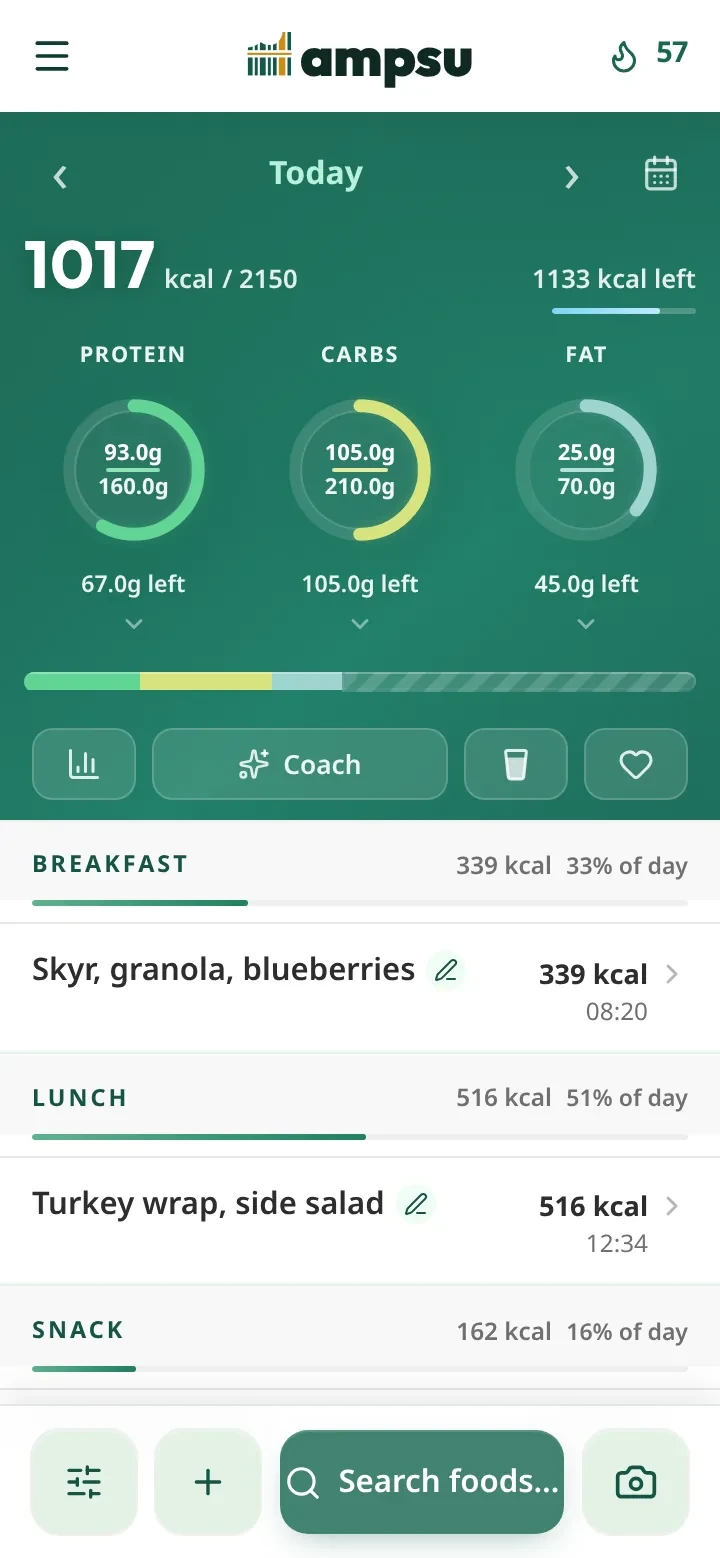
A calorie app does the label maths for you. If your yoghurt says 60 kcal per 100 g and you eat 150 g, that's 90 kcal. Search or scan it, check the entry against the packet, enter 150 g, and the diary adds 90 kcal. Repeat for the rest of the day.
Include the bits that are easy to forget: oil in the pan, dressing, drinks, snacks, and milk or sugar in coffee. Match the entry to what you weighed, too. Rice weighed after cooking needs a cooked-rice entry; dry rice has a different weight because it absorbs water.
How do I make this less tedious?
Spend your effort where it changes the total:
- Let the cucumber go. Skip a few plain lettuce leaves or cucumber slices if logging them makes you want to quit. Count bigger portions and log the dressing, cooking oil, nuts, and spreads. People who track disagree on vegetables, and portion size is the useful dividing line.
- Spray the oil, then make one quick entry. A spray bottle helps you use less. If you sprayed generously through the day and didn't measure it, log 50–100 kcal of cooking oil as a rough guess. A couple of short sprays may be far less. Oil has about 9 kcal per gram, so weigh your bottle before and after a few uses once to see what your usual spray actually adds.
- Save the repeats. Put regular foods in Favourites, save your usual combinations as Meals, and use Recipes for batch cooking. You can set a recipe's cooked weight when water changes the final amount.
- Copy yesterday, if it looks like today. The diary can copy a whole day. Remove or edit what changed instead of searching for the same breakfast again.
- Know dinner already? Log it early. It gives the rest of the day some shape, and you can edit it if plans change. Plenty of trackers do this.
- Guess the unweighable meal. Use Quick meal or the AI photo estimate for restaurant food. Check the portion and add a small buffer if oil or sauce might be hiding in there. The photo is a guess, and that is fine.
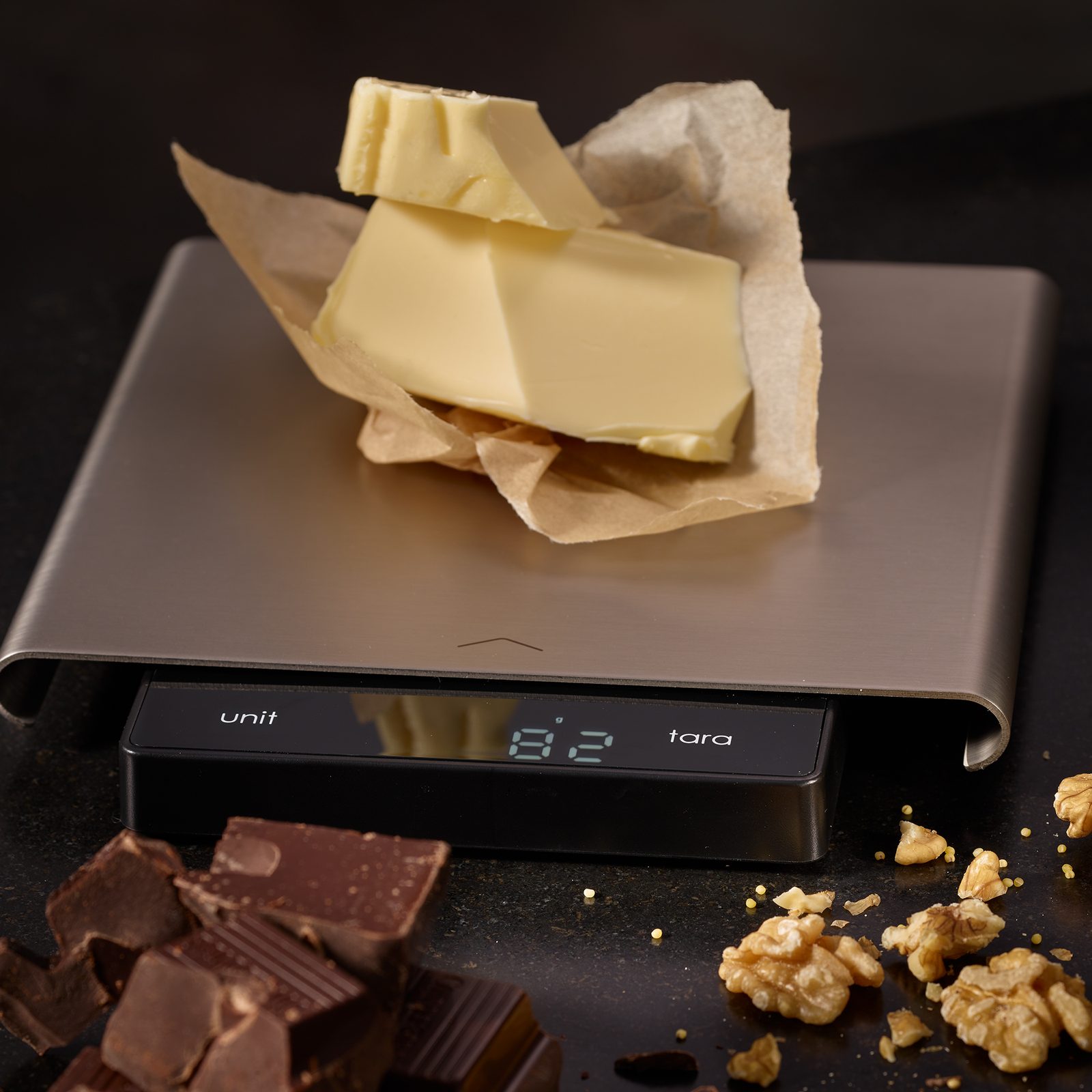
- Make the scale do the fiddly bit. Look for a display raised or pulled forward so your dinner plate doesn't hide it. For a spread, put the whole jar on the scale, press tare, then scoop. If your scale shows negative weights, −18 g means you used 18 g. No sticky measuring spoon required.
Log the whole day, even when dinner is approximate. A rough dinner tells you more than a diary that stops at lunch.
How do I know if my target is right?
Weigh in under similar conditions and compare weekly averages over a couple of weeks. One morning can jump because of water or food still in your gut. So give the number a few friends before you listen to it.
If you expected to lose weight and the average stays flat, check for missing drinks, oils, snacks, or weekends. Your daily burn may also differ from the calculator's guess. Adjust the target a little and check again. If weight changes faster than you wanted or you feel lousy, ease up.
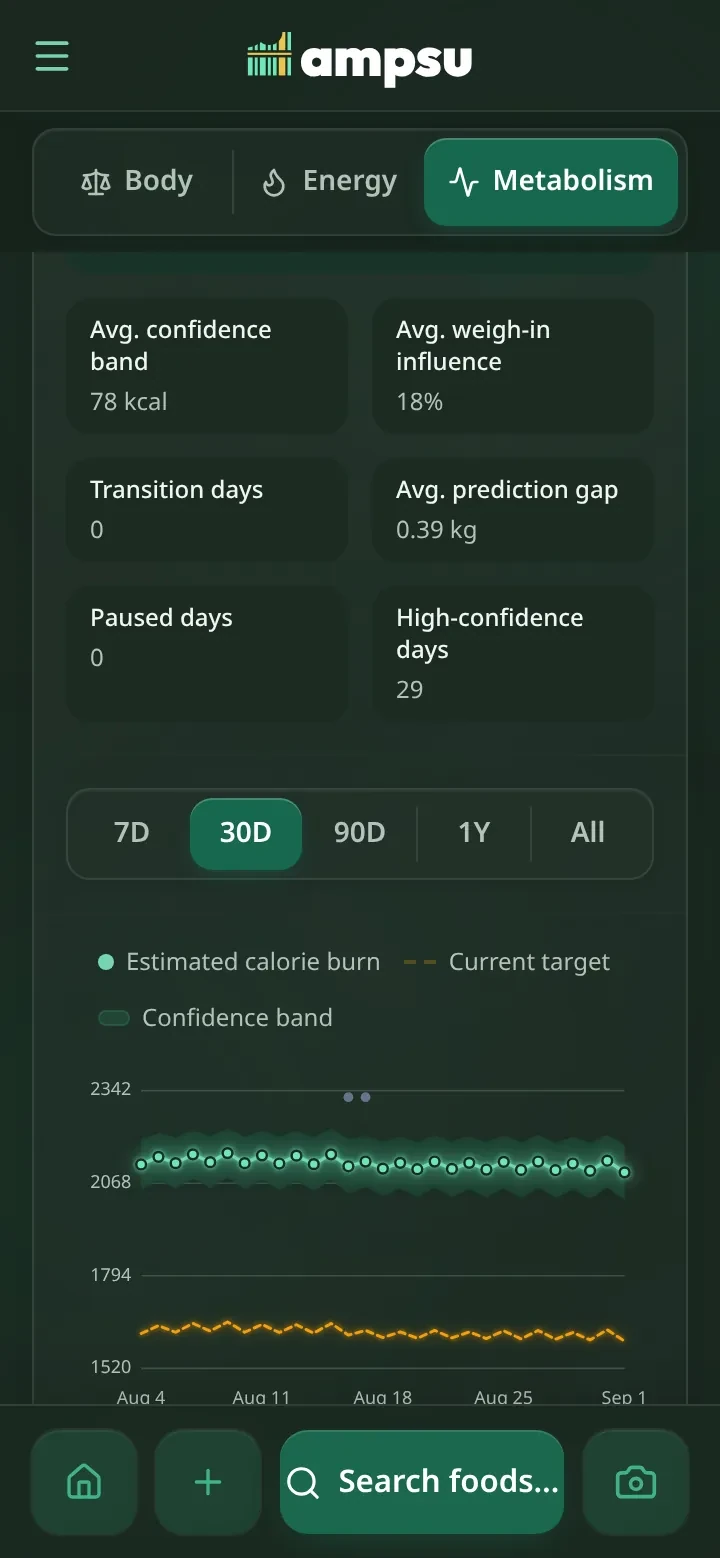
With enough logged days and weigh-ins, the app's metabolism view can use that trend to refine your burn estimate. The TDEE-from-your-log calculator shows the same idea. Days with missing meals make the estimate less trustworthy.
If you care about fat loss, BMR cannot tell you whether you are making progress. Your weight trend plus a waist measurement or occasional body-fat estimate gives more context, especially if you train. A body-fat calculator can use tape measurements. Home body-fat scales can shift with hydration, so watch the longer trend rather than one reading (study).
Start here: estimate your daily burn, choose a target, and log two weeks of complete days, including the imperfect ones. Then check the weight trend. The target is a starting guess, and you can change it.
If tracking starts to feel stressful or rigid, it is okay to stop. A registered dietitian can help you find another approach.