Creatine for women: does it work, and will it make you bloated?
Creatine improves strength in women too, at the same 3 to 5 g a day. What studies show on muscle, bloating, menopause and the brain, and how to take it.
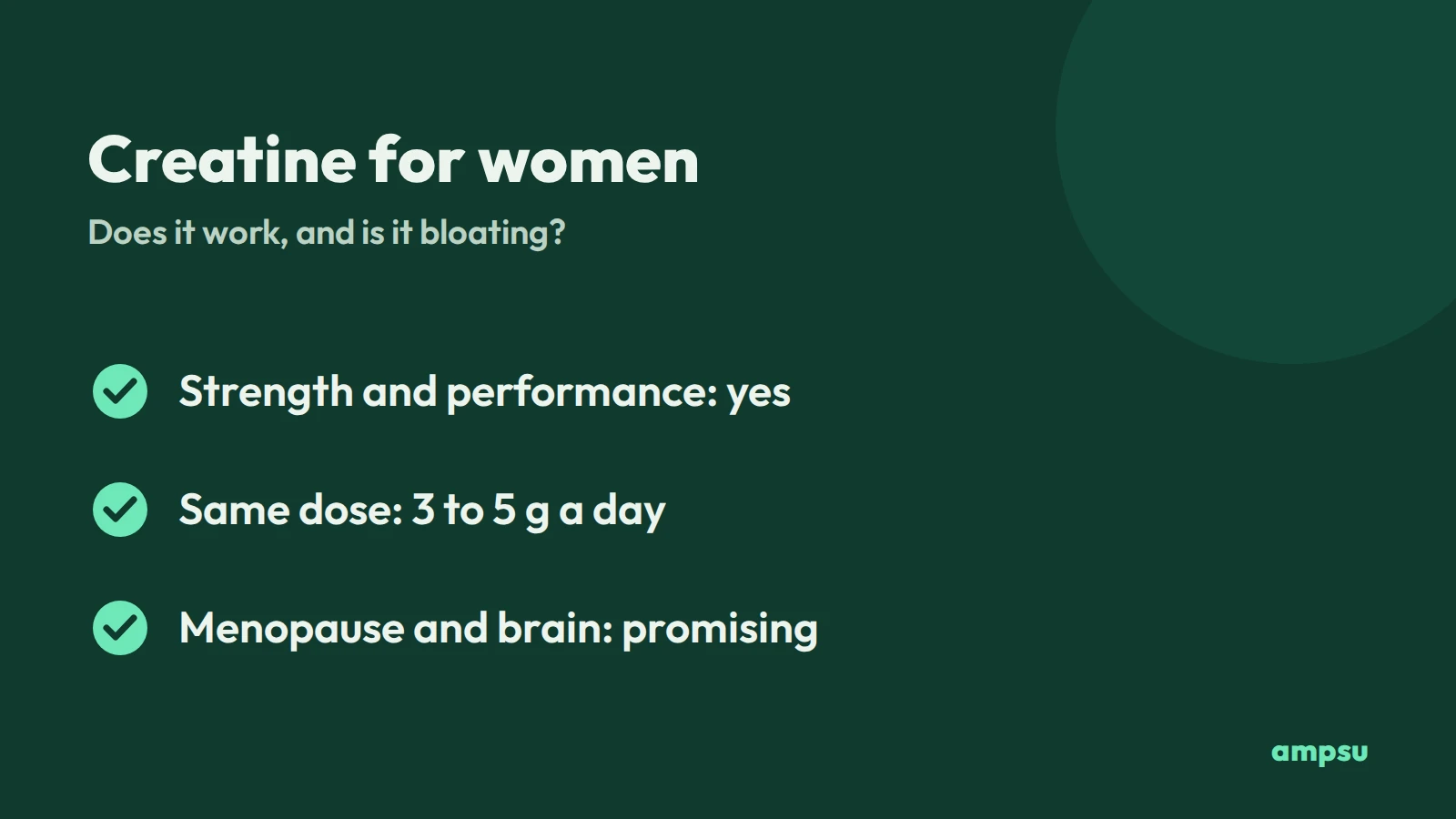
Creatine works for women too, though most of the research was done on men and the picture for women is less complete. What we know: it improves strength and performance in short, hard efforts, the standard dose of 3 to 5 g a day is the same, and it doesn't make you bulky. The muscle gain on top of training looks smaller in women than in men, and the most interesting newer research is about menopause and the brain.
So it's a reasonable thing to try if you lift or train hard, and an open question if you're hoping for more. Here's what the studies actually show.
Does creatine work for women?
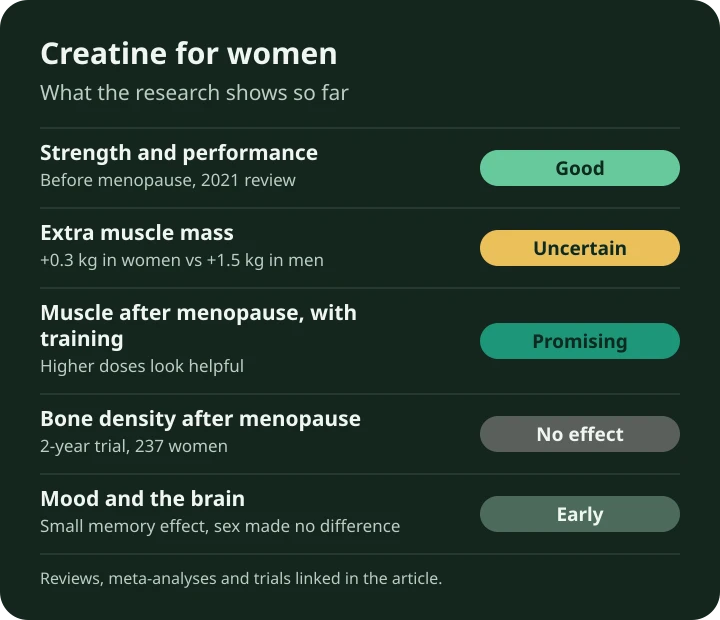
For strength and performance, yes. A 2021 review of creatine in women's health concludes that creatine improves strength and exercise performance in women before menopause. The same review notes that women tend to have lower creatine stores than men, which is one reason researchers think they may have more to gain.
For muscle size, the evidence is weaker. In a 2022 meta-analysis, creatine increased lean mass by about 1.5 kg in men but only 0.3 kg in women, a difference small enough to be chance. Fewer trials in women and different training programmes may explain part of the gap, so this isn't the last word.
Will creatine make me bulky or bloated?
Bulky, no. Creatine helps you train a little harder; the muscle still comes from training and food, and nobody accidentally turns into a bodybuilder on 3 g a day.
Bloated, a little at most. Creatine draws water into the muscle, which can add about half a kilo to a kilo on the scale in the first week, mainly if you start with a high loading dose. That water sits inside the muscle, not under the skin. Starting with 3 to 5 g a day keeps it small. If you track your weight, the water bump and cycle-related swings can stack up, so look at your trend over a few weeks rather than single weigh-ins. This article on creatine side effects covers the water in more detail.
Creatine during and after menopause
This is where the research is most active. Oestrogen helps muscle and bone, and after menopause both get harder to keep. The review above suggests creatine combined with strength training may help muscle size and function in postmenopausal women, especially at higher doses.
The biggest trial so far is mixed. In a 2-year study of 237 postmenopausal women doing strength training and walking, creatine didn't change bone density compared with a placebo. It did improve one measure of hip bone strength and made them a bit faster over an 80 m walk, and those who stuck with it gained more lean tissue. Promising, not a replacement for training or for advice from your doctor about bone health. This article on menopause weight gain covers what else changes and what helps.
Creatine, mood and the brain
Early, but intriguing. The 2021 review points to signs that creatine supports mood and thinking, possibly by helping the brain's energy supply. A meta-analysis on memory found a small improvement overall, mostly in older adults, and sex didn't change the result. None of this is strong enough to take creatine for your mood, but it's one of the more interesting things to watch.
How much creatine should women take?
The same as men: 3 to 5 g of creatine monohydrate a day, every day, at any time. A loading phase isn't needed and makes the water bump more noticeable. If you're pregnant, trying to get pregnant or breastfeeding, ask your doctor or midwife first; there's research interest in pregnancy, but not enough to start on your own.
This article on what creatine does covers dose, timing and which form to buy. Plain monohydrate is the one to get.
How Ampsu fits in
Creatine adds to training and protein; it doesn't replace them. Ampsu shows your protein for every meal, and the protein calculator gives you a target for your weight and goal. Those two habits will do more for your strength than any supplement.
Your first step
If you're already strength training twice a week, try 3 g of creatine with breakfast for six weeks and keep a note of the weights you lift. That's the clearest way to see whether it does anything for you.