Creatine side effects and weight gain: water, hair, kidneys
Creatine's main side effect is 0.5 to 1 kg of water on the scale in the first week. What the research says about weight gain, hair loss, kidneys and cramps.
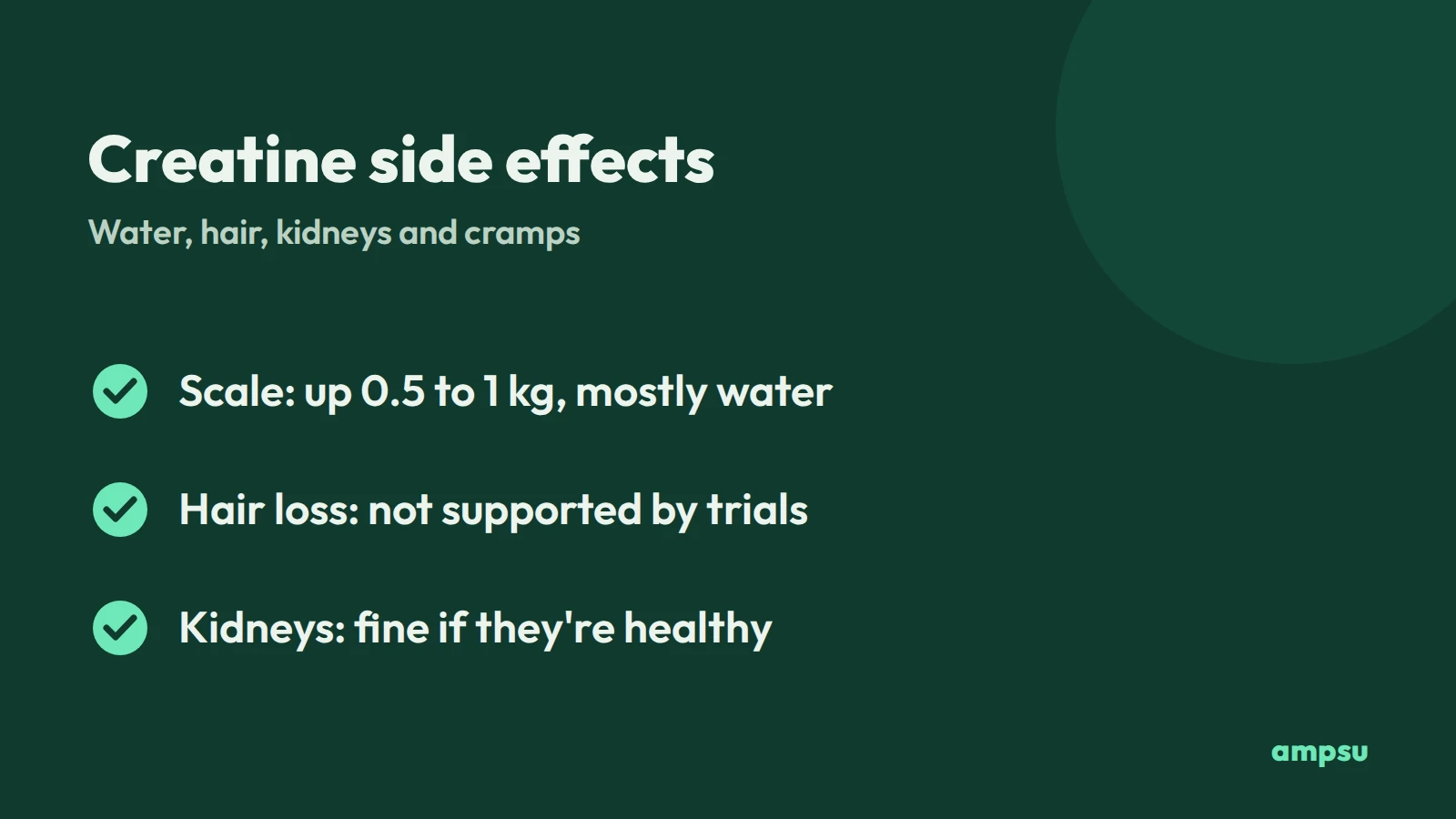
For healthy adults at 3 to 5 g a day, creatine has very few side effects. The one most people actually notice is on the scale: about 0.5 to 1 kg in the first week, mostly water drawn into the muscles, and mainly if you start with a loading phase. Hair loss, kidney damage and cramps are the scary ones online, and the research mostly doesn't back them up.
If you track your weight, that first-week jump is worth knowing about in advance, because it looks exactly like a diet going wrong. Here's what's real, what isn't, and who should check with a doctor first.
Does creatine make you gain weight?
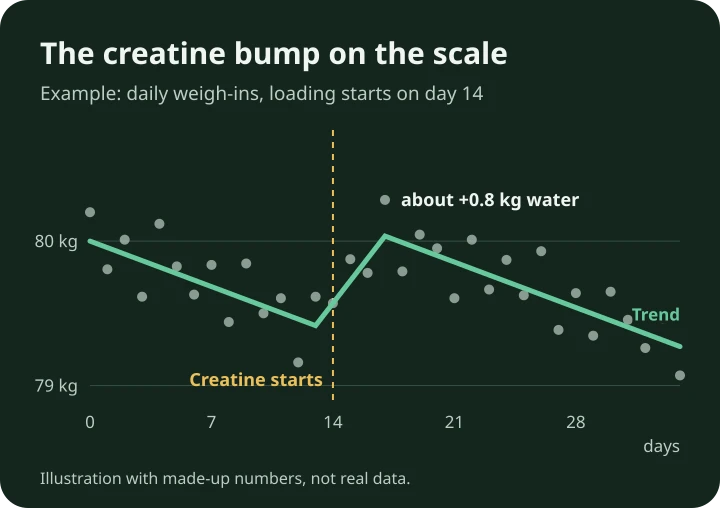
A little, at first, and it's water. Creatine pulls water into the muscle cells along with it. The International Society of Sports Nutrition notes that early studies saw about 0.5 to 1 litre of fluid retained during loading, roughly matching the weight people gained. A review of common creatine questions adds that it doesn't always happen, especially at steady doses without loading, and that creatine doesn't increase body fat.
So if your scale jumps by half a kilo to a kilo in the week you start, that's expected. It levels off, and your weight trend carries on from there. Water in muscle isn't fat, and it isn't the puffy kind of bloat under the skin either. Starting with 3 to 5 g a day instead of loading keeps the bump smaller and slower.
Does creatine cause hair loss?
Probably not. The worry comes from a single 2009 study of rugby players, where DHT, a hormone linked to male-pattern baldness, rose by 56% during a loading week. Nobody measured hair. In a 2025 randomised trial, 12 weeks of 5 g a day changed neither DHT nor hair density, follicle count or thickness compared with a placebo. If baldness runs in your family, creatine isn't what decides it.
Is creatine bad for your kidneys?
Not in people with healthy kidneys, as far as the studies go. The ISSN lists trials of 20 g a day for 5 days, and of up to 10 g a day for between 10 months and 5 years, with no effect on kidney function. If you already have kidney disease, though, talk to your doctor before taking it.
One practical catch: creatine raises creatinine in the blood, and creatinine is the usual marker doctors use to judge kidney function. A routine blood test can therefore look worse than your kidneys really are. Tell your doctor you take creatine, or pause it for a while before a planned test if they suggest it.
Does creatine cause cramps or dehydration?
The evidence points the other way. In a season-long study of college American football players that the ISSN describes, the players taking creatine had fewer cramps, less heat illness and less dehydration than those who didn't. Drink normally; you don't need litres of extra water.
Stomach trouble and other side effects
Big single doses are the usual culprit for stomach upset or loose stools, which is why loading doses get split into four servings of about 5 g. At 3 to 5 g a day, most people notice nothing at all. Cheap products are a bigger risk than creatine itself, so pick plain creatine monohydrate from a brand that publishes testing.
Who should be careful with creatine?
- People with kidney disease, or on medicines that affect the kidneys: ask your doctor first.
- Pregnant or breastfeeding women: there are promising early studies, but ask your doctor or midwife before starting.
- Teenagers: the review found no clear harm, but asks for more research. Training and food come first at that age.
How to track creatine in Ampsu
Creatine has practically no calories, so there's nothing to log in the diary. The useful thing is reading your weight trend correctly. Ampsu works from your weight trend rather than single weigh-ins, but a water bump in week one can still nudge it, so keep weighing in as usual and give it two or three weeks before you read anything into the trend.
This article on what creatine does covers the benefits and the dose, and this one on not losing weight in a deficit explains other reasons the scale can sit still.
Your first step
If you start creatine this week, write the date down. When the scale jumps on day four, you'll know why.