What to eat on Mounjaro or Wegovy: protein, muscle, low appetite
Eating far less on a GLP-1? Make the little you eat count: how much protein, keeping muscle, small high-protein portions and why weight can stall.
A few weeks into Mounjaro or Wegovy, a lot of people notice the same thing: food just stops being interesting. Lunch gets forgotten, dinner is half a plate, and the evening snacking that used to happen on autopilot simply doesn't. Which is the point of the medication, but it raises a new question. If you're eating so much less, what should the little you do eat actually be?
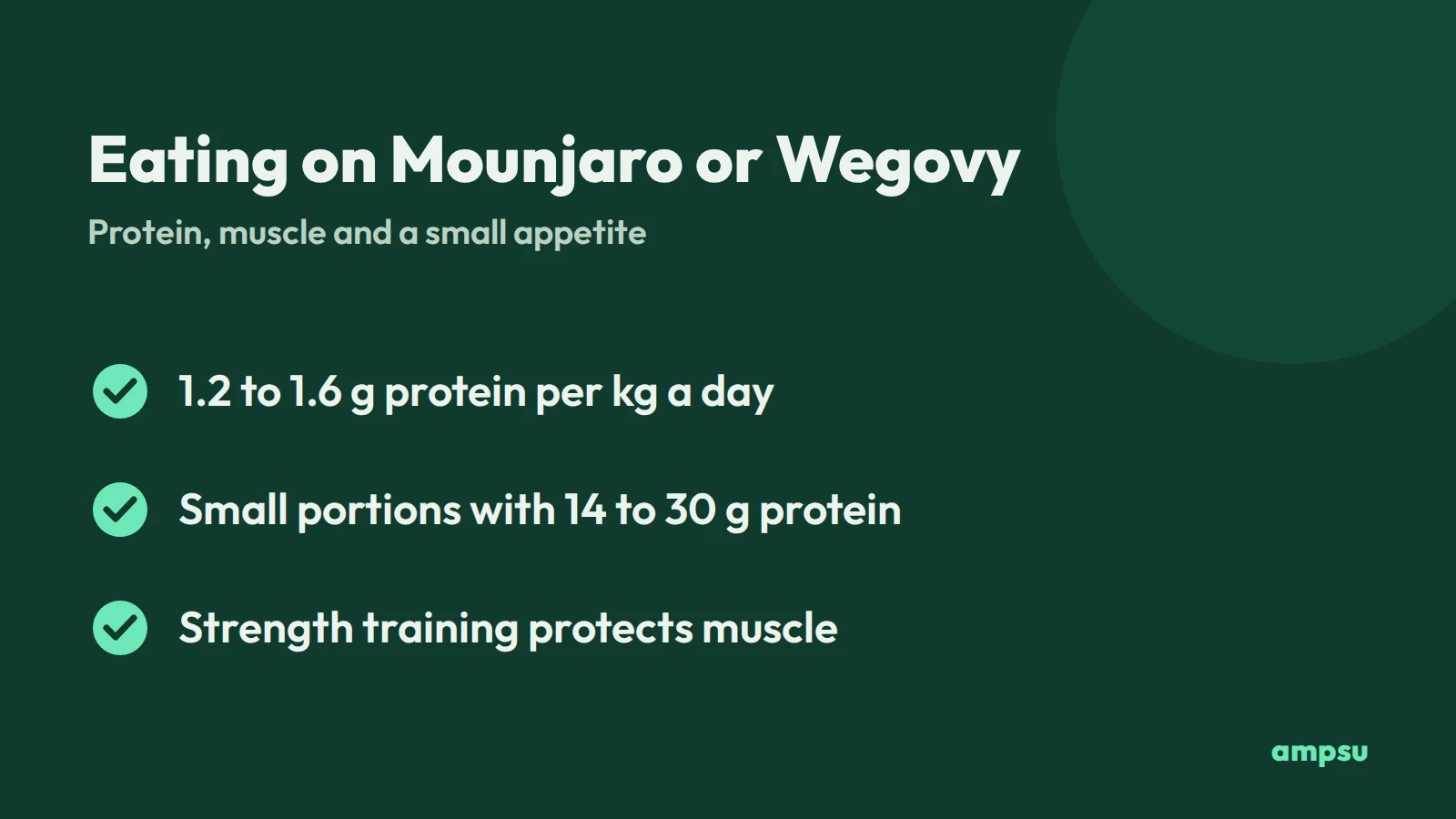
Short answer: the drug takes care of eating less. Your part is what that smaller amount is made of. Protein first, at every meal, enough fluid and fibre to keep things moving, and some strength training to hold on to muscle. A joint advisory from four obesity and nutrition societies puts the protein target at 1.2 to 1.6 g per kg of body weight a day during active weight loss.
This is general information, not medical advice. Your prescriber knows your situation, and anything about doses or side effects belongs with them.
How much weight do people lose on Mounjaro or Wegovy?
A lot, on average, though people vary widely. In the main trial of semaglutide 2.4 mg (Wegovy, the same drug as Ozempic at a higher dose), people lost an average of 14.9% of their body weight over 68 weeks, against 2.4% on placebo. In the main trial of tirzepatide (Mounjaro), average losses at 72 weeks were 15.0%, 19.5% and 20.9% on the 5, 10 and 15 mg doses.
Those are averages, and both trials included lifestyle advice alongside the drug. Some people lose much more, some much less, and the first months include a gradual dose increase, so early weeks often look slower than later ones.
Do you lose muscle on GLP-1 medication?
Some lean mass, yes, as with any large weight loss. How much is genuinely unclear. A 2024 review of the evidence found that in some trials lean mass made up 40 to 60% of the weight lost, and in others about 15% or less. Lean mass also isn't the same as muscle: it includes organs, bone and water. MRI studies suggest the muscle changes are mostly what you'd expect for the amount of weight lost, and that muscle quality may even improve.
The review also notes that older people and those with more health problems are more at risk of losing too much muscle. Either way, the two things that protect muscle are the same as in any weight loss: enough protein and regular strength training.
How much protein do you need on Mounjaro or Wegovy?
The joint advisory from the American College of Lifestyle Medicine, the American Society for Nutrition, the Obesity Medicine Association and The Obesity Society mentions targets of 1.2 to 1.6 g per kg per day during active weight loss, and says intake shouldn't drop below 0.4 to 0.5 g per kg. It also points out that using your full current weight can overestimate the need for people with obesity, so a target based on a lower reference weight, such as your goal weight, is a reasonable way to keep the number achievable.
For example, if your goal weight is 80 kg, that's roughly 95 to 130 g a day. On a small appetite that's a real job, which is why protein has to come first rather than last.
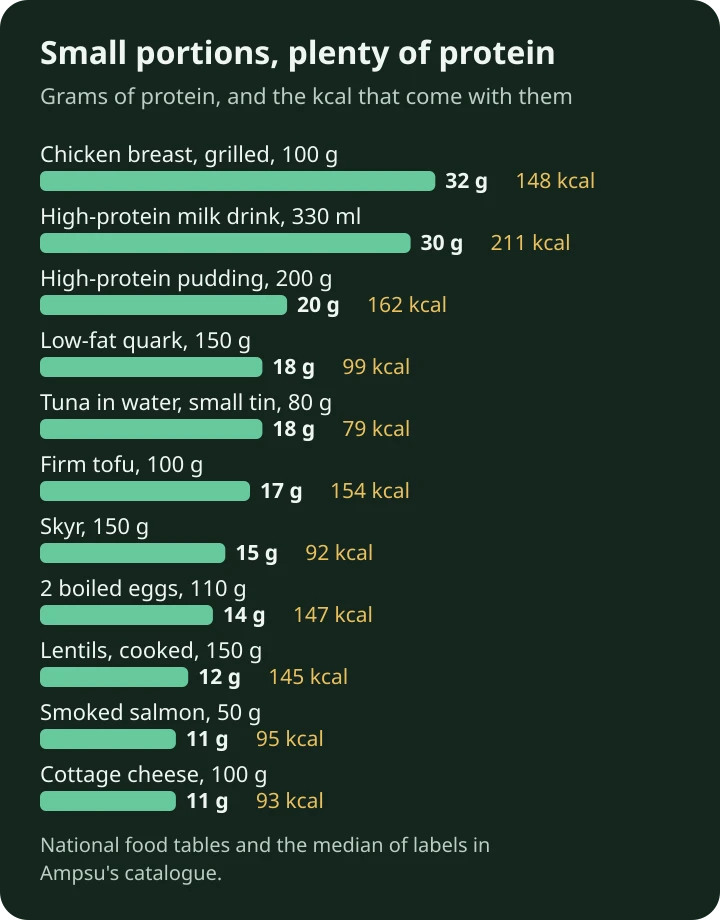
What should you eat when you're barely hungry?
- Start every meal with the protein. If you only manage half a plate, make it the half with the chicken, fish, eggs, tofu or quark.
- Use small, dense portions. A pot of skyr, a small tin of tuna, two eggs or a high-protein drink each bring 14 to 30 g of protein for 80 to 210 kcal.
- Drinks count. On days when chewing feels like effort, a high-protein milk drink is an easy 30 g. This comparison of high-protein foods shows which supermarket products are worth it.
- Keep some fibre and plenty of fluid. Gut side effects are among the most common complaints on these medications, and the advisory calls managing them critical. Vegetables, fruit, oats and pulses, plus regular drinking, help keep things moving.
- Go gently with rich food. Many people find large, fatty meals sit badly. Smaller, plainer meals, eaten slowly, are usually easier.
Why am I not losing weight on Mounjaro or Wegovy?
It's one of the most searched questions about these drugs, and there are a few common reasons.
- It's early. Both medications start at a low dose and increase over weeks or months. Slow early progress is normal.
- Calories can still sneak in. Appetite drops, but drinks, grazing and "just a bit" of something rich can add up, especially once the novelty of not being hungry wears off.
- Water is hiding the loss. Day-to-day weight swings with salt, fluid and digestion. Judge by the weekly average over several weeks, not single mornings.
- A plateau later on is expected. As you get lighter you burn less, so loss slows with any method. This explainer on stalls in a deficit covers how to tell a real plateau from noise.
If weight isn't moving after a reasonable time on a steady dose, that's a conversation for your prescriber.
Should you track food on GLP-1s?
The advisory recommends it, for a practical reason: when appetite drops this much, it's easy to under-eat protein without noticing, and nutrient gaps can creep in. It suggests food logs or food photos to keep an eye on intake.
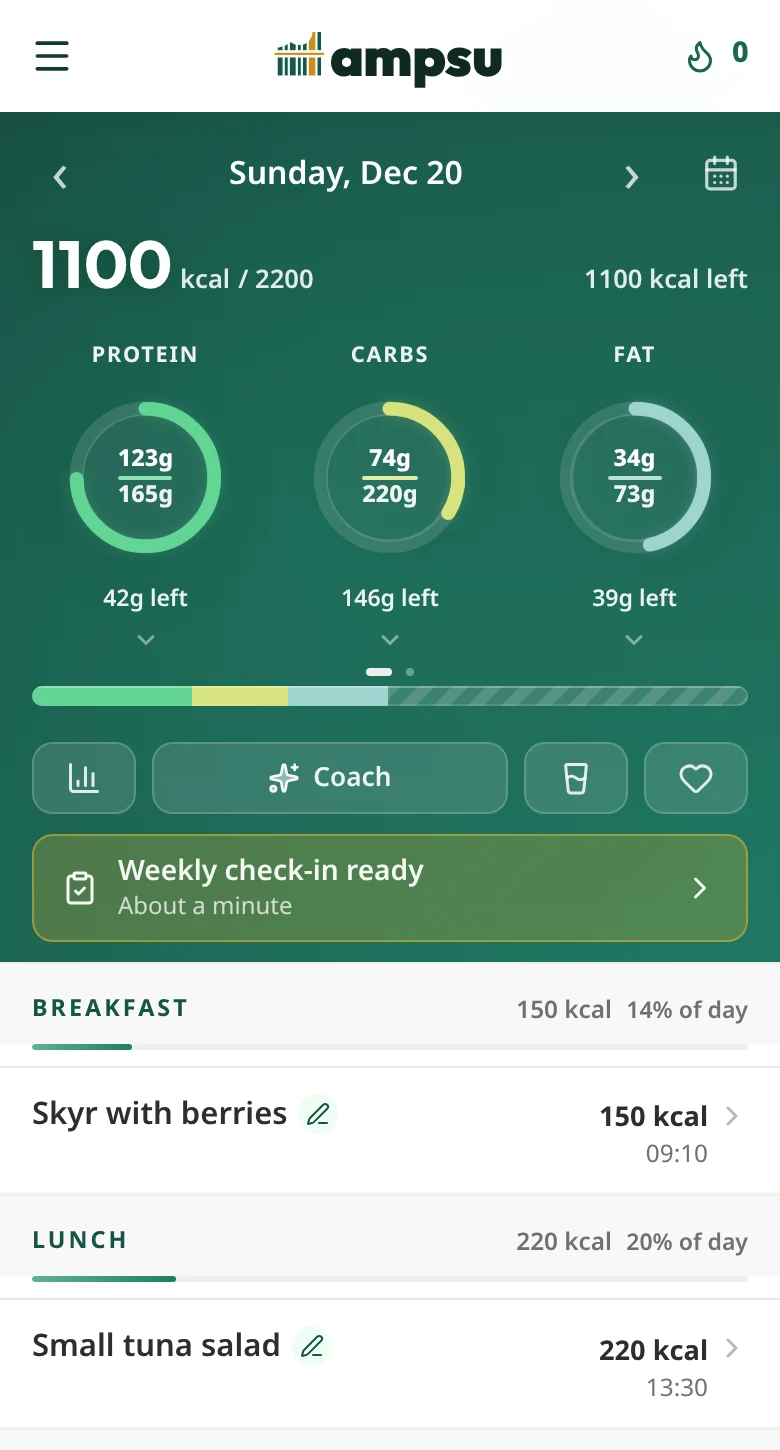
In Ampsu, logging can be as quick as a photo of the plate or a barcode scan, and the protein ring shows at a glance whether a light day still reached your target. The protein calculator gives you a starting number for your weight.
What happens when you stop?
Weight regain after stopping is common, and the advisory lists it among the main challenges of these medications. The habits you build while appetite is low, like protein at every meal, regular strength training and keeping an eye on the trend, are the ones that matter most once it comes back.
Your first step
Pick a protein you'll actually eat for each meal tomorrow, even in a small portion, and log the day so you can see roughly where your protein lands.