Weight-loss trends of 2026 checked: berberine, gelatin and more
Berberine, the gelatin trick, cortisol pills, GLP-1 patches and tai chi walking: what the studies say about each, and which ones are worth keeping.
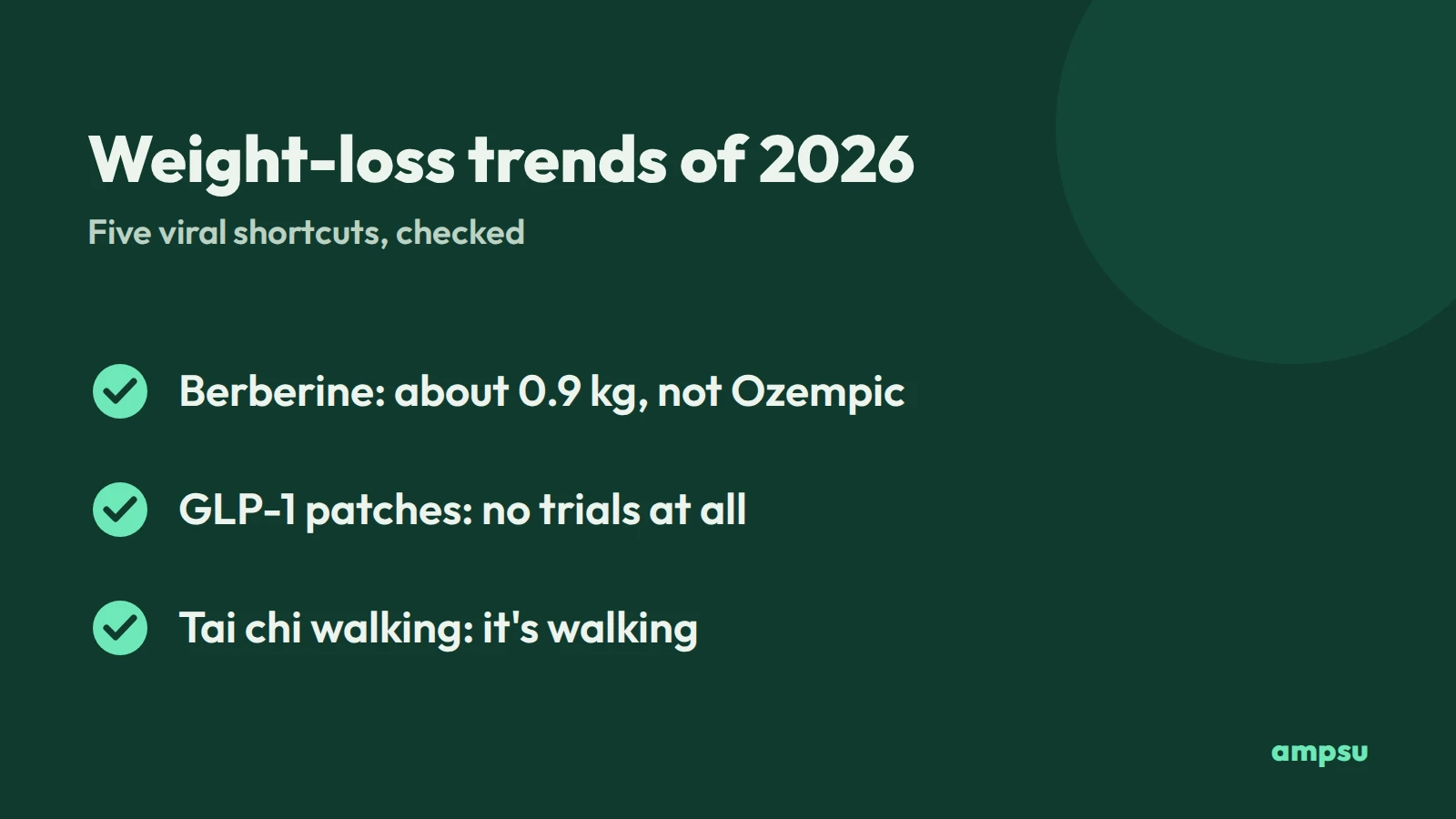
Every year the feed finds a few new shortcuts, and 2026 was busy. Berberine got sold as "nature's Ozempic". People drank gelatin before dinner, bought pills to fix their "cortisol belly", stuck GLP-1 patches on their arms and slowed their walks right down to tai chi pace.
We went through the research behind each one. The short version: one has a small, real effect, one is tiny, one carries a risk that outweighs it, one has no evidence at all, and one is a perfectly nice walk. None of them does what a modest calorie deficit does, but a couple are fine to keep if you like them.
Does berberine work for weight loss?
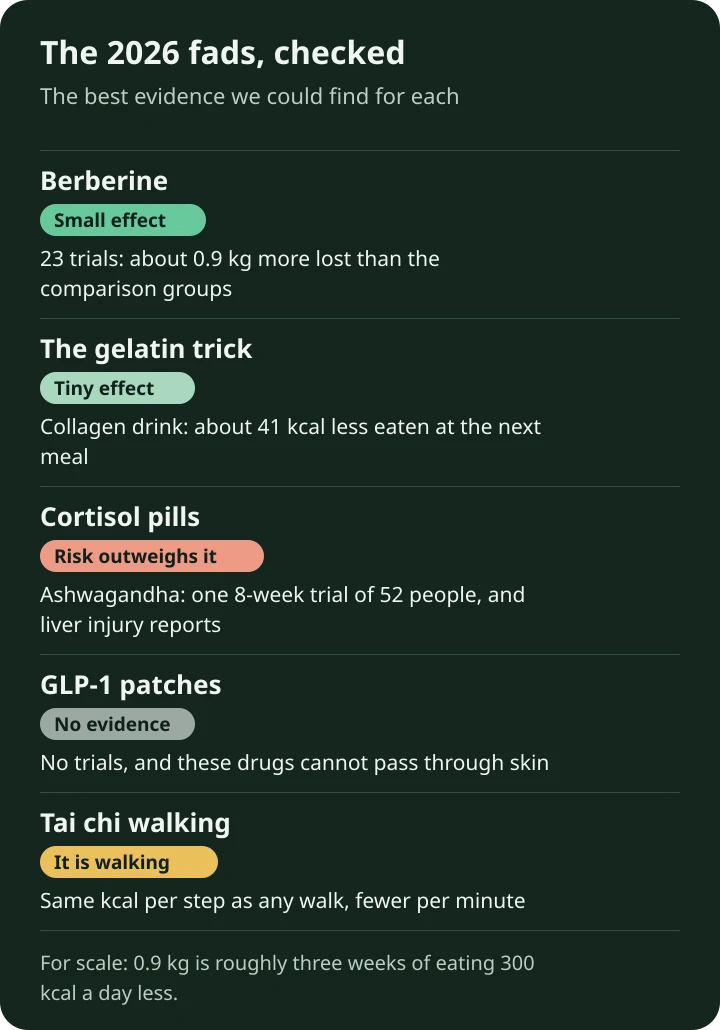
A little. Berberine is a plant compound that has been studied for blood sugar for years, and that's where the Ozempic comparison comes from. A 2026 meta-analysis of 23 trials found that people taking it lost on average 0.88 kg more than the comparison groups. That is a real effect, and a small one. For scale, it's about what three weeks of eating 300 kcal a day less would do.
The authors also flagged problems with the trials themselves, like missing blinding and poorly described products. And Ozempic it isn't: in the main semaglutide trial, people lost about 15% of their body weight. Berberine can also interact with prescription medicines, so ask a pharmacist before adding it if you take any.
Does the gelatin trick work?
The trick is to dissolve unflavoured gelatin in water and drink it before a meal, so you feel full sooner. A sachet of about 7 g has roughly 23 kcal and 6 g of protein, so it costs almost nothing, and protein does tend to fill you up.
The closest test we found is a 2025 trial of collagen peptides, which are made from the same protein. Fifteen women took 15 g a day for a week, and at the test meal they ate about 10% less, around 41 kcal. An older lab study found that diets where gelatin was the only protein left people less hungry than casein, but also short on the protein the body needs, because gelatin lacks some essential amino acids.
So it's harmless and might take the edge off a meal. Forty calories isn't nothing, but a full glass of water or starting with the protein on your plate does much the same.
Do cortisol pills get rid of belly fat?
The "cortisol belly" idea is that stress hormones make you store fat round the middle, so lowering cortisol with a supplement makes it go away. Cortisol does affect where fat goes when the body makes far too much of it, which is a real medical condition. But for most people, belly fat comes from the same place as other fat: eating more than you burn, plus age and hormones like the ones covered in our menopause article.
The pills usually contain ashwagandha. The trial most often quoted gave it to 52 stressed adults for eight weeks, which is far too small and short to say much about weight. Meanwhile liver injury has been reported from ashwagandha, and Denmark has banned it in food supplements. We wouldn't take that risk for a belly fat promise. If stress is wrecking your sleep and eating, that's worth tackling directly, and it may help the scale more than any capsule.
Do GLP-1 patches work?
There are no published trials of them. The name borrows from semaglutide and tirzepatide, but those are prescription medicines, so a patch sold as a supplement can't contain them. They also couldn't get through the skin from a patch: skin keeps out molecules much over 500 daltons, and these drugs weigh several thousand. Whatever is in the patch, it isn't what the name suggests.
Does tai chi walking burn fat?
Tai chi walking is slow, deliberate walking: heel down, roll through the foot, arms loose, attention on the movement. It's pleasant and good for balance. As a fat burner, it's walking.
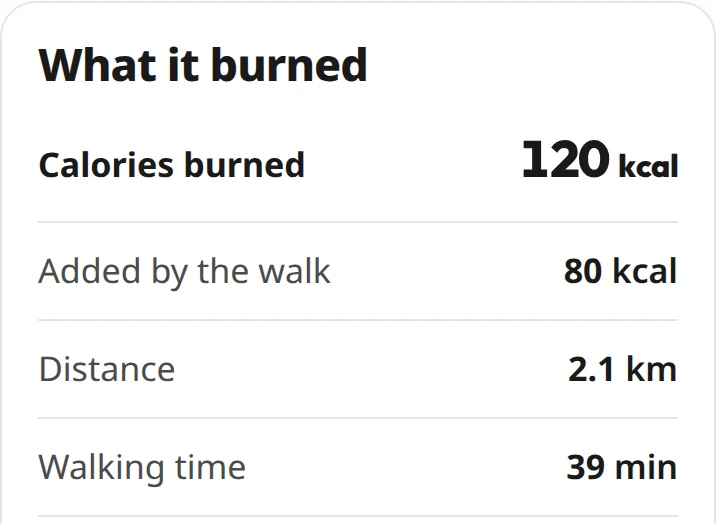
And walking is decent. What matters for calories is mostly how far you go, not how stylishly. In Ampsu's steps calculator, 3,000 slow steps add about 80 kcal for a 75 kg person, and 3,000 brisk ones add about the same. The difference is time: the slow walk takes about 39 minutes and the brisk one about 24. Tai chi walking is slower still, so in half an hour it covers less ground.
If tai chi walking is what gets you out of the door, it counts. If you have the time, a few brisk minutes mixed in will cover more distance. "Japanese walking", three minutes fast and three minutes easy, improved fitness and blood pressure in older adults over five months, though that trial wasn't about weight.
So what does work?
The boring answer is the one with the evidence. A moderate calorie deficit that you can keep up, enough protein to hold on to muscle, and more movement in the day. This explainer on calorie deficits shows how to set one up, and this guide to high-protein foods shows which supermarket products earn their place.
That's also where a trend can do some good. If drinking something warm before dinner or a slow evening walk helps you stick to the plan, keep it. The trick doesn't do the work, but it can make the plan easier to follow.
Your first step
Pick the trend you were most tempted by and ask what it's meant to do for you. If the honest answer is "help me eat a bit less" or "get me moving", log a week and see whether it does.