Plant-based protein sources: which ones give you the most?
Tofu, tempeh, seitan and soya mince give 17 to 23 g of protein per 100 g; beans and lentils 8 or 9. The best plant sources, complete protein and a 100 g day.
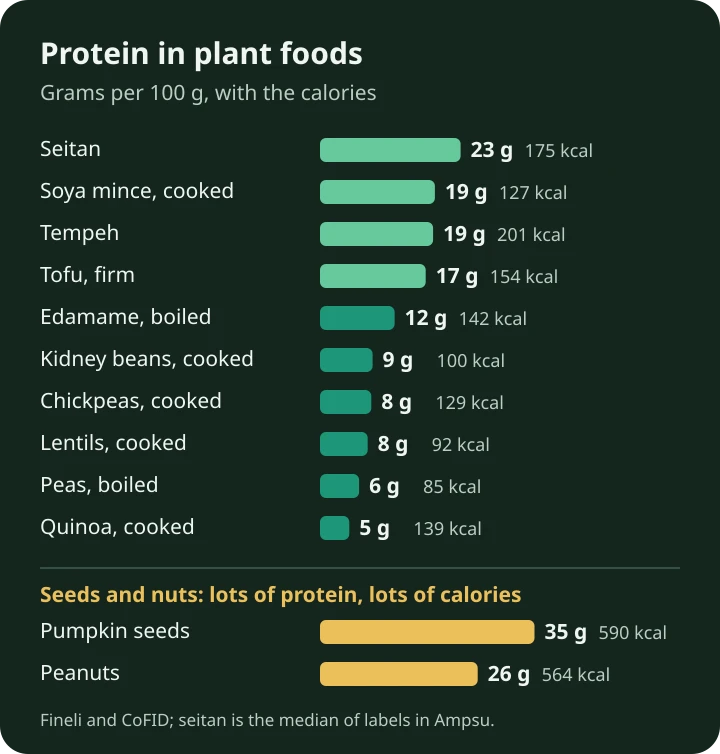
The plant foods with the most protein are the soya ones and seitan: about 17 to 23 g per 100 g for tofu, tempeh, cooked soya mince and seitan, which is in the same league as chicken. Cooked beans, lentils and peas give 5 to 9 g. Seeds and nuts look huge on paper, 25 to 35 g, but they come with five or six times the calories.
So the trick with plant protein isn't finding it. It's knowing which foods carry it cheaply in calories, and how much of them a normal day needs. Here's the list, and what a 100 g day looks like without any meat, fish, eggs or dairy.
What are the best plant-based protein sources?
Values from the Finnish and UK national food composition tables, per 100 g:
- Soya mince, cooked: about 19 g protein for 127 kcal. The dry granules have nearly 50 g, so a small bag goes a long way in a bolognese or chilli.
- Seitan: about 23 g for 175 kcal, going by the median of the seitan labels in Ampsu's catalogue. It's made from wheat gluten, so it's out if you avoid gluten.
- Tempeh: about 19 g for 200 kcal. Fermented whole soya beans, firmer and nuttier than tofu.
- Firm tofu: about 17 g for 154 kcal. Soft or silken tofu has roughly half that.
- Edamame, boiled: about 12 g for 142 kcal.
- Lentils, kidney beans and chickpeas, cooked: 8 to 9 g for 90 to 130 kcal, plus plenty of fibre.
- Peas, boiled: 5 to 7 g for 70 to 85 kcal. Not bad for something you probably already have in the freezer.
- Pumpkin seeds, hemp seeds and peanuts: 25 to 35 g, but 560 to 620 kcal. A handful is a good top-up, not a main source.
- Soya drink: about 3 g per 100 ml, close to cow's milk. Oat drink has about 1 g and almond drink about half that.
Grains help more than people give them credit for. Oats have about 14 g per 100 g dry, so a 60 g bowl of porridge brings 8 g before anything goes on top.
Is plant protein complete?
Protein is built from amino acids, and nine of them have to come from food. Soya has all nine in useful amounts. Most other plant foods are low in one: beans and lentils in methionine, grains in lysine. They cover each other's gaps, which is why beans on toast and rice with dal have worked for centuries.
You don't need to combine them in the same meal. A classic review of plant proteins concluded that a varied plant diet over the day gives adults enough of every amino acid. If you eat a mix of pulses, grains, soya and seeds, the "complete protein" question mostly answers itself.
Can you build muscle on plant protein?
Yes, if you eat enough of it. In a 2021 trial, young men eating about 1.6 g of protein per kg from plants only, with a soya protein shake, gained the same leg muscle and strength over 12 weeks of training as men on a mixed diet with whey. A 2018 meta-analysis found no difference between soya and animal protein supplements for strength or lean mass either.
The catch is volume. Most plant foods carry less protein per bite and more fibre, so hitting a high target takes a bit more planning. Soya foods and seitan make it much easier than beans alone.
How much plant protein do you need?
The same as anyone else: about 0.83 g per kg of body weight as a baseline, and more if you're losing weight, training or over 65. This guide to how much protein you need has the numbers by weight and goal, or the protein calculator works it out for you.
There's a health argument for shifting some protein towards plants, too. A meta-analysis of 31 cohort studies found that people who ate more plant protein had a lower risk of dying from any cause, and from heart disease in particular. It's observational, so it can't separate the beans from the rest of those people's habits, but it points the same way as most nutrition advice.
What does a 100 g plant-protein day look like?
Here's one that gets close without a single shake:
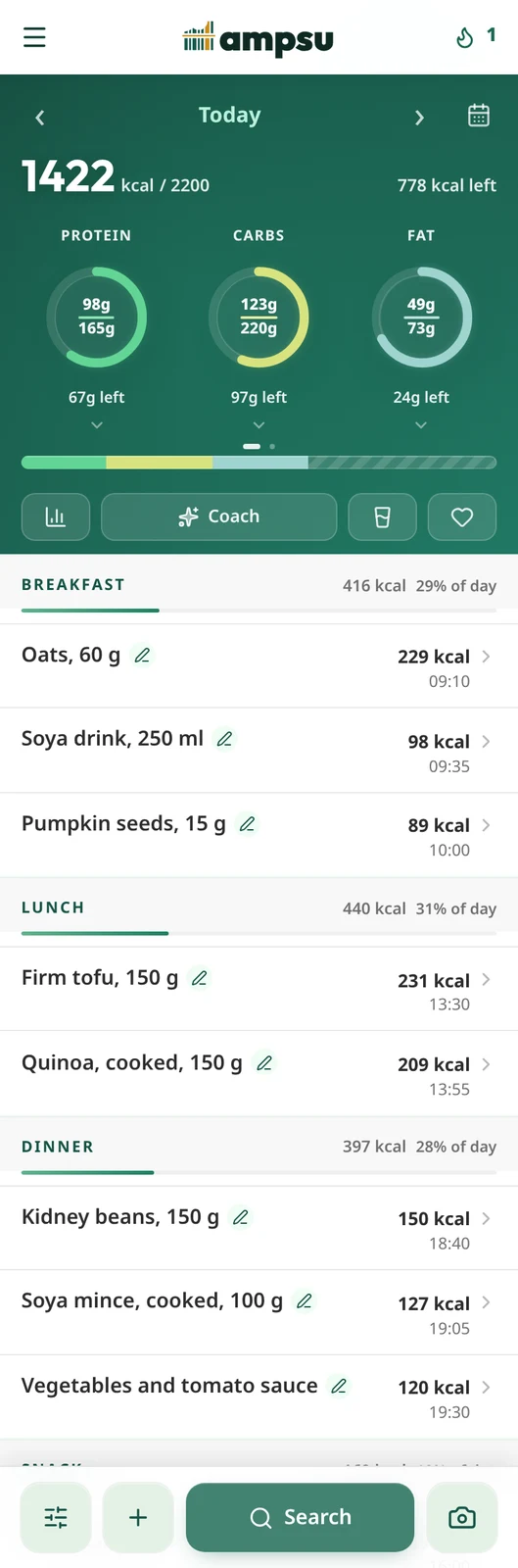
- Breakfast: 60 g of oats cooked in 250 ml of soya drink, with 15 g of pumpkin seeds: about 21 g
- Lunch: 150 g of firm tofu with 150 g of cooked quinoa: about 33 g
- Snack: 30 g of peanuts: about 8 g
- Dinner: chilli with 150 g of kidney beans and 100 g of cooked soya mince: about 32 g
That's about 94 g, and a few more come from the vegetables and sauce. Take the tofu and soya mince out and you're in the 50s, which is the usual story: a plant day built only on beans and grains tends to land well short of a training target.
How to track plant protein in Ampsu
Search for the food and enter the cooked weight. Cooked lentils, firm tofu and soya mince are all in the national food tables Ampsu uses, and packaged tofu or seitan usually comes up by scanning the barcode. The diary shows your protein for each meal, so you can see whether lunch pulled its weight. This comparison of high-protein foods covers more supermarket options, plant and otherwise.
Your first step
Pick one meal this week that usually has beans or lentils as its only protein, and add tofu, tempeh or soya mince to it. It's the easiest 15 to 20 g you'll find.