OMAD (one meal a day): does it work for weight loss?
One meal a day can cause weight loss, mostly because one meal rarely covers a day's calories. What studies found, what a month feels like and who should skip it.
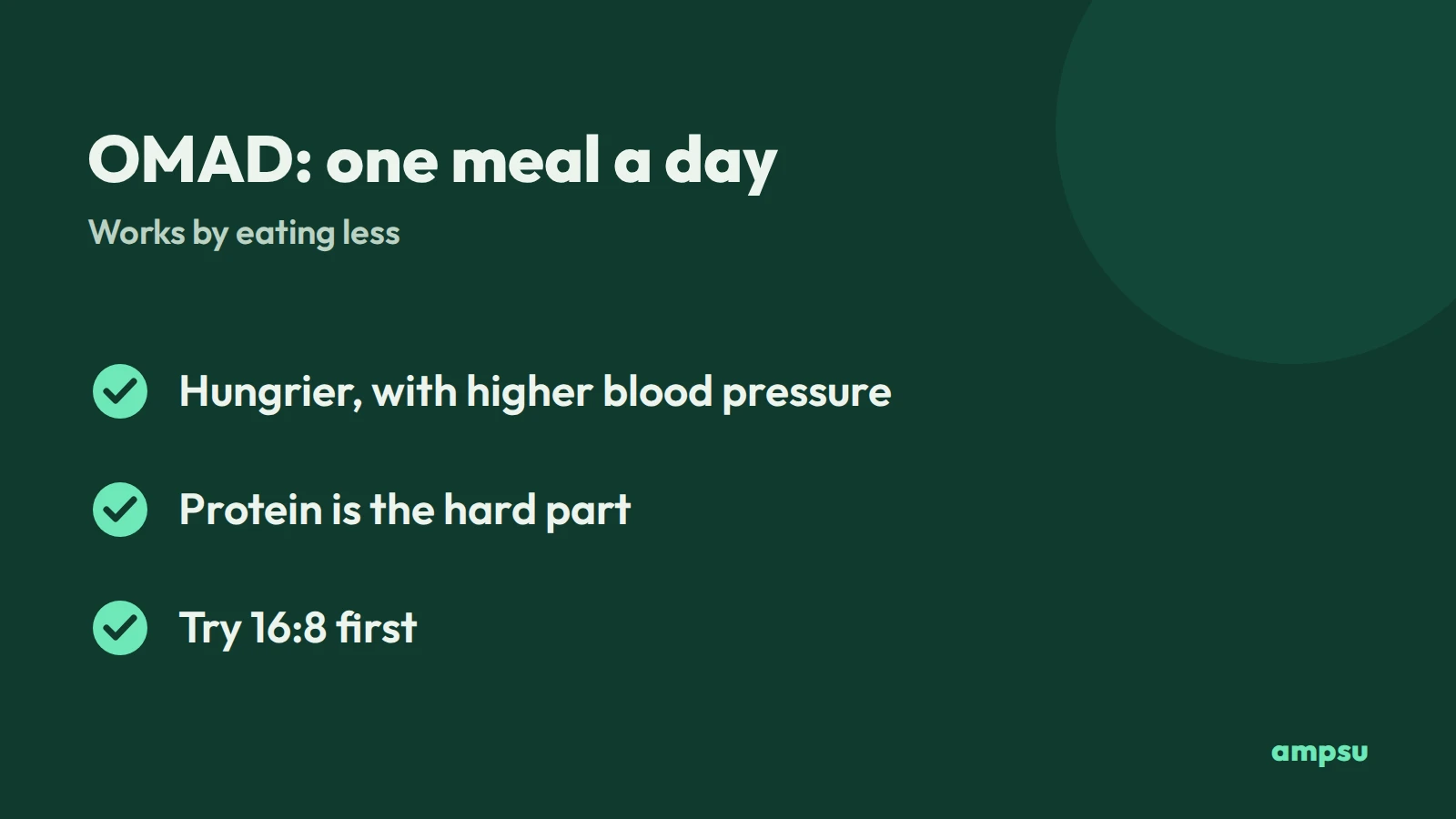
OMAD, or one meal a day, means eating all your food in a single sitting and fasting for the rest of the day. It can make you lose weight, because it's hard to eat a whole day's calories in one meal. But it doesn't burn fat by some special route, and the few controlled studies found real downsides: more hunger, higher blood pressure and cholesterol, and worse blood sugar in the morning.
If you've seen someone on social media eat a single enormous plate and call it a lifestyle, this is what's actually going on, and what a month of it tends to look like.
What is OMAD?
It's the most extreme version of time-restricted eating, sometimes written as 23:1: one hour to eat, 23 hours without food. Water, black coffee and plain tea are fine in between. Most people eat their meal in the evening, so they can eat with family and go to bed full.
Compared with 16:8 fasting, which most people manage by skipping breakfast, OMAD skips lunch too. That's a big difference in practice, especially on a busy working day.
Does OMAD help you lose weight?
Often, yes, and for a simple reason. Eating 2,000 kcal or more in one sitting is hard work for most people, so one meal usually ends up well below what you burn. That's a calorie deficit, and a deficit is what makes you lose weight. There's no study showing that one meal burns more fat than the same calories spread over three.
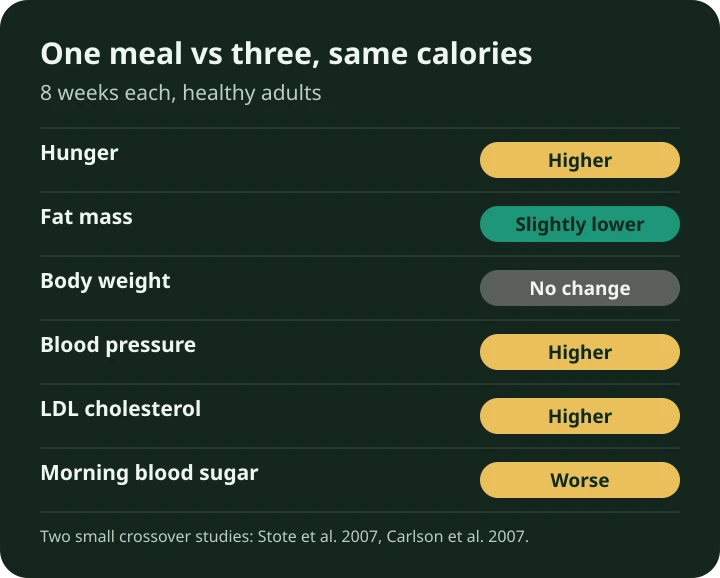
The cleanest test is a small crossover study where healthy, normal-weight adults ate exactly the calories they needed, either in three meals or in one evening meal, for 8 weeks each. Their weight stayed within 2 kg because calories were matched, and on one meal a day they lost a little fat mass. They were also significantly hungrier, their blood pressure went up, and so did their total and LDL cholesterol.
What happens to your body on OMAD?
In a companion study with the same design, people on one meal a day had higher blood sugar in the morning and handled a sugary drink worse than on three meals, with a slower insulin response. The effect went away once they returned to normal eating. For a healthy person that may not mean much over a month. For someone with diabetes or prediabetes, it's a reason to talk to a doctor first.
The rest of what people report is less mysterious. The first week is usually the hardest, with hunger peaking in the afternoon. Some people feel sharp and light in the morning; others feel cold, irritable and very interested in the office biscuits. The scale often drops fast early on, partly because there's simply less food and water in your gut. That part comes back the day you eat normally again.
Can you get enough protein in one meal?
Your body can use it. The old idea that only about 30 g of protein per meal "counts" doesn't hold up: a 2023 study found that 100 g of protein in one go kept muscle building going for longer than 25 g did. The problem is practical. A protein target of 120 g means something like a large chicken breast, a tub of yoghurt and a few eggs in the same sitting, alongside everything else you want to eat. Many people on OMAD end up short, and in a deficit that costs muscle.
If you try it, build the meal around protein first. The protein calculator gives you a daily target to aim for.
Who should skip OMAD
- Anyone taking medication that lowers blood sugar, including insulin.
- Anyone pregnant or breastfeeding.
- Anyone with a history of eating disorders. A single daily meal can feed a binge and restrict cycle.
- People who train hard, especially twice a day. Fuelling and recovering on one meal is tough.
How to track OMAD in Ampsu
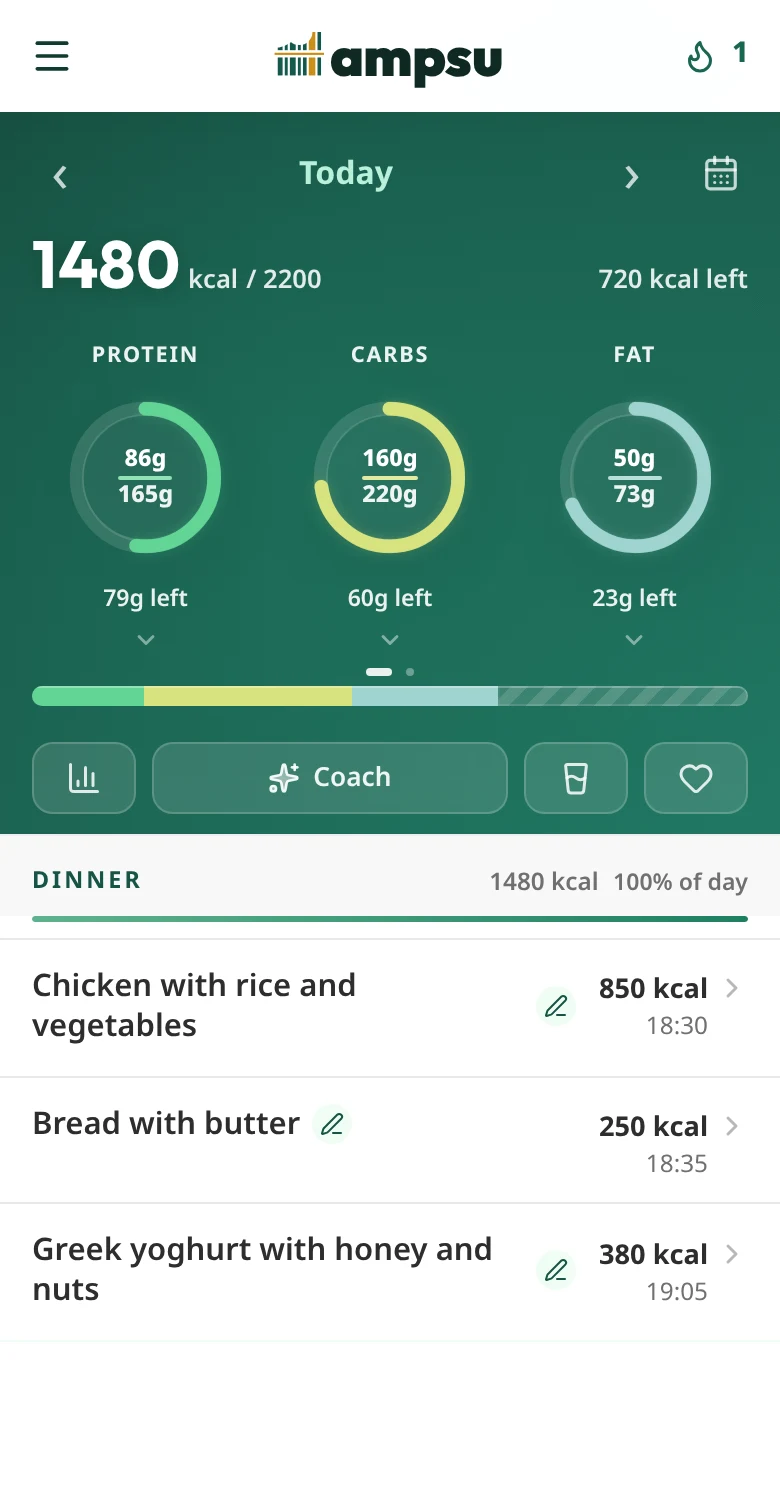
Log the meal as the separate things on your plate rather than one big guess, so the calories and protein are right. The diary shows the time you ate, and the rings show at a glance whether one meal got you anywhere near your protein goal. Over a few weeks, Ampsu learns your real daily burn from your weigh-ins, so you'll know whether OMAD is giving you a deficit or just a very long afternoon.
Your first step
Don't jump straight to one meal. Try 16:8 for two weeks, then a couple of two-meal days a week. If that feels easy and your protein still adds up, a few OMAD days a week is a reasonable experiment. If you're miserable, three meals with fewer calories works just as well.