Intermittent fasting 16:8: does it work for weight loss?
16:8 fasting works about as well as eating less any other way. What the trials found, why the window helps some people, the downsides and how to try it.
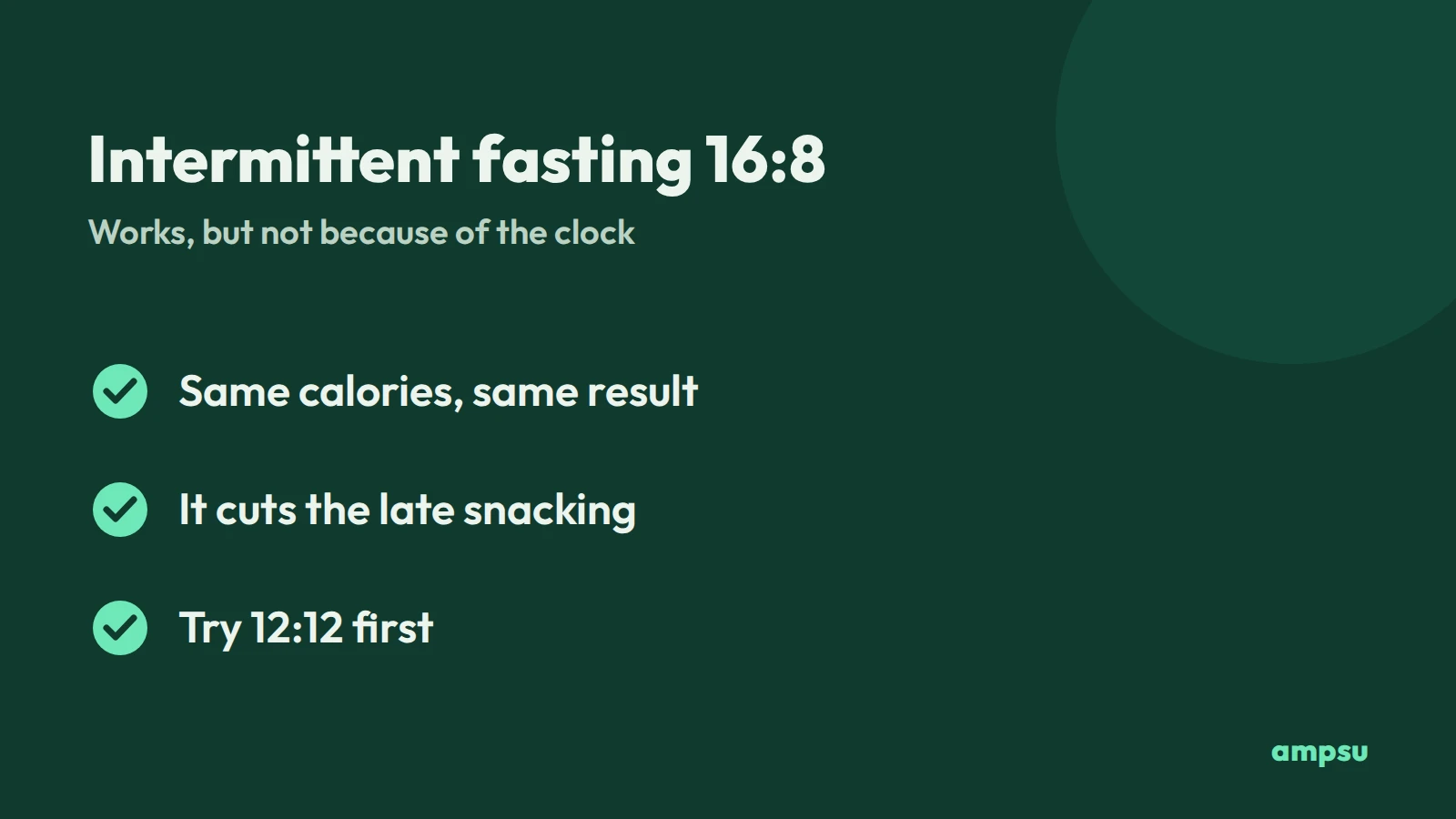
Intermittent fasting 16:8 means eating all your food within 8 hours and fasting for the other 16, for example from noon to 8 pm. It helps some people lose weight, but not because of the clock. In trials where both groups ate the same calories, the 16:8 group didn't lose meaningfully more. It works when a shorter window makes it easier to eat less, mostly by cutting the late-night snacking.
That's not a knock on it. If skipping breakfast is easy for you and makes your day simpler, 16:8 is a perfectly good way to run a deficit. Just know which part is doing the work.
What is intermittent fasting 16:8?
It's the most popular form of time-restricted eating. You pick an 8-hour window, say 12:00 to 20:00, and eat only inside it. Outside the window you stick to water, black coffee or plain tea. Most people do it by skipping breakfast, because sleeping through 8 of the 16 hours is the easiest fast there is.
Other versions exist. 14:10 is gentler, 18:6 is stricter, and alternate-day fasting and 5:2 work on whole days instead of hours. The idea is the same: eat less often, and hopefully less overall.
Does 16:8 help you lose weight?
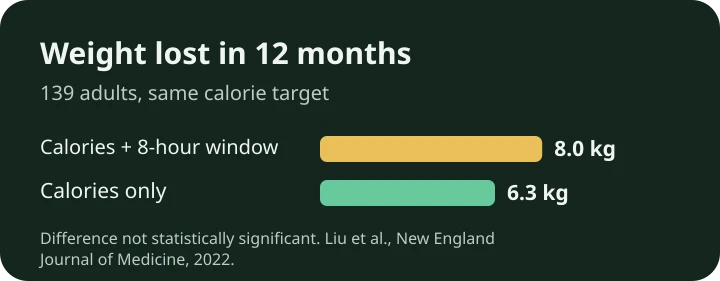
Yes, about as well as eating less in any other way. The best test of whether the timing itself matters is a 12-month trial with 139 adults with obesity published in 2022. Everyone had the same calorie target, and half also ate only between 8 am and 4 pm. After a year, the time-restricted group had lost 8.0 kg and the other group 6.3 kg, and the difference wasn't statistically meaningful. Waist, body fat and blood markers followed the same pattern.
Without a calorie target, the results look thinner. In a 12-week trial of 16:8 with 116 adults, the fasting group lost about 0.9 kg and the group eating three normal meals lost about 0.7 kg, again no real difference. And a 2025 review of 99 trials and about 6,600 adults found that every form of intermittent fasting and plain calorie cutting led to weight loss, with time-restricted eating no better than eating less every day.
Why it works for some people
Because it's a rule that's easy to follow. "Nothing after 8 pm" takes out the evening crisps, the second dinner and the biscuits with the late film, which for many people is where the extra calories live. Fewer eating occasions usually means fewer calories, as long as the meals inside the window don't quietly grow to make up for it.
That last part is the catch. It's perfectly possible to eat 3,000 kcal between noon and eight. The clock doesn't count calories. You still do, or your app does.
Downsides worth knowing
- Muscle. In the 12-week trial, the fasting group lost a bit more lean mass. Eating enough protein inside the window and doing some strength training helps.
- Hunger and mood. The first week or two can be grumpy. If it never gets easier, it may not be your method.
- Training. A hard morning workout on an empty stomach feels worse for some people. Move the window or the workout.
- Not for everyone. If you're pregnant, have diabetes and take medication that lowers blood sugar, or have a history of eating disorders, talk to a doctor before you try fasting.
How to try 16:8 with Ampsu
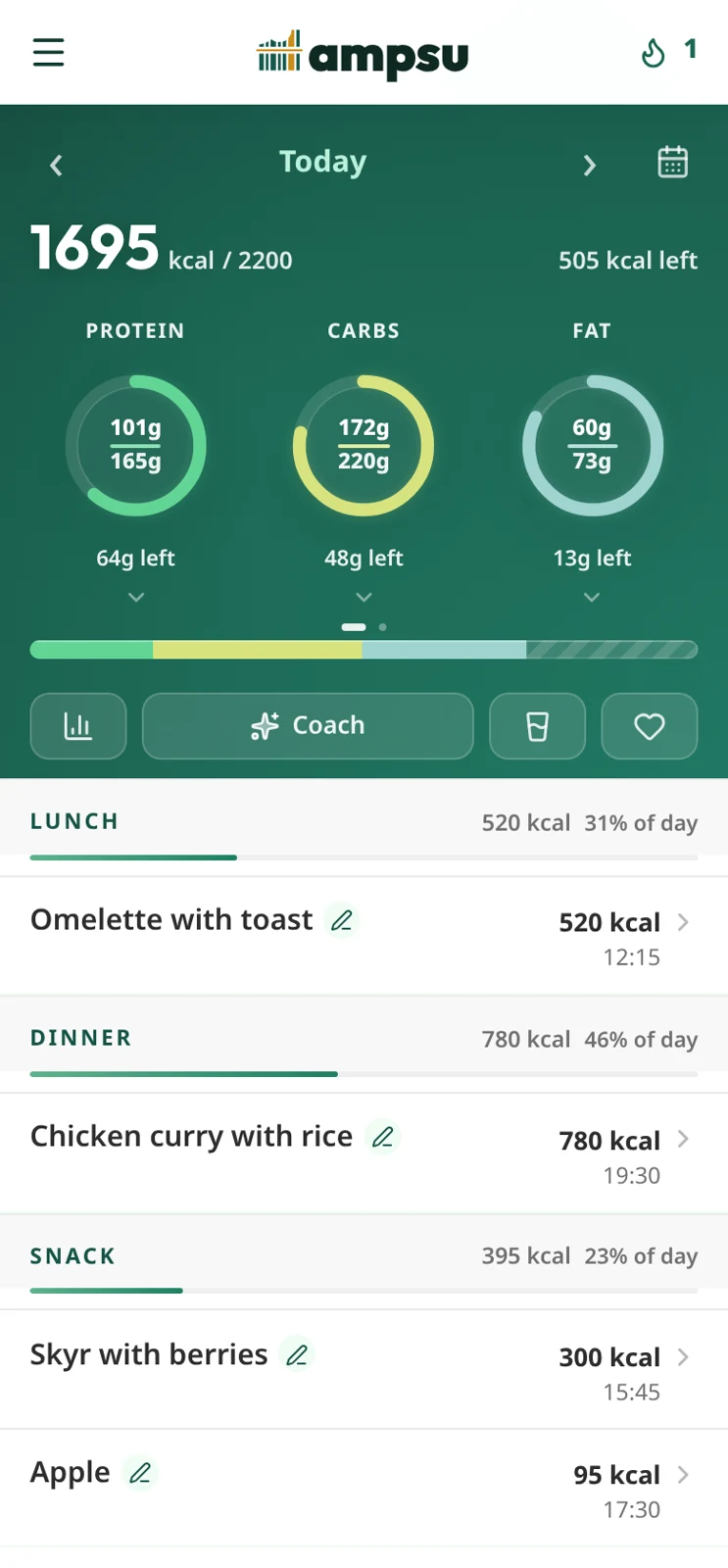
Ampsu doesn't have a fasting timer, and you don't really need one: a clock does that job. What it does is the part that decides your results. Log what you eat inside the window and the diary shows the time of each entry, so you can see whether you're keeping to it. Your calorie target and protein goal stay the same whatever the window, and if you're not sure what those should be, the calorie deficit calculator gives you a starting point. Over a few weeks, your weigh-ins will tell you whether the window is helping you eat less or just later.
If the scale isn't moving even with the window in place, this guide to why you're not losing weight in a deficit covers the usual reasons.
Your first step
Try a 12:12 window for a week, for example 8 am to 8 pm, which mostly just means no late snacks. If that feels easy, narrow it to 14:10 and then 16:8. If it feels miserable, eat breakfast and cut calories some other way. Both work.