How to lose belly fat (and why crunches won't do it)
You can't spot-reduce belly fat with ab exercises. What actually shrinks it, why visceral fat matters most and how to measure your waist instead of the scale.
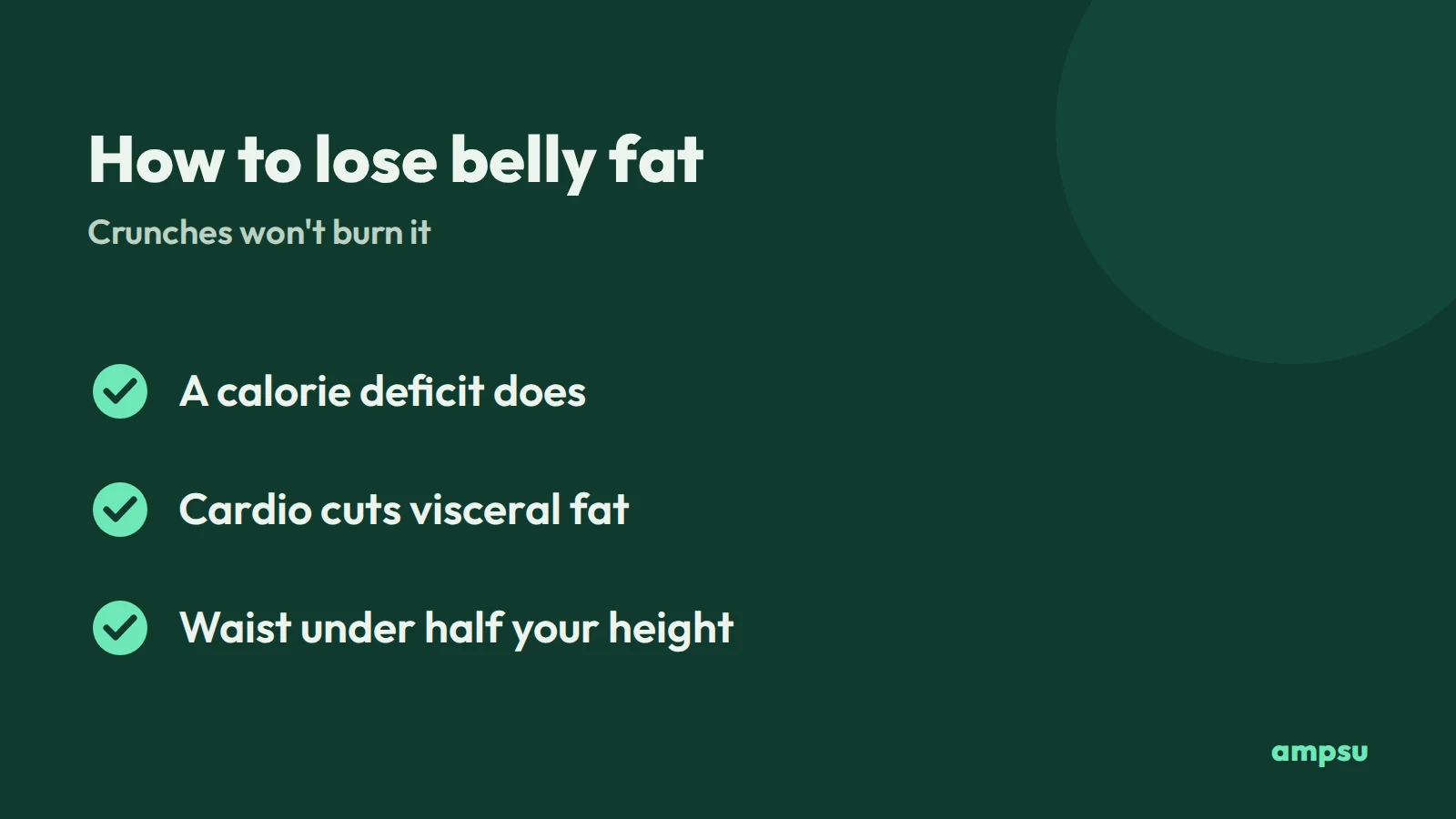
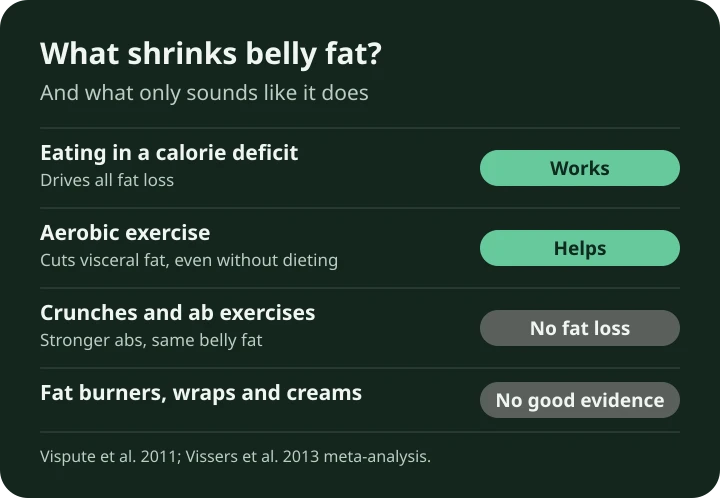
You can lose belly fat, but you can't choose to lose it from your belly first. Crunches strengthen the muscles underneath without burning the fat on top, and studies of ab-only training found no change in belly fat. What works is losing fat overall, with a calorie deficit, and regular cardio is especially good at shrinking the deep visceral fat around your organs. Your waist measurement tells you how it's going far better than the scale.
The good news is that the fat that matters most for your health tends to respond well once you start. The bad news is that no gadget, cream or six-minute ab routine will speed that up.
Can you target belly fat with ab exercises?
No. In a 6-week trial, people did seven abdominal exercises five days a week while eating the same as before. Their abs got stronger and they could do more curl-ups, but belly fat, waist size and skinfolds didn't change. Muscles don't preferentially burn the fat lying over them; your body draws on fat stores from all over.
Ab work is still worth doing for strength and posture. It just won't carve a waistline on its own.
Why belly fat is the last to go (sometimes)
Where you store fat and where you lose it first depends largely on genes, sex and age. Many men store fat around the middle; many women store more on the hips and thighs until menopause, when the belly tends to take over. That's why two people on the same diet can look very different after a month. Keep going and the belly does shrink, just not on your preferred schedule.
Visceral fat: the belly fat that matters most
There are two kinds. Subcutaneous fat sits under the skin, the part you can pinch. Visceral fat sits deeper, around your liver and other organs, and it's linked to type 2 diabetes, high blood pressure and heart disease. The encouraging part is that visceral fat responds well. In a meta-analysis of exercise studies, aerobic training at moderate or high intensity reduced visceral fat even without dieting, with measurable changes within about 12 weeks.
How to measure belly fat at home
Use a tape measure, not the scale. Measure around your waist halfway between your lowest rib and the top of your hip bone, after breathing out normally. Then divide it by your height. A waist-to-height ratio under 0.5, meaning a waist less than half your height, is the healthy target in UK health guidance. A meta-analysis covering more than 300,000 adults found this ratio picked out people with diabetes, high blood pressure and heart risk better than waist size or BMI alone.
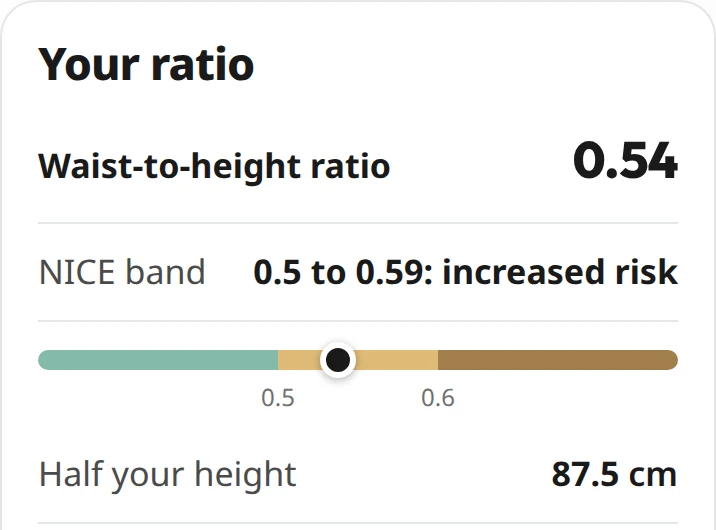
Try it yourself in the waist-to-height calculator, and measure again every couple of weeks.
How to lose belly fat
- Eat in a moderate calorie deficit. This is the part that does most of the work.
- Do cardio you'll stick with, around 150 minutes a week or more. Brisk walking counts.
- Lift weights two or three times a week to keep muscle while you lose fat.
- Keep protein up, which helps with hunger as well as muscle.
- Go easy on alcohol. This look at alcohol calories explains why the beer belly has a point.
- Sleep enough. Short sleep makes everything above harder.
How to track belly fat in Ampsu
Ampsu keeps your calories and protein in view each day and learns your real burn from your weigh-ins, so your deficit is based on you rather than a guess. Pair that with a tape measure: when the weight trend flattens but your waist keeps shrinking, you're losing fat and possibly gaining muscle, which this guide to body recomposition covers.
Your first step
Measure your waist tonight and write it down with the date. Then forget about it for two weeks while you focus on your calories and a daily walk. The tape will tell you more than any mirror selfie.