Body recomposition: lose fat and build muscle at once
You can lose fat and gain muscle at the same time, especially as a beginner. What the studies show, how much protein you need and why the scale barely moves.
Body recomposition means losing fat and gaining muscle at the same time. It's real, and it's most likely if you're new to lifting, coming back after a break, or carrying a fair bit of body fat. The recipe is simple: lift weights regularly, eat plenty of protein, and keep calories at or a little below maintenance. The catch is that the scale barely moves while it happens, which is exactly when most people give up.
So this is partly a guide and partly a pep talk for anyone whose weight hasn't budged in a month while their jeans got looser.
Can you lose fat and build muscle at the same time?
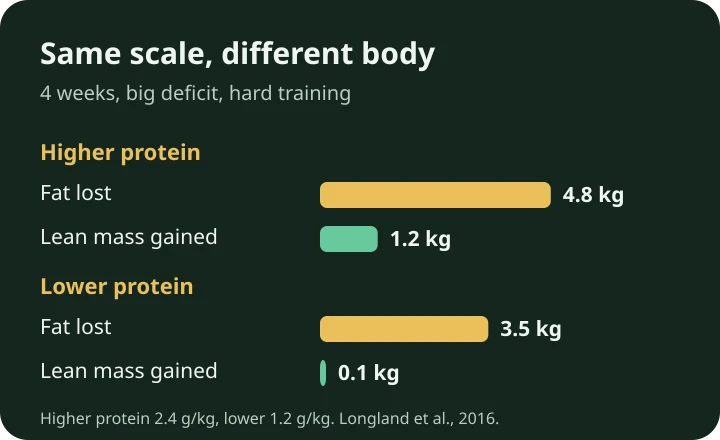
Yes. The clearest example is a 4-week study in young men who ate about 40% less than they needed and trained six days a week with weights and intervals. The group on higher protein, 2.4 g per kg of body weight, gained 1.2 kg of lean mass and lost 4.8 kg of fat. The group on 1.2 g per kg gained almost no lean mass and lost 3.5 kg of fat.
Look at what the scale did, though. The high-protein group was down about 3.6 kg, the other group about 3.4. Nearly the same number on the scale, very different bodies underneath. That's recomposition in a nutshell, and it's why weight alone is a poor judge of how it's going.
Who can recomp, and how fast?
Beginners do best, because muscle grows fastest in the first months of training. People returning to the gym after a break regain muscle quickly too, and people with more body fat have more stored energy to fuel the process. If you're already lean and have lifted for years, gains during a deficit are slow, and a dedicated building phase followed by a short cut usually works better.
Expect weeks to months, not days. A kilo or two of muscle in the first few months is a good result for most beginners, with fat coming off at the same time.
How much protein do you need for body recomposition?
Around 1.6 g per kg of body weight a day is a solid target. A 2018 analysis of 49 studies found that extra protein helped muscle and strength gains from lifting, with no further benefit above about 1.6 g per kg on average. If you're in a large deficit, going higher, towards 2 g per kg, is reasonable and is what the 4-week study used to good effect.
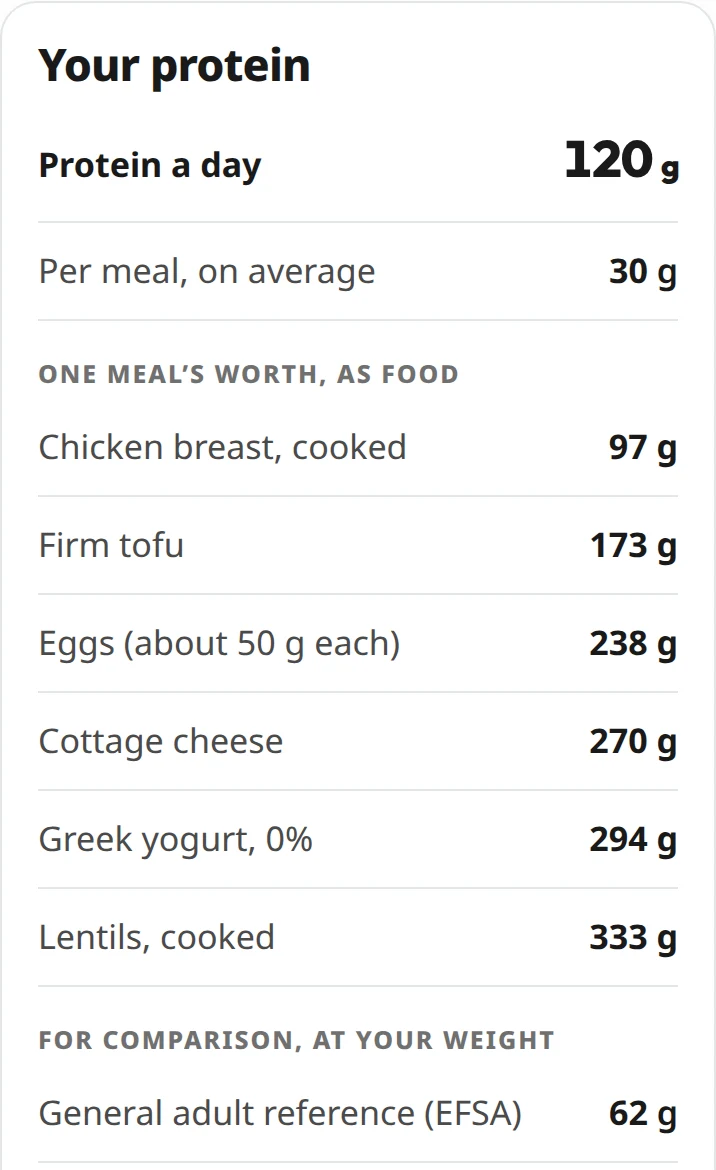
For more on targets and where to get it, this guide to how much protein you need a day goes into detail.
How to recomp
- Lift at least three times a week, and try to add a little weight or a rep over time. Without progress in the gym, there's nothing telling your body to build.
- Eat at maintenance or in a small deficit, around 10 to 20% under. A crash diet makes building muscle much harder.
- Hit your protein most days, spread over three or four meals.
- Sleep. Seven hours or more makes training, recovery and appetite all easier.
- Give it at least eight to twelve weeks before you judge it.
How to tell if it's working
Don't rely on the scale alone. Measure your waist once a week, take a photo in the same light once a month, and note what you lift. If your waist is shrinking and your lifts are going up while your weight stays flat, it's working. The waist-to-height calculator turns that tape measure into a number worth tracking.
How to track recomposition in Ampsu
Set your protein goal and Ampsu shows it as its own ring through the day, so you can see at dinner whether you need a yoghurt or a second chicken breast. Weigh in a few times a week and the trend line smooths out the daily water swings that make a recomp look like nothing is happening. Ampsu learns your real daily burn from those weigh-ins, which helps you keep calories near maintenance rather than guessing.
Your first step
Work out your protein target and hit it for the next seven days. Add three lifting sessions that week. Then measure your waist, write it down, and forget about the scale until next month.