Alcohol calories: beer, wine and spirits compared
A half-litre of beer has about 215 kcal, a glass of wine 130 and a shot 90. Calories per drink, why alcohol slows weight loss and how to drink without undoing your week.
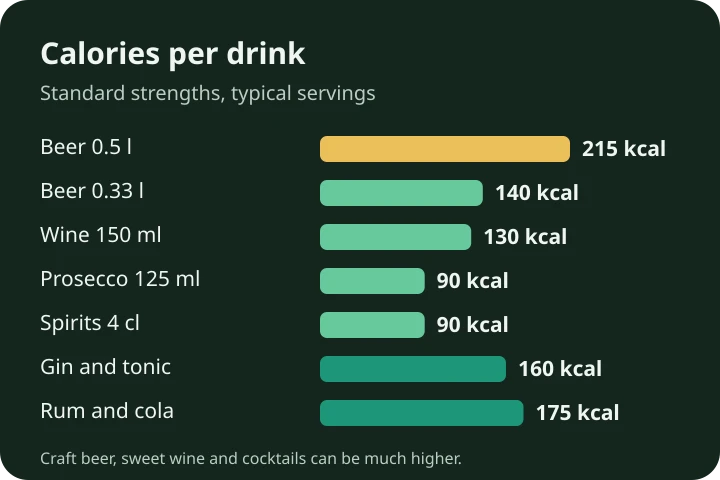
A half-litre of regular beer has about 215 kcal, a 150 ml glass of wine about 130, and a 4 cl shot of spirits about 90 before you add a mixer. Alcohol itself carries 7 kcal per gram, almost as much as fat, and none of it fills you up. Three pints on a Friday is roughly a meal's worth of calories, and that's before the late-night food that tends to follow.
This isn't a "stop drinking" article. It's the numbers, so a night out fits into your week instead of quietly cancelling it.
How many calories are in alcohol?
Pure alcohol has 7 kcal per gram, compared with 4 for protein and carbohydrate and 9 for fat. Most of the calories in a drink come from the alcohol, so stronger drinks have more, and sugar in sweet wines, ciders and mixers adds the rest.
| Drink | Serving | kcal |
|---|---|---|
| Beer, regular (about 5%) | 0.5 l | 215 |
| Beer, regular (about 5%) | 0.33 l | 140 |
| Red or white wine (about 12%) | 150 ml | 130 |
| Prosecco or sparkling wine | 125 ml | 90 |
| Spirits (40%) | 4 cl | 90 |
| Gin and tonic | 4 cl + 200 ml tonic | 160 |
| Rum and cola | 4 cl + 200 ml cola | 175 |
Diet mixers save 70 to 80 kcal a glass. Light and alcohol-free beers usually have a third to a half of the calories of the regular kind.
Why alcohol makes weight loss harder
Three things stack up. First, drink calories come on top of food, not instead of it. A review of the research on alcohol and appetite concluded that energy from alcohol adds to what you eat, and that alcohol before or with a meal tends to make people eat more. It's called the aperitif effect, and anyone who has ordered chips at midnight has met it.
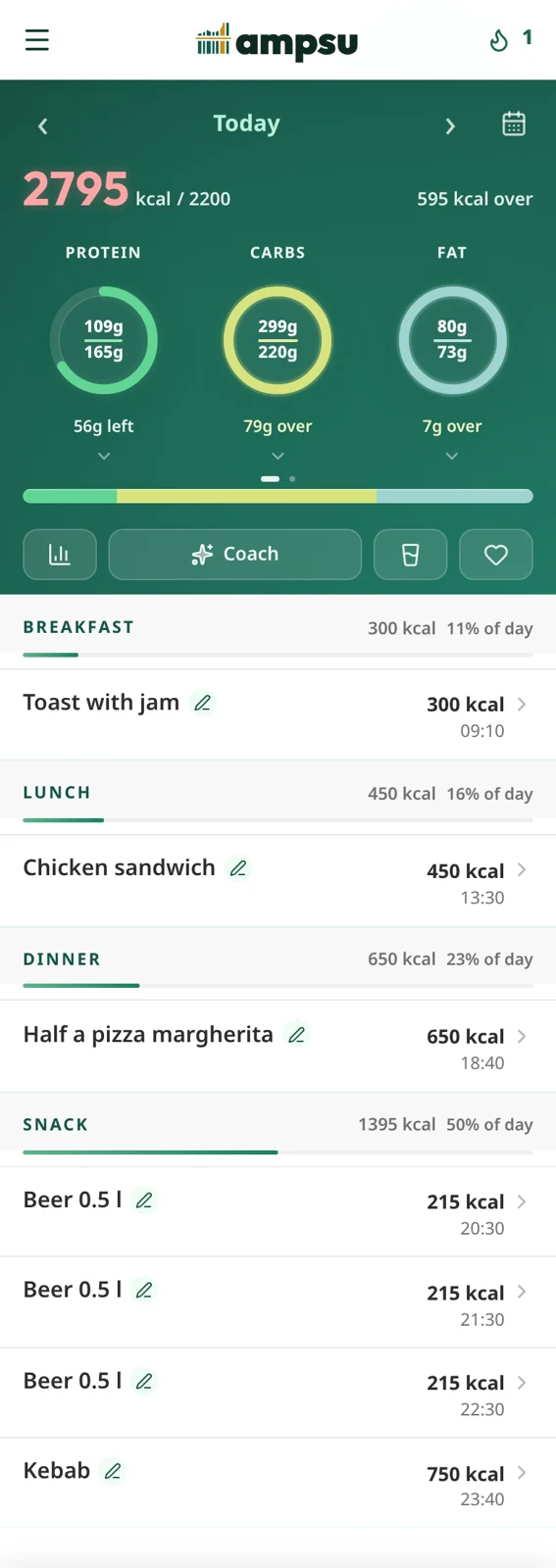
Second, your body deals with alcohol first. In a calorimetry study, adding alcohol to men's diets cut the amount of fat they burned over the day by about a third. That doesn't make alcohol magically fattening, because calories still count, but it does mean the fat from the kebab gets stored while the beer gets burned.
Third, the next day. Poor sleep and a hangover tend to mean more snacking, less moving and a skipped workout. None of that shows up on a drink's label.
How to drink and still lose weight
- Decide the number before you go out. Two drinks is a plan; "a few" is a forecast.
- Alternate with water or something alcohol-free. You drink less and feel better tomorrow.
- Switch to diet mixers, light beer or wine spritzers.
- Eat a proper meal with protein beforehand, so the midnight snack has less pull.
- Budget for it. Eating 150 to 200 kcal less on a few weekdays makes room for Friday without touching your weekly deficit.
And if the night does end at the kebab shop, this look at kebab calories has the numbers, and this guide to cheat meals covers how much one big night really costs.
How to track alcohol in Ampsu
Log drinks like any food: search for the drink or scan the bottle, and set the amount. It's tempting to skip them, but they're often the reason a week that "should" have been a deficit wasn't. Ampsu learns your real burn from your weigh-ins, so honest logging gives you honest numbers, and a Saturday weigh-in that's up a kilo after a salty night out won't send your targets off course.
Your first step
Next time you're out, log each drink as you order it. Not to stop you, just so you know. Most people are surprised by the total, and that alone tends to change the third order into a water.