How many calories in an egg? Boiled, fried and by size
A medium egg has about 70 kcal boiled and 100 fried. Calories and protein for small to XL eggs, yolk vs white, and how to log eggs accurately.
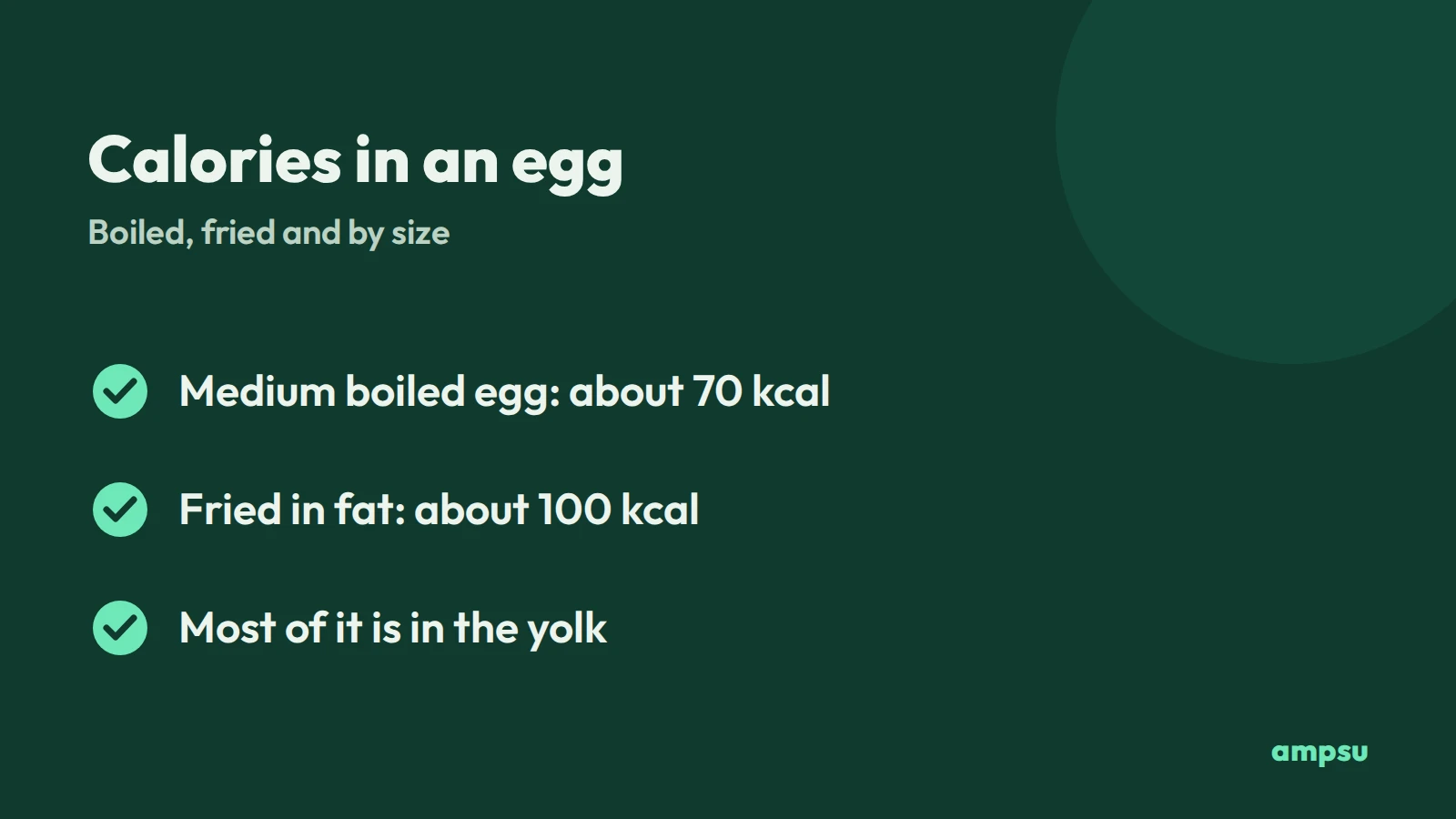
A medium egg has about 70 kcal when it's boiled or poached, and about 100 kcal fried in oil or butter. A small one is closer to 60 and an extra large one about 90. Each brings 5 to 8 g of protein.
That's the quick answer. The rest of this page is for when you want the number for your eggs and your pan, because "one egg" covers a surprisingly wide range.
How many calories are in a boiled egg?
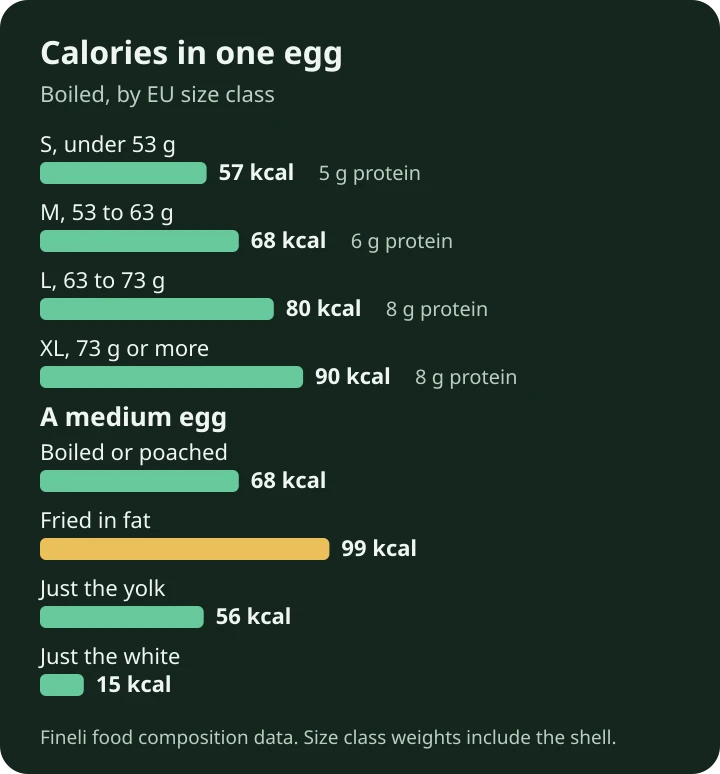
Boiled egg has about 134 kcal per 100 g in the Fineli food composition data, with 12.6 g of protein and 9.2 g of fat. Boiling doesn't add anything, so soft, hard, poached and raw all come out the same.
What changes is the size of the egg. In the EU, eggs are sold in four weight classes, and the weight on the box includes the shell, which is roughly 12% of it. So the edible part of a medium egg weighs about 51 g.
- Small (S), under 53 g: about 57 kcal and 5 g protein
- Medium (M), 53 to 63 g: about 68 kcal and 6 g protein
- Large (L), 63 to 73 g: about 80 kcal and 8 g protein
- Extra large (XL), 73 g or more: about 90 kcal and 8 g protein
If the box doesn't say, medium is the safest guess. Two eggs on toast is usually around 140 kcal for the eggs.
How many calories are in a fried egg?
It depends almost entirely on the fat. Fineli's fried egg, cooked in fat, has 194 kcal per 100 g, which puts a medium one at about 100 kcal. Fried in a dry non-stick pan, it stays close to a boiled egg.
A teaspoon of oil is about 40 kcal and a teaspoon of butter about 35, and not all of it ends up in the egg. If you baste the egg or pour the pan fat over toast, count the whole spoonful. Scrambled eggs and omelettes work the same way: the eggs are the eggs, and the butter, milk and cheese are extra.
Yolk or white: where are the calories?
Mostly in the yolk. In a medium egg, the yolk has about 56 kcal and the white about 15. The white is almost pure protein and water, so egg whites are a common way to add protein for very few calories. The yolk carries the fat, and most of the vitamins A and D, choline and iron, so you lose those if you only eat the whites.
Are eggs good for weight loss?
They can help, mostly because they're filling for what they cost. In a small study of 30 women, an egg breakfast left people fuller than a bagel breakfast with the same calories, and they ate about 160 kcal less at lunch. One study is not a law, but it fits what we know about protein and fullness.
Eggs are also easy to count, because they come in fairly standard sizes. That makes them one of the few foods where a quick log is reliably close to right. This guide to high-protein foods compares them with other everyday sources.
How many eggs a day is OK?
For most people, an egg a day is fine. A large analysis of three cohort studies and an updated meta-analysis found that up to one egg a day was not linked to a higher risk of heart disease or stroke. If your doctor has given you specific advice about cholesterol or diabetes, follow that.
How to log an egg in Ampsu
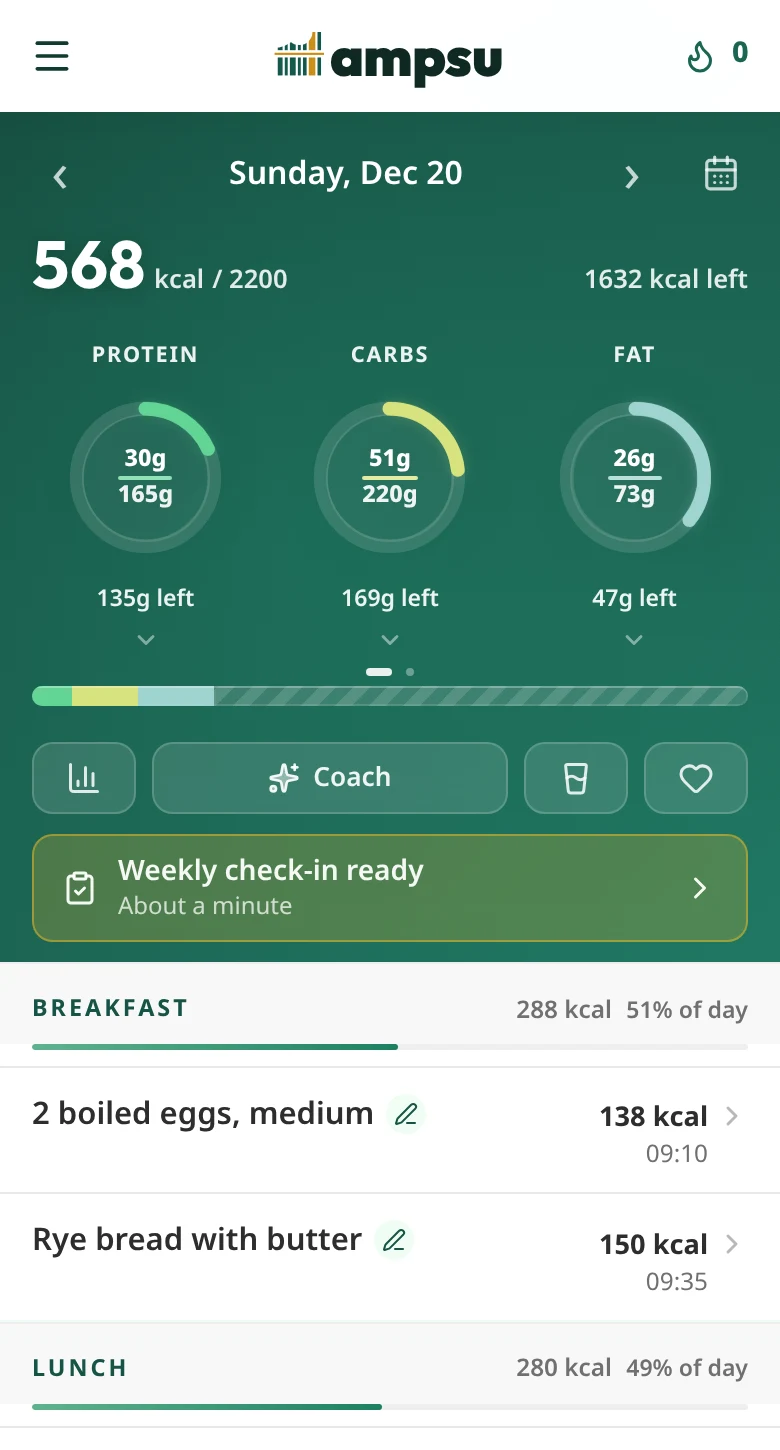
Search for "boiled egg" or "fried egg" and enter the weight: about 51 g for a medium egg without its shell, or 102 g for two. If you fried in fat, pick the fried version or add the oil or butter as its own entry, so the pan doesn't vanish from the day.
If you're working out how many calories you need in the first place, the TDEE calculator gives you a starting number, and this explainer on calorie deficits shows what to do with it.
Your first step
Check the size on your egg box tonight. Next time you log eggs, you'll know whether you're counting 57 or 90.