How many calories in a banana? Small, medium and large
A medium banana has about 105 kcal, a small one 90 and a large one 120 to 135. Calories by size, peel weight, ripeness, banana chips and how to log it.
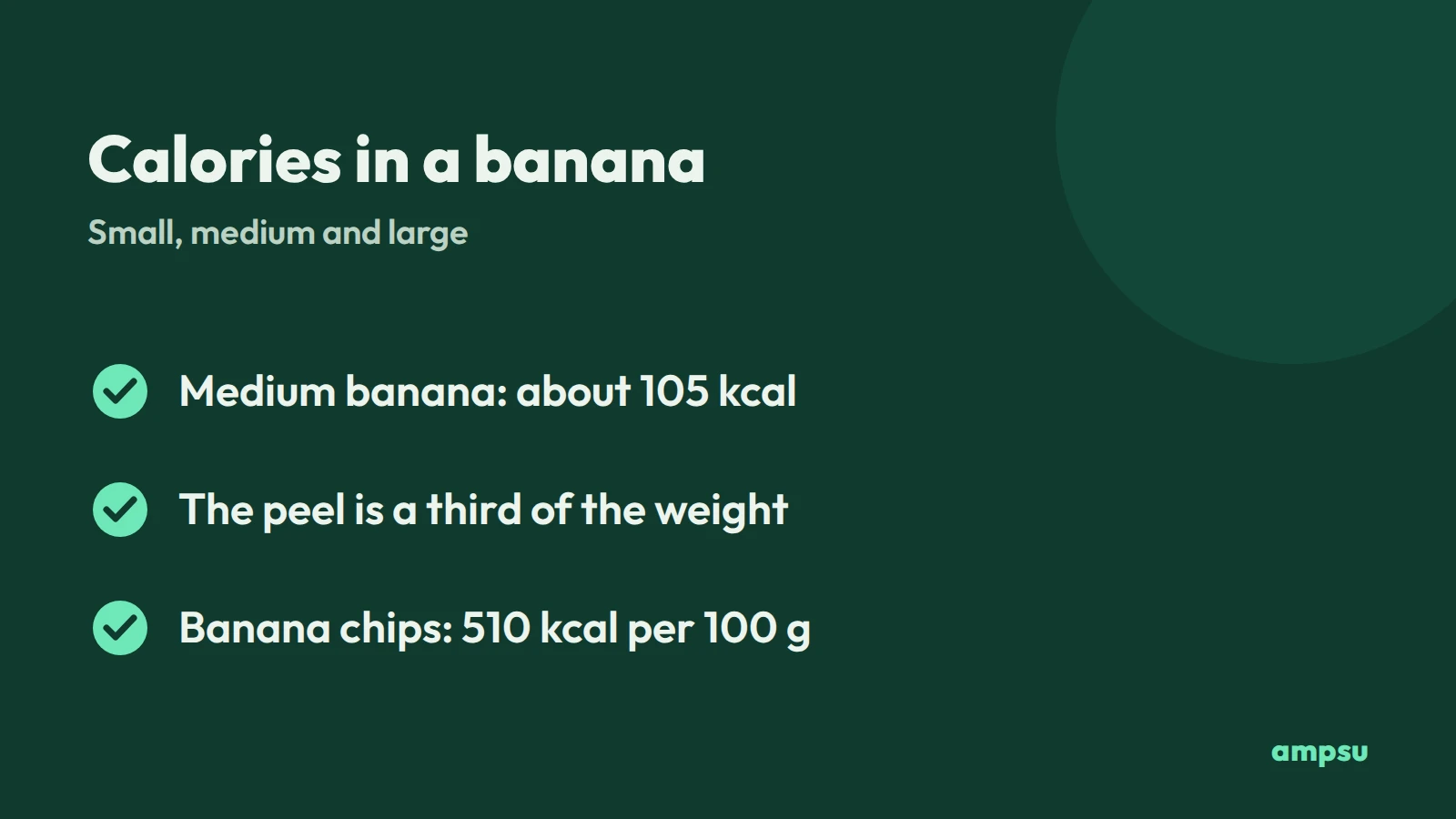
A medium banana has about 105 kcal. A small one is closer to 90 and a large one about 120 to 135. Each brings roughly 1 g of protein, 3 g of fibre and a good dose of potassium.
That's the quick answer. The rest of this page is for when you want the number for the banana in your hand: how much the peel weighs, whether ripeness changes anything, and what happens once a banana becomes chips or bread.
How many calories are in a banana?
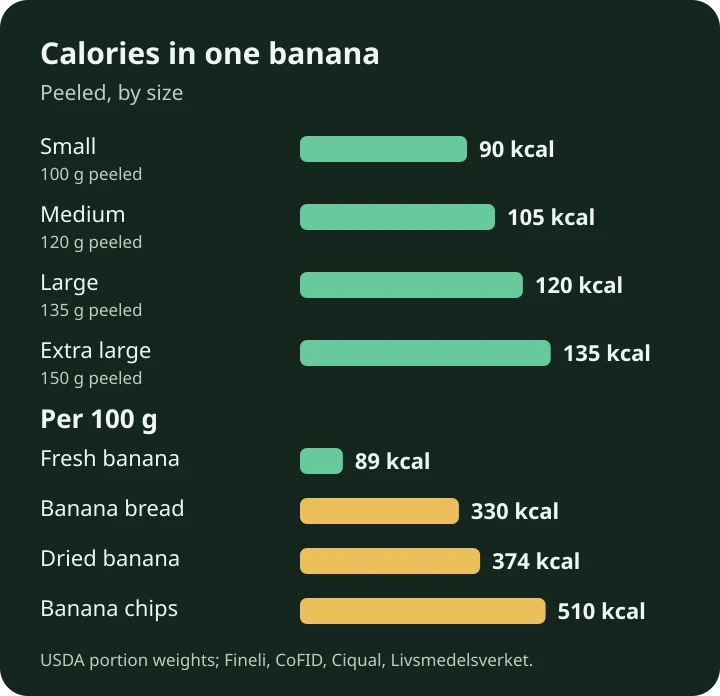
Peeled banana has between 81 and 95 kcal per 100 g in the European national food tables: 81 in the UK's CoFID, 87 in Finland's Fineli, 91 in France's Ciqual and 95 in Sweden's Livsmedelsverket. The US database lands in the middle at 89, so that's a fair figure to use.
Bananas don't come in official size classes like eggs, but the USDA's food database gives typical peeled weights:
- Small, about 100 g peeled: about 90 kcal
- Medium, about 120 g peeled: about 105 kcal
- Large, about 135 g peeled: about 120 kcal
- Extra large, about 150 g peeled: about 135 kcal
A medium banana also has about 27 g of carbohydrate, of which around 14 g is sugar, plus 3 g of fibre and just over 1 g of protein. Fat is close to zero.
How much does a banana weigh with the peel?
The peel is roughly a third of the weight. CoFID and Fineli both list banana with and without skin, and the edible part comes out at 63 to 68%. So a medium banana that weighs about 180 g on the scale is around 120 g of fruit.
That matters when you weigh one for logging. If you weigh it whole, pick an entry for banana with skin, or take a third off. Weighing the peeled fruit and using the plain banana entry is the simpler route.
Does a riper banana have more calories?
Not really. As a banana ripens, its starch turns into sugar, which is why a green banana tastes chalky and a spotty one tastes sweet. A review of ripening in fruit describes the starch falling and the sugar rising as banana, apple and tomato ripen. The total energy stays in the same range: the USDA's newer analyses put ripe bananas at 97 kcal per 100 g and overripe ones at 85.
The bigger difference is how quickly the carbohydrate hits. Green bananas carry more resistant starch, which digests slowly or not at all, so they're more filling and gentler on blood sugar. Ripe ones are quicker energy. Neither is a wrong choice; it depends what you want the banana for.
Banana chips, dried banana and banana bread
Once a banana is dried, the water goes and the calories concentrate. Per 100 g:
- Fresh banana: about 89 kcal
- Dried banana: about 374 kcal, in Livsmedelsverket's table
- Banana chips: about 510 kcal, because they're usually fried in coconut or palm oil
- Banana bread: about 330 kcal in CoFID's homemade version, so a 90 g slice is around 300
A handful of banana chips, about 30 g, is roughly 150 kcal, the same as one and a half fresh bananas and a lot less filling.
Are bananas good for weight loss?
They're a perfectly good snack while losing weight: about 105 kcal, easy to carry, and with some fibre to slow things down. No single food makes you gain or lose weight by itself; it's the total across the day that counts. If a banana replaces a biscuit or a pastry, that's a win. If it's an extra on top of everything else, it's an extra 105.
They're also good fuel. In a 2012 study of trained cyclists, eating bananas during a 75 km time trial worked as well as a sports drink with the same amount of carbohydrate. And a medium banana has about 400 mg of potassium, a bit over a tenth of the 3,500 mg a day EFSA recommends for adults.
How to log a banana in Ampsu
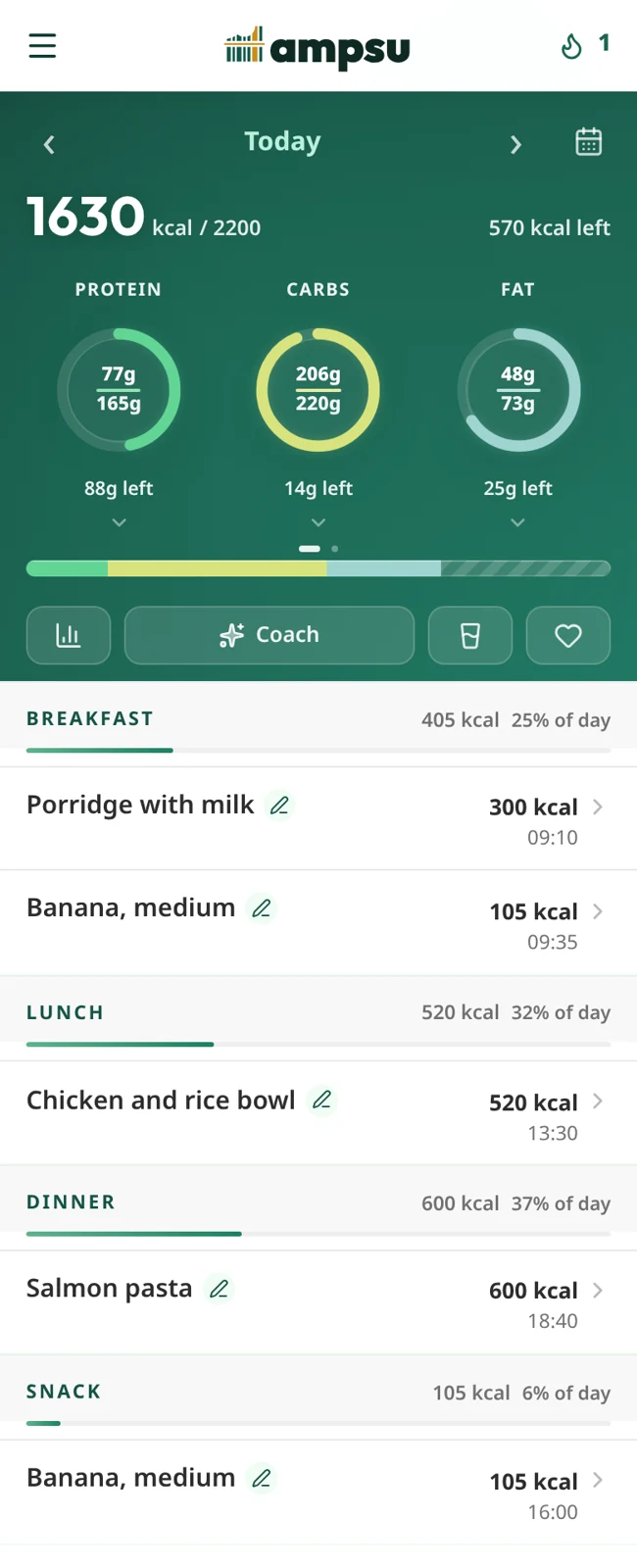
Search for "banana" and enter the peeled weight, or pick the medium serving if you didn't weigh it. A banana is one of the few foods where a quick estimate is reliably close, since a small and a large one are only about 30 kcal apart.
For other everyday foods, this page on calories in an egg works the same way, and this explainer on calorie deficits shows how a snack fits into a daily target.
Your first step
Weigh your next banana once, with and without the peel. After that you'll know your usual size by eye, and logging it takes two seconds.