Cheat meals and refeeds: do they ruin your diet?
A cheat meal barely dents a week's deficit; a cheat day can erase most of it. The maths, what refeed and diet-break studies found, and how to fit a big meal in.
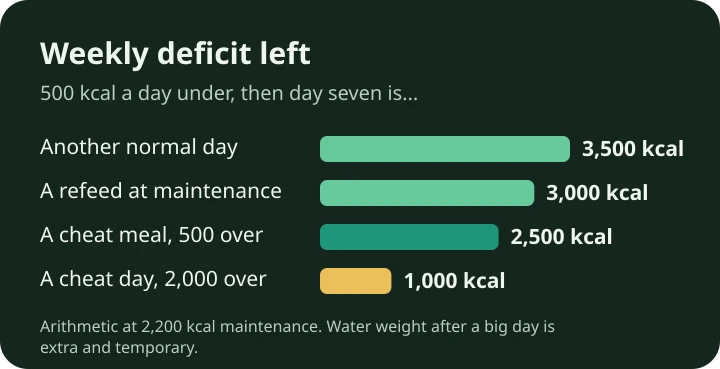
A cheat meal won't ruin your diet, but a cheat day can quietly undo most of a week. If you eat 500 kcal under your needs six days a week, one day that's 2,000 kcal over leaves you with a third of the deficit you worked for. A planned refeed at maintenance is different: studies of diet breaks found people lost about the same fat, or more, while getting a rest from dieting. The difference is the number, not the name.
Nobody needs a lecture about pizza. This is about doing the maths so a fun evening stays a fun evening, not a mystery plateau.
Do cheat meals ruin weight loss?
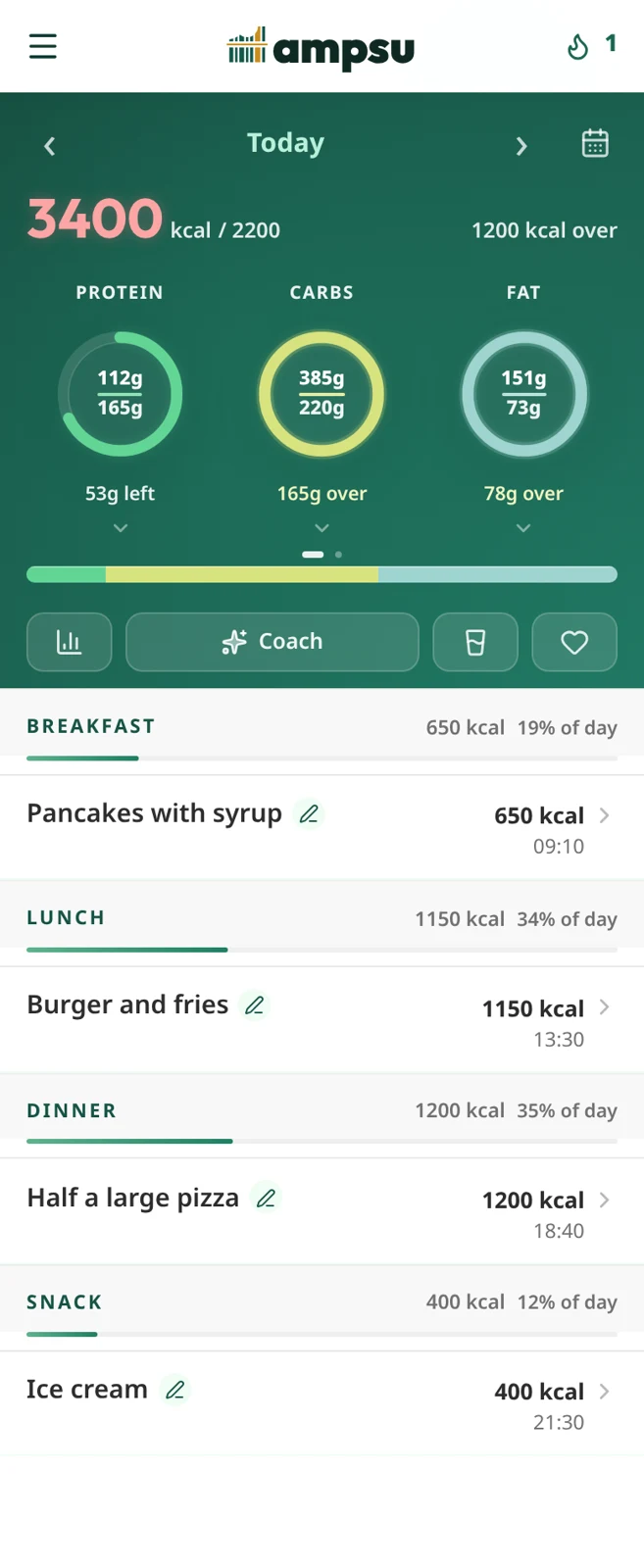
One meal rarely does. A burger and fries with a drink might be 1,000 to 1,500 kcal, which in a week with a steady deficit takes a bite out of your progress without wiping it. The trouble starts when a cheat meal becomes a cheat day, and a cheat day becomes Friday to Sunday. Weekend calories add up fast, because restaurant food, drinks and snacks are all dense and none of them come with a label.
There's a second reason the scale looks bad on Monday. A salty, carb-heavy day makes your body hold extra water, so you can be a kilo or two up the next morning without having gained that much fat. It usually settles within a few days. Don't let one weigh-in talk you into a crash diet.
What's the difference between a cheat meal and a refeed?
A cheat meal is whatever you fancy, in whatever amount. A refeed is planned: you eat around your maintenance calories for a day or two, usually by adding carbohydrate, and then go back to your deficit. A diet break is the same idea stretched to a week or two.
The research on planned breaks is surprisingly friendly. In a trial with men with obesity, alternating two weeks of dieting with two weeks at maintenance led to more weight and fat loss than dieting continuously for the same 16 weeks of actual dieting, though it took longer on the calendar. In a 7-week study of people who lift, two higher-carb days each week gave the same fat loss as dieting every day, with less loss of lean mass. And in a study of a 1-week diet break, athletes' fat mass didn't change during the break even though they ate at maintenance.
How to fit a cheat meal into a diet
- Plan it. A meal you've budgeted for is part of the diet, not a break from it.
- Bank a little. Eating 150 to 200 kcal less on the other days makes room for a bigger Saturday without touching your weekly deficit.
- Make it a meal, not a day. Enjoy the pizza; skip the "might as well" pastries the next morning.
- Log it anyway. Not to feel guilty, but because a rough number now beats a confused scale later.
- Go back to normal at the next meal. Not tomorrow, not Monday.
How Ampsu handles a big day
Log the meal like any other, even if the numbers are a guess, and Ampsu shows it in the day's total without any fuss. Because it learns your real daily burn from weigh-ins over weeks, one big day doesn't send your targets haywire, and a salty Monday weigh-in doesn't either. If you want a rough idea of the deficit you're working with in the first place, the calorie deficit calculator gives you one. And if a weekend kebab is your thing, this look at kebab calories has the numbers.
Your first step
Next time you plan a big meal, log it in advance with a rough estimate and see how much of your week it uses. If it's more than you'd like, trim 150 kcal from the days before. Then go and enjoy it.