Zone 2 cardio: is the fat-burning zone real?
Zone 2 burns a bigger share of fat, but not more fat overall than harder cardio. What zone 2 is, how to find your heart rate, zone 2 vs HIIT and how much to do.
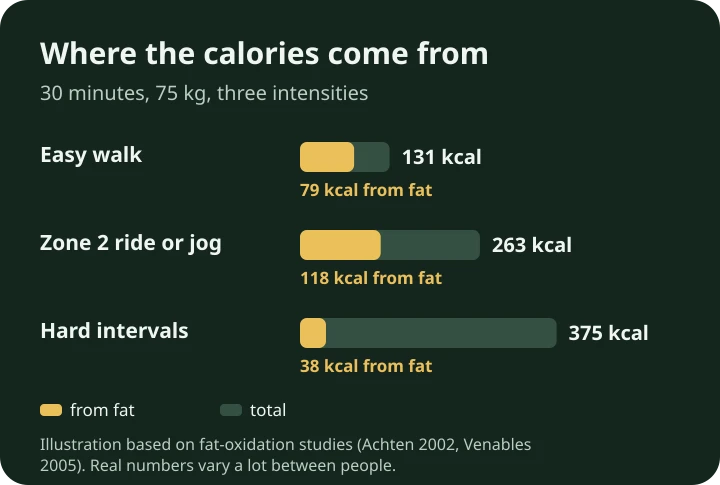
Zone 2 is easy, steady cardio: roughly 60 to 70% of your maximum heart rate, a pace where you can still talk in full sentences. At that intensity a bigger share of your energy comes from fat, which is where the "fat-burning zone" idea comes from. But for losing body fat, what counts is how many calories you burn in total, and harder sessions burn more per minute. Zone 2 doesn't melt fat faster. It's just easy enough to do a lot of.
That's not a knock on it. A workout you can repeat five times a week without dreading it is a very good workout. It's only the little "fat burn" sticker on the cardio machine that oversells it.
What is zone 2 cardio?
Heart-rate zones split your effort into bands, usually five. Zone 2 is the second-easiest: harder than a stroll, easier than a "tempo" run. The simplest check is the talk test. If you can talk but would rather not sing, you're about right. If you can only manage a few words at a time, you've drifted into zone 3 or above.
To put a number on it, estimate your maximum heart rate first. A large analysis of maximum heart rate found that 208 minus 0.7 times your age fits most healthy adults better than the old "220 minus age". For a 40-year-old that's about 180 beats a minute, so zone 2 sits around 108 to 126. It's an estimate: your real maximum can be 10 or more beats away.
Does zone 2 burn more fat?
As a share of your energy, yes. Per hour of your life, not really. In a classic study of fat burning during exercise, the fastest fat use came at about 64% of maximal oxygen uptake, which is roughly zone 2, and fat's contribution became negligible above about 89%. A large study of healthy, everyday adults found the peak at around half a gram of fat a minute, and it varied a lot from person to person.
Half a gram a minute is about 30 g of fat in an hour, which sounds like a lot until you remember that what decides your body fat over weeks is the overall calorie balance. Over a whole day your body tends to balance its fuel use: burn more carbohydrate in a hard session and it leans more on fat afterwards. The fuel mix during the workout matters much less than it sounds.
Zone 2 or HIIT for fat loss?
Roughly a draw, so pick the one you'll keep doing. In a 2017 meta-analysis, high-intensity intervals and steady moderate cardio reduced body fat and waist size by similar amounts, with intervals taking about 40% less time. A 2019 meta-analysis found the same for body fat percentage, with a small edge for intervals in kilograms of fat lost.
The trade-off is simple. Intervals save time but feel awful in a way that's hard to do every day. Zone 2 takes longer but you can stack lots of it, it's gentle on the joints, and it builds the aerobic base that makes everything else easier. Plenty of people do both: mostly easy, a little hard.
How much zone 2 do you need?
For health, the WHO's general advice of 150 to 300 minutes of moderate activity a week is a good target, and zone 2 counts towards it. For weight loss, cardio is a supporting act. Three 45-minute sessions a week at 75 kg is around 1,000 to 1,200 kcal, which is useful, but one generous takeaway can undo a session. What you eat still does most of the work. This comparison of incline walking, running, rucking and cycling has calories for different kinds of cardio.
How to track zone 2 in Ampsu
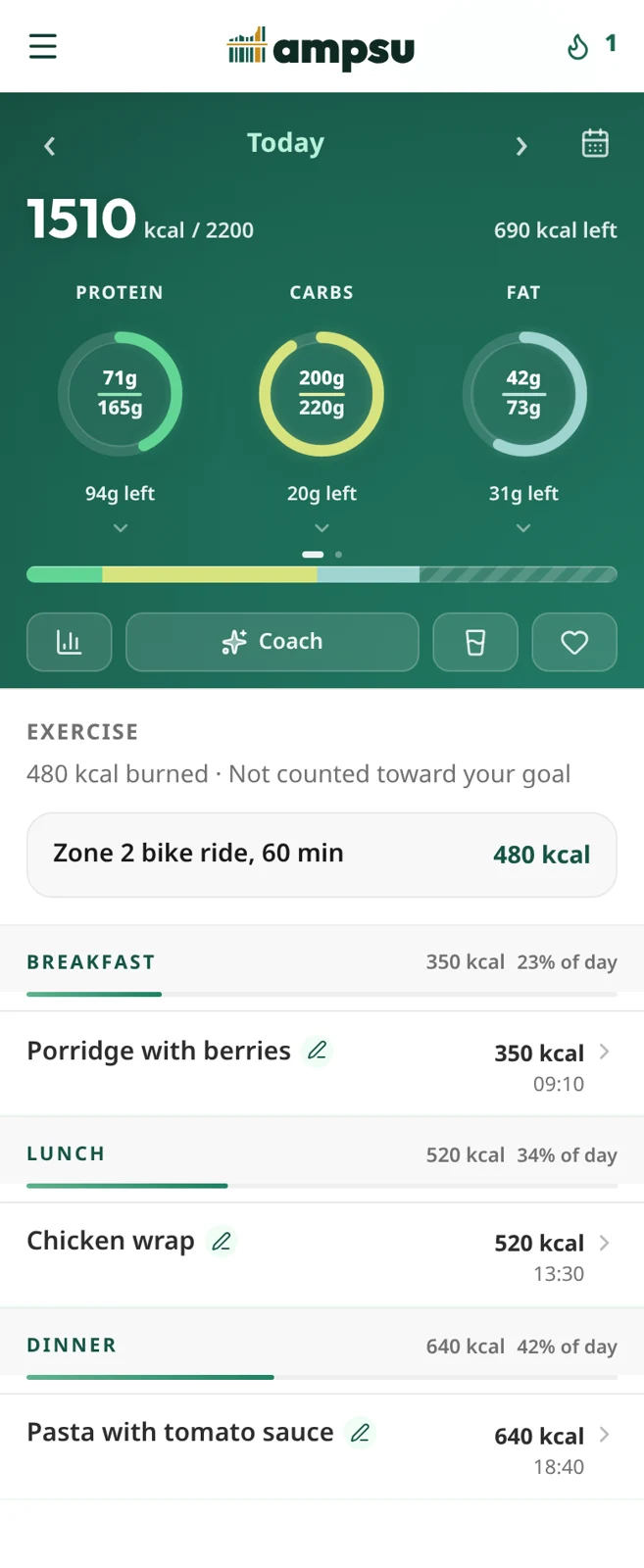
If you use a watch, let your workouts sync from Strava, Polar, Fitbit or your phone's health app. Otherwise log the session yourself with an honest calorie number. Ampsu shows it in your diary next to the food, but it doesn't simply add the workout to the day's budget. Over the weeks it works out your real burn from your weigh-ins instead, so a watch that's optimistic about calories can't talk you into an extra dessert.
If you want your daily number first, the TDEE calculator gives you a starting point that includes your activity.
Your first step
On your next easy run or ride, slow down until you could hold a conversation, and stay there for the whole session. If it feels almost too easy, you've found zone 2.