Keto for weight loss: does it beat other diets?
Keto works about as well as other diets that cut calories, and doesn't burn more body fat at the same calories. What the trials found, the downsides and how to start.
Keto works for weight loss about as well as any other diet that gets you eating less. In the best long trials, low-carb and low-fat diets ended up within a kilo of each other after a year. Keto doesn't melt fat faster at the same calories; when researchers fed people exactly the same calories in a metabolic ward, fat loss actually slowed a little on keto. What it does well is make some people less hungry and cut a lot of easy-to-overeat foods in one go.
So if bacon and eggs keep you full and you don't miss bread, keto is a fine way to run a deficit. If you've been told carbs are the reason you can't lose weight, the evidence says otherwise.
What is the keto diet?
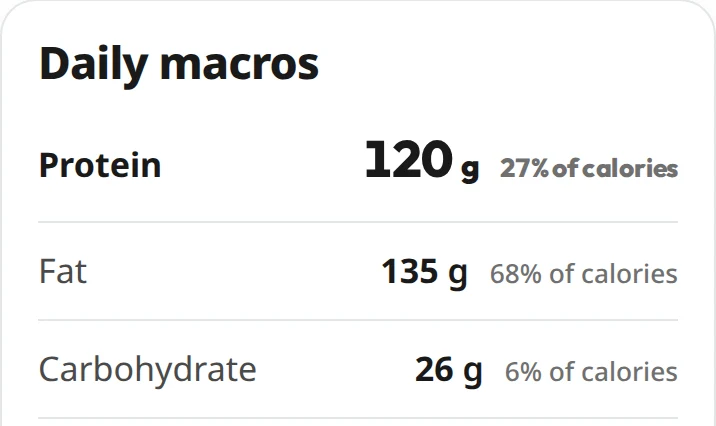
A ketogenic diet keeps carbohydrate so low, usually somewhere around 20 to 50 g a day, that your body switches to running largely on fat and on ketones made from fat. For comparison, a single banana has about 25 g of carbohydrate and a slice of bread about 15. Most of your calories come from fat, a moderate amount from protein, and almost none from sugar, bread, pasta, rice, potatoes or most fruit.
Does keto work for weight loss?
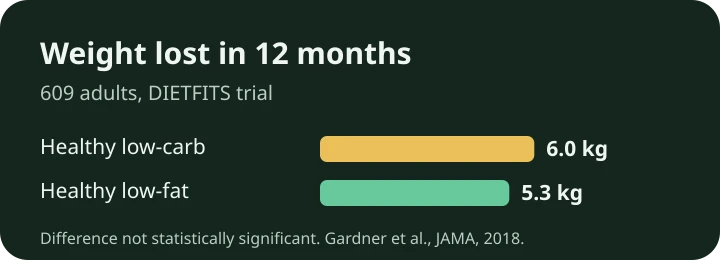
Yes, and so does the opposite. In a 12-month trial with 609 adults, one group ate a healthy low-carb diet and the other a healthy low-fat diet. After a year, the low-carb group had lost 6.0 kg and the low-fat group 5.3 kg, a difference small enough to be chance. Neither genes nor how much insulin people made predicted who did better on which diet.
The first week on keto often looks dramatic on the scale. A lot of that is water: your body stores carbohydrate with water, and when the stores run down, the water goes too. It's real weight, just not fat, and it comes back when you eat carbs again.
Does keto burn more fat?
Not in the way the marketing suggests. In a metabolic ward study, men who moved from a standard diet to keto at the same calories burned slightly more energy, roughly 50 to 150 kcal a day depending on how it was measured, but their body fat loss slowed rather than sped up. Burning more fat for fuel isn't the same as losing more body fat, because you're also eating a lot more of it.
And keto doesn't automatically mean eating less. In a 2021 study where people could eat as much as they liked, they ate about 550 to 700 kcal a day more on an animal-based keto diet than on a plant-based low-fat one. Some people find keto filling. Others find that cheese is very easy to keep eating.
Downsides of keto
- The first week or two can bring tiredness, headaches and low energy while your body adjusts, often called the keto flu.
- It's hard to stick to. Birthday cake, pizza with friends and most restaurant menus all need a plan.
- Fibre tends to drop when grains, beans and fruit go, so vegetables and nuts have to pick up the slack.
- Some people see their LDL cholesterol rise on keto, so a blood test is worth it if you stay on it for months.
- If you take medication for diabetes, talk to your doctor before you cut carbs this far.
How to do keto with Ampsu
Pick the keto preset when you set your macro goals, or set your own numbers with the macro calculator. Ampsu then shows carbs, protein and fat as separate rings through the day, so you can see when a "low-carb" snack wasn't. Keep protein up as well: this list of high-protein foods has plenty that fit keto. And because the scale drops fast in week one, give it three or four weeks before you judge how much fat you've actually lost.
Your first step
Before you go full keto, try cutting the carbs you eat without noticing, like sugary drinks, pastries and the bread basket, for two weeks. If that alone gets the scale moving and you feel fine, you may not need the strict version at all.