How many calories do 10,000 steps burn? Steps vs the gym
10,000 steps burn about 370 kcal at 75 kg, 260 of them extra. How that compares with a gym session, why everyday movement matters and how many steps to aim for.
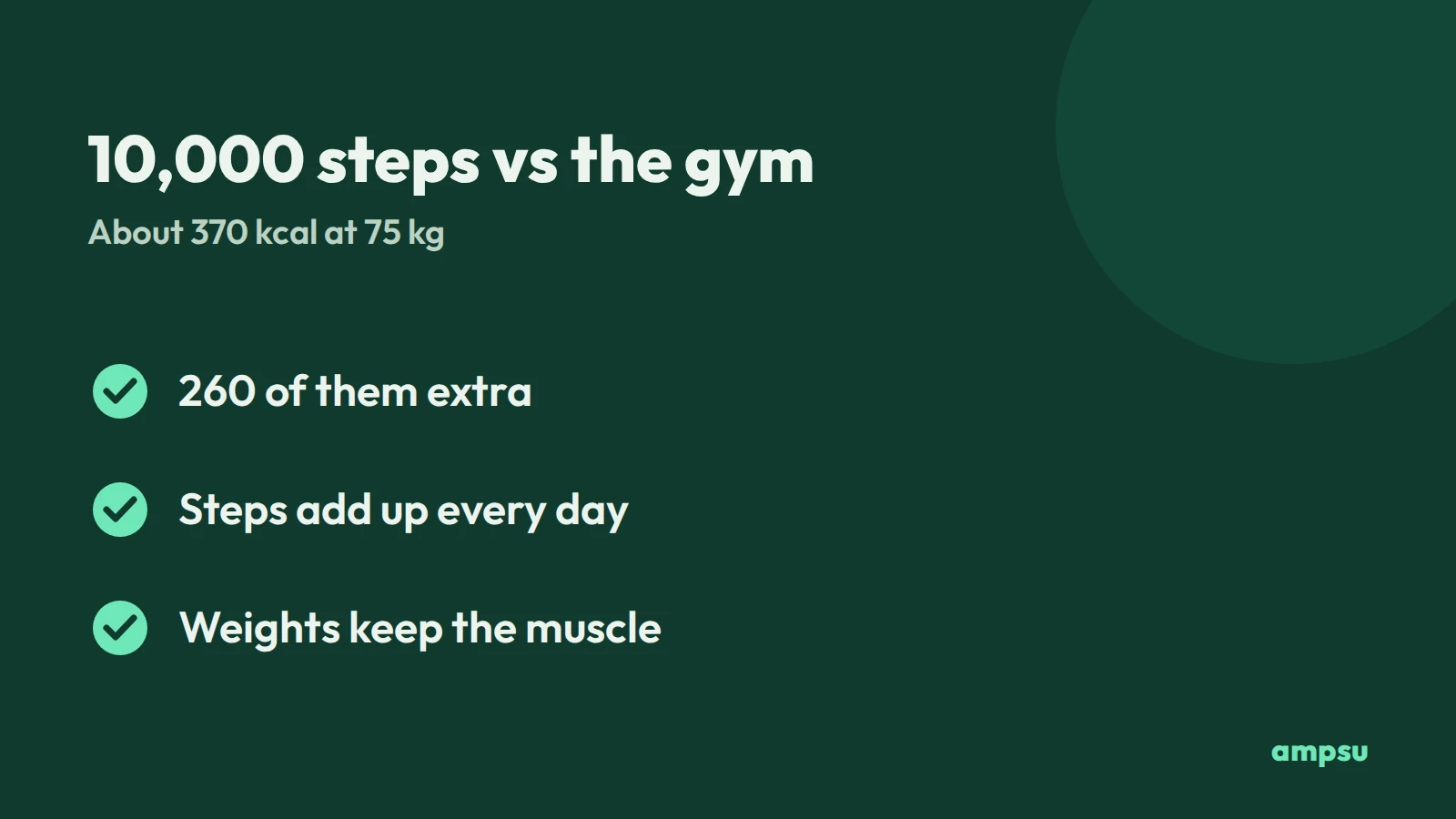
For someone who weighs 75 kg, 10,000 steps burn about 260 kcal on top of what you'd burn sitting still, or about 370 kcal in total. An hour of weights is roughly 200 to 300 extra. So one day of steps is in the same league as a gym session. The difference is that you can walk every day, and most people don't lift seven times a week.
The gym gets the selfies; the steps quietly do the work. Here's what everyday movement adds up to, why it matters more than people think, and how many steps are actually worth aiming for.
How many calories do 10,000 steps burn?
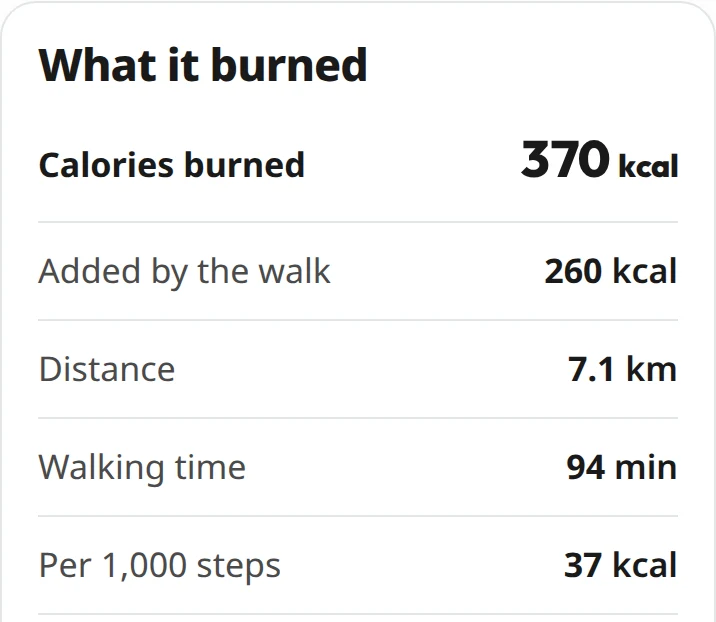
It depends on your weight, your step length and your pace. Ampsu's steps calculator uses the Ludlow and Weyand walking equation, which came within about 4% of measured walking in field tests. For a 75 kg adult who's 170 cm tall, walking at an average pace:
- 10,000 steps: about 7.1 km, 94 minutes, 370 kcal in total, of which about 260 is the walking itself.
- Per 1,000 steps: about 37 kcal in total, or 26 extra.
Heavier people burn more for the same steps, lighter people less, and a hill or a brisk pace adds a good chunk. The "extra" number is the one to compare with a workout, because you'd burn the rest anyway by just existing.
Is walking better than the gym for weight loss?
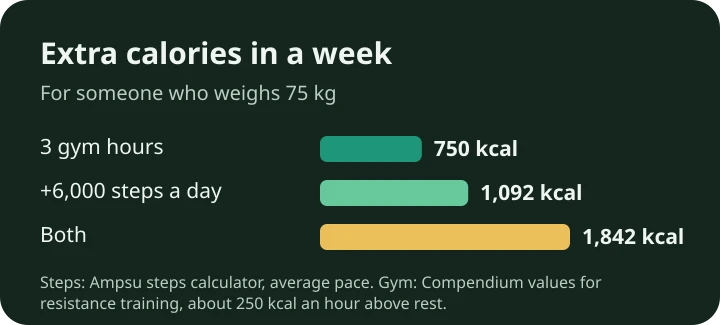
For the calorie count, steps often win simply because you do them every day. Say you go from 4,000 to 10,000 steps a day. That's about 1,100 extra kcal a week. Three one-hour gym sessions add roughly 600 to 900, depending on how much of the hour you spend lifting and how much reading the whiteboard.
But the gym does something walking can't: it keeps and builds muscle, which matters a lot when you're eating less. So the honest answer is both. Steps for the daily burn, weights for what the weight loss is made of.
Why does everyday movement matter so much?
Because it varies more between people than anything else you burn. In a classic overfeeding study, 16 volunteers ate 1,000 kcal a day more than they needed for 8 weeks. Two-thirds of the extra energy they burned came from what researchers call non-exercise activity: fidgeting, standing, walking around. The people who moved more without thinking about it stored up to ten times less fat than those who didn't.
The flip side matters when you diet. When you eat less, it's easy to move less without noticing: more sitting, fewer errands on foot, the lift instead of the stairs. Keeping your steps up is one of the simplest ways to stop that from eating your deficit.
Do you really need 10,000 steps?
The number came from marketing, not science, but it isn't far off. A 2022 analysis of 15 studies and almost 47,500 adults found that the risk of dying early kept falling as steps went up, levelling off at around 6,000 to 8,000 a day for people over 60 and 8,000 to 10,000 for younger adults. For weight loss there's no magic threshold. Every extra 1,000 steps is about 26 kcal at 75 kg, and they add up.
If you're at 3,000 now, aiming for 10,000 tomorrow is a recipe for sore feet and giving up. Add 1,000 to 2,000 a day for a couple of weeks, then add again.
Easy ways to add steps
- A 10-minute walk after meals: about 1,000 steps each, and a nice excuse to leave the dishes for later.
- Phone calls on your feet. Nobody can tell.
- Get off a stop early, or park at the far end of the car park.
- A walking pad under a standing desk, if you have the space and the patience for questions from colleagues.
How to track steps in Ampsu
Let your steps sync from your phone's health app, Fitbit or another connected service, and Ampsu folds them into your picture of the day. It doesn't add every step to your calorie budget. Instead it learns your real daily burn from your weigh-ins over a few weeks, so if your steps go up, your estimated burn follows. For workouts, this comparison of incline walking, running and cycling has the numbers.
Your first step
Check your average daily steps over the last week, then add a 10-minute walk after one meal a day. That's roughly 7,000 extra steps a week without a single gym visit.